
 E-Paper



Farmers’ protest 2.0: New vanguards emerge as veterans pushed to margins
The farmers’ agitation in Punjab has witnessed a change of guard as leaders who were at the forefront of the 13-month protest at the Delhi borders between November 2020 and December 2021 have been pushed to the margins and new elements with fringe support are now calling the shots

 Prefer HTon Google


Chandigarh : The farmers’ agitation in Punjab has witnessed a change of guard as leaders who were at the forefront of the 13-month protest at the Delhi borders between November 2020 and December 2021 have been pushed to the margins and new elements with fringe support are now calling the shots.
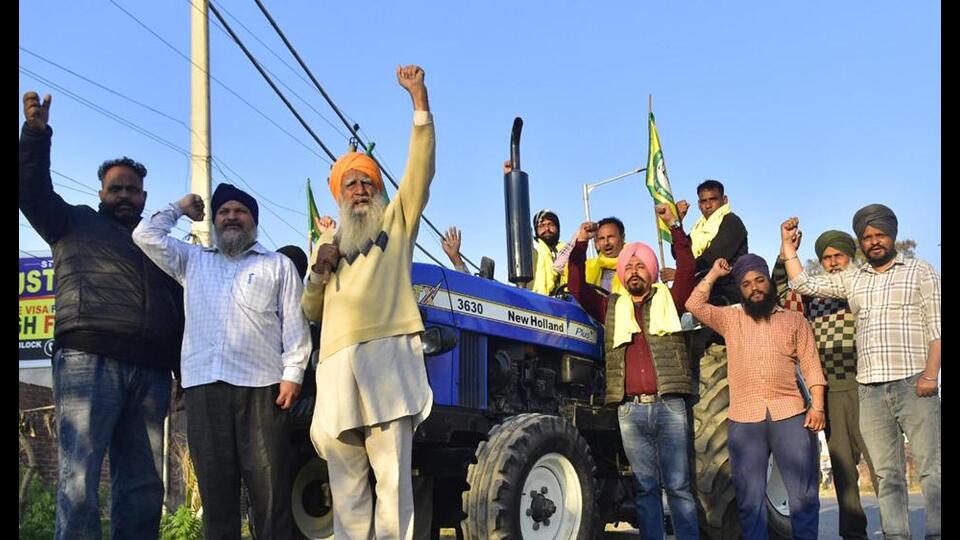
Farmer unions in Punjab have been known for splits and divisions. Till the 2020-21 stir at Singhu and Tikri borders, most unions never used to see eye to eye but they still came under one roof. However, after the agitation was over, differences in leadership dynamics emerged and unions started distancing from each other. With new leaders taking charge, the factional fighting within the unions grew deeper because of their ambitions, mainly political. Differences among the unions came to the fore more openly during the 2022 Punjab assembly elections.
Balbir Singh Rajewal-led BKU (Rajewal) and other unions took the poll plunge only to taste defeat. It led to the formation of SKM (non-political), which is spearheading the ‘Delhi Chalo’ march. Now, Rajewal and old forces, including BKU (Ugrahan), that claims largest support base among Punjab farmers, have been forced to play a second fiddle as the new elements, which seem to be nurturing bigger aspirations, have taken over.
Competitive farm politics to the fore
At this stage, Punjab is witnessing a competitive farm politics with different outfits pushing the boundaries of protest. Under the banner of the Samyukta Kisan Morcha (Non-Political), 17 farm organisations, including BKU (Sidhupur) led by Jagjit Singh Dallewal and Sarwan Singh Pandher’s Kisan Mazdoor Sangharsh Committee started the ‘Delhi Chalo’ protest on February 13 seeking a law guaranteeing MSP, assured procurement of crops and debt waiver, besides other demands.
The two farm leaders outsmarted other unions by announcing ‘Delhi Chalo’ march days before the SKM’s ‘Bharat Bandh’ call of February 16.
“The latest trend of competition in farm politics has led to chaos in the state. The motive of these leaders is not to help farmers but to rehabilitate themselves,” said Sardara Singh Johl, eminent farm economist and former vice-chancellor of Punjab Agricultural University. Their demands are impractical and they are taking poor and hapless farmers for a ride, he added.
“These protests would not do any good to anyone, but cost the state dearly. This should stop and meaningful talks be initiated,” Johl suggested.
The Delhi Chalo march by SKM (non-political) was halted by the Haryana government by putting barricades on their side at Shambu and Khanauri borders. Four rounds of talks between the farm leaders and three Union ministers Piyush Goel, Arjun Munda and Nityanand Rai have ended in a deadlock.
The fourth round of talks were held last week when a formula of MSP and assured procurement of five crops --- cotton, maize and three pulses --- was put forward by the Centre. But the farm leaders rejected the proposal seeking legal guarantee of MSP on all crops and debt waiver.
After much deliberations, farm leaders announced to pause the ‘Delhi Chalo’ march after the death of 21-year-old farmer from Bathinda Shubh Karan Singh in police action at Khanauri in Jind district on February 21. The SKM (Non-Political) leaders announced to suspend the march for two days which was further extended till February 29.
On Saturday, Pandher announced that the protest would continue and farmers who have come with him wanted to reach Delhi even if announcement for the Lok Sabha elections is made and model code of conduct put into force. “We want place (in New Delhi) for peaceful protest. We will not interfere in the poll process and will wait for the formation of the new government to meet our demands,” Pandher had announced.
The rift between the SKM and the group headed by Pandher and Dallewal could be gauged from the fact that the latter went ahead with their Delhi Chalo march even though the SKM gave a call for February 16 Grameen Bharat Bandh over similar demands. On February 3, the SKM leaders said they would have nothing to do with the ‘Delhi Chalo’ march. “They (Dallewal and Pandher) have not taken us into confidence before starting the ‘Delhi Chalo’ protest and we have nothing to do with them,” Rajewal said. On his part, Dallewal said the SKM failed to take up farmers’ issues even two years after the protest ended in the Capital. “So we have been left with no option but to take the lead,” Dallewal added.
Parallel programmes
Seeing Dallewal and Pandher-led SKM (non-political) hogging the limelight and engaging with the central leadership and hitting the headlines, the SKM was forced to announce a parallel programme, including nationwide protests on February 23, a tractor march on February 26 and a Kisan Mahapanchayat on March 16 in the national capital.
“SKM (Non-Political) seems to be in tearing hurry in upping the ante and this raises doubts on their intentions. They tried to stay on the top when the SKM had already planned Bharat Bandh on February 16 and Kisan Mahapanchayat in Delhi in March month. Besides, the BKU (Ugrahan) was to start five-day protest in Chandigarh from February 22,” said political scientist Jagrup Singh Sekhon, who remained head of the political science department in Guru Nanak Dev University, Amritsar.
“They (Dallewal and Pandher) have aspirations and want to be in the limelight. What have they achieved? The protests have turned violent and a young farmer lost his life, besides many were injured. The entire state has been on the tenterhooks and the real issues have been pushed on a backburner,” Sekhon added.
No party affiliation
During the 2020-21 protest, the farm movement became independent of the political parties. Till the state polls of 2017, the farm leaders were seeking to contest polls on political parties’ platforms. Rajewal was seeking to contest as a Shiromani Akali Dal (SAD) candidate before assembly elections of 2012.
There was a time when political parties in Punjab used to give plum posts to farm leaders. Ajmer Singh Lakhowal, a farm leader, was appointed as the Punjab Mandi Board chairman under SAD-BJP regime and before that in the 1980s, Bhupinder Singh Mann was nominated to the Rajya Sabha during the Congress regime in the Centre.
However, now, it seems the political parties have become subservient to the farmer outfits. The SAD, which enjoyed tangible support among the state peasantry, is now forced to follow the farm organisations. After the “Delhi Chalo” protest, was announced, the SAD had no option but to cancel its month-long “Punjab Bachao Yatra” on February 14.
The dissipation of Left parties in Punjab has led to their cadre aligning with farmer organisations, particularly in the Malwa belt of state. The Left-oriented think-tank has come in support of the farm outfits.


