
 E-Paper



Finally, Chandigarh admn chooses concrete for building 209 bus shelters
Of the 209 shelters being worked upon, 131 are existing shelters that are in a dilapidated condition and are being reconstructed with concrete, while 78 are fresh structures coming up at new locations


After dabbling with multiple designs and materials over the past two decades, the Chandigarh administration has settled for cost-effective concrete for the construction of 209 bus queue shelters in the city.
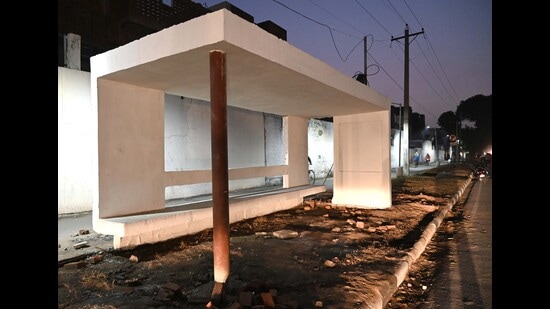
Of the 209 shelters being worked upon, 131 are existing shelters that are in a dilapidated condition and are being reconstructed with concrete, while 78 are fresh structures coming up at new locations. Costing ₹3.5 lakh, they are expected to be ready in the next six months.
UT chief engineer CB Ojha said, “We are constructing 209 bus queue shelters with reinforced cement concrete (RCC). Big enough to seat 12 people, they are not only cost-effective, but also remain cooler in summer compared to other materials, such as metal. Further, the shortlisted design has a provision of setting up advertisements in the back, which will help the administration generate income.”
The shelters’ design is also in sync with the intelligent traffic system of Chandigarh Transport Undertaking that allows commuters to live track buses through screens that display the expected arrival/departure timings of buses.
With the addition of the 78 new shelters, their total number in Chandigarh will go up to 416. The existing structures include the 10 bus queue shelters built using the random rubble masonry (RRM) technique, also known as stone masonry, whereas around 135 are made of brick and mortar.
Apart from stone masonry and brick-and-mortar shelters, the administration had also gone for two other designs that resulted in 22 kiosk-style shelters and 60 stainless steel shelters, which form the bulk of those being demolished and reconstructed.
In 2013, the administration had spent ₹13 lakh each on constructing the steel shelters, whereas the concrete/brick ones cost ₹3.5 lakh.
The kiosk-style shelters, several of them having space for tuck shops, had come up in 2004. But a subsequent audit report by the accountant general had pointed out that the administration had wasted public money because both steel and kiosk shelters were not passenger-friendly.
Welcoming UT’s decision, Navdeep Asija, a member of the road safety council, Chandigarh, said, “The concrete design is open from three sides that will help the bus drivers gauge whether passengers are waiting or not. Also, the structure is summer friendly and has advertisement space.”
City-based architect Surinder Bahga added, “Use of concrete for bus shelters is in line with Chandigarh’s heritage, as opposed to steel.”


