
 E-Paper



Guest column | A promise unkept but dharma upheld
Tasked with a reconnoiter of the venue of the surrender ceremony at Khulna, he was driving to the brigade headquarters when a Pakistani second lieutenant signalled them to stop. Defeated and battle fatigued, the soldier requested to be escorted to his platoon.


The war had just ended and the Pakistan army was preparing to surrender. Tasked with a reconnoiter of the venue of the surrender ceremony at Khulna, he was driving to the brigade headquarters when a Pakistani second lieutenant signalled them to stop. Defeated and battle fatigued, the soldier requested to be escorted to his platoon. It was unsafe for him to travel in the land that had overnight become independent and an enemy territory.
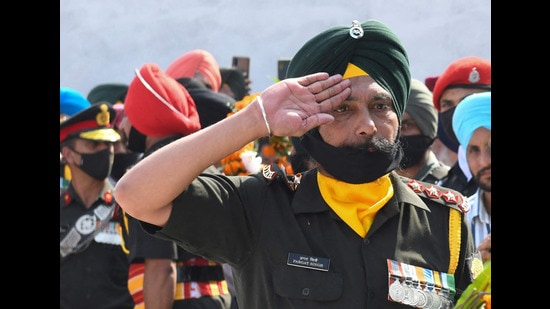
“My parents had migrated from Hoshiarpur in 1947,” the youngster spoke in chaste Punjabi in order to establish an emotional connect. It was conveyed to the subaltern that irrespective of his ‘Punjab connection’, he would be helped. “Be kind on the enemy, for all you know, their fathers may have fought alongside me in the Great War with the Germans.” He remembered the parting words of his veteran father when he had left for the imminent war.
I made my radio operator stand on the open Willys Jeep, hoping that our olive green uniforms, along with my turban, would dissuade the local militia from firing at us. The excitement in his voice was palpable. However, by the time they reached, the Pakistani platoon had been surrounded by a mob armed with swords and sticks giving surly stares. Judging the mood of the moment and sensing trouble, he had to think and act fast. “Joi (Jai) Bangla;” he shouted the greeting of ‘Mukti Bahini’ freedom fighters. The return greetings from the other side came as a great relief in those anxious moments.
“We will take these dogs to the river and chop their heads off,” said the mob leader as he narrated the stories of Pakistan army’s alleged atrocities. Being outnumbered, any attempt to dissuade them from doing so could invite trouble, but then leaving the hapless khaki clad soldiers to be butchered was not an option. “Before beheading, wouldn’t it be better to humiliate them and let the entire world see how the ‘rascals’ lay down their arms and beg for mercy in front of TV cameras?” he suggested. The pause and murmur in the mob that followed gave a glimmer of hope.
The mob leader deliberated upon the proposal for some time which felt like eons. After a while came a nod of approval, much to the relief of Pakistanis who stood there like plagued sinners unsure of their fate. The platoon “marched off” with weapons to the surrender venue, guarded by Indian troops. The gamble had paid off as his diplomatic skills saved many a life. “I quickly vanished among the milling troops thereby depriving the locals the thrill of the picture I had painted,” he spoke in a flat monotone.
“My disappearing was an “un-soldierly” act and I had broken my promise as well,” he said, taking a deep breath. “Do not regret your decision. You may not have kept your word but you certainly upheld a soldier’s dharma,” I said, holding his hand and reassuring him. With every anecdote of life he narrates, I am awe struck of this gentleman, Brigadier Harwant Singh, who in addition to being a role model, is also my father.
harrypal71@yahoo.co.in
(The writer is a Mohali-based freelance contributor)


