
 E-Paper



Guest Column| Chandigarh: Stirring up a hornet’s nest
Both states need their capitals. It falls on the Centre to resolve this sensitive issue. In case of other states, the capitals remained with the parent state and none paid any territorial compensation. Thus, Chandigarh should be transferred to Punjab and liberal central grant be given to Haryana to build its own capital, as done for other states. Anything else amounts to playing with the sentiments of people.

 Prefer HTon Google


Last year witnessed some ominous developments regarding Chandigarh and Punjab:(i) As per the Punjab Reorganisation Act, 1966, both Punjab and Haryana deputed their employees to Chandigarh administration but they were governed under the Punjab Civil Services Rules. Ignoring this, the Union Government implemented Central Service Rules from April 1, 2022. (ii) Allocation of land in Chandigarh to Haryana for its new assembly building was announced on July 9, 2022, in the Northern Zonal Council meeting. Perturbing developments followed. Haryana offered land in Panchkula (Saketri village) in lieu of the land in Chandigarh (July 13, 2023) and the Chandigarh administration asked for an alternate site or ₹620 crore (September 21, 2023).
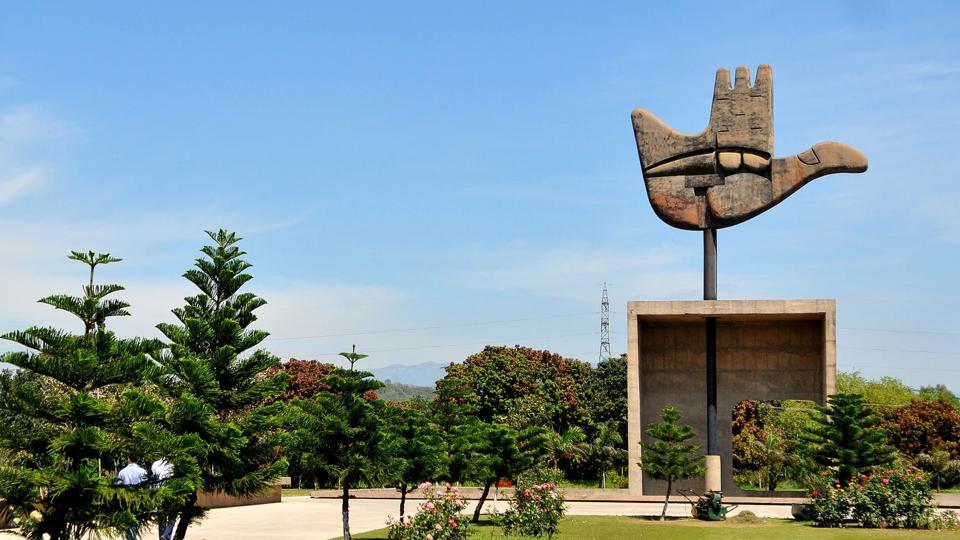
These decisions obviously dilute Punjab’s claim over Chandigarh. The allocation of land to Haryana in Chandigarh is incredulous as Punjab’s claim over Chandigarh has been upheld by various awards and accords. So, why have an assembly in a city that eventually is to be transferred to Punjab?
A brief revisit to the creation of the present state of Punjab justifies apprehensions. The states, except Punjab, were reorganised on linguistic basis with effect from November 1, 1956. Consequently, there was a long-drawn-out agitation for a Punjabi-speaking state. On April 23, 1966, the Government of India appointed the Punjab Boundary Commission with Justice JC Shah as chairman and S Dutt and MM Philip as members. The commission, with a split-decision, recommended that Kharar tehsli (including the Chandigarh Capital Project) be included in the Hindi-speaking state. Dutt, in his dissenting note stated: “I regret that I am unable to agree with the recommendations which my colleagues propose to make about Kharar tehsil including Chandigarh. In my view, Kharar tehsil as a whole, with the exception of Kalka police station, should be merged with the proposed Punjabi state; the area of Kalka police station should be merged with Himachal Pradesh.”
The recommendations were considered controversial as (i) Punjabi was the dominant language in the rural areas of Kharar tehsil, (ii) Chandigarh was carved out by uprooting Punjabi-speaking villages of Kharar tehsil, and (iii) according to established precedent, Punjab being the parent state had a legitimate right over the capital.
Right of Punjab on Chandigarh
The Government of India did not accept the commission’s recommendations in toto. According to the Punjab Reorganisation Act, 1966: (i) The territories which will form a new state of Haryana include Pinjore kanungo circle and Manimajra kanungo circle of Kharar tehsil; and (ii) A new Union Territory of Chandigarh shall be formed comprising Manimajra and Manauli kanungo circles of Kharar tehsil. The rest of Kharar tehsil remained in Punjab. Thus, the Union Territory of Chandigarh was carved out of greater Punjab on November 1, 1966. Since then, it has been the joint capital of Punjab and Haryana.
Punjab went through turmoil due to various factors, including its claim over Chandigarh from the late ’70s to the early ’90s. The government took many decisions to resolve the issues. One of them was the governor of Punjab taking over as the administrator of Chandigarh, though it remained the capital of both states. It is indicative of the right of Punjab on Chandigarh. This is continuing since June 1, 1984.
Another decision was the Rajiv-Longowal Memorandum of Settlement on July 24, 1985. According to this accord: The capital project area of Chandigarh will go to Punjab. A commission will be constituted to determine the specific Hindi-speaking areas of Punjab, which should go to Haryana, in lieu of Chandigarh. The actual transfer of Chandigarh to Punjab and areas in lieu thereof to Haryana will take place simultaneously on January 26, 1986.
This led to the constitution of multiple commissions: Justice KK Mathew Commission (January 25, 1986), Justice ES Venkataramiah Commission (April 2, 1986) and Justice DS Desai Commission (June 20, 1986). These commissions could not identify any contiguous Hindi-speaking areas for transfer, as had happened earlier with the Prime Minister’s Award (January 29, 1970), giving Chandigarh to Punjab in lieu of 105 Hindi-speaking villages and two cities (Abohar and Fazilka) to Haryana.
Festering wound for 57 years!
The concluding paragraph of the Shah Commission Report of 1966 is highly imperative: “Agitation for setting up of separate linguistic states in the territory of Punjab raised its head more than 18 years ago, and it is unfortunate that strong passions have been aroused on that problem. Punjab has been at the forefront among the states of India in war, and in the times of peace it has led all other states in agricultural production, and parts of the state are humming with small-scale industry. We fervently hope that after the dust of conflict has settled….” Contrary to 18 years, the wound of Chandigarh is festering for 57 years!
Over the years, both states, responsibly located many state-level offices in their cities, SAS Nagar and Panchkula, both territorially contiguous to Chandigarh. But suddenly the demand of Haryana for land in Chandigarh is being processed!
Both states need their capitals. It falls on the Centre to resolve this sensitive issue. In case of other states, the capitals remained with the parent state and none paid any territorial compensation. Thus, Chandigarh should be transferred to Punjab and liberal central grant be given to Haryana to build its own capital, as done for other states. Anything else amounts to playing with the sentiments of people with unknown motives.
The governments need to be cautious. Recently propped-up issues are likely to result in accusations claiming injustice to Punjab and may be used to arouse sentiments to vitiate the environment with unpredictable repercussions. Political parties need to be vigilant that any flare-up of sentiments does not push Punjab backwards.
Let us not fall prey to those who have been exploiting sentiments of Punjabis, resulting in suffering not only to Punjab but the whole country. Hopefully, in national interest and for justice, these new irrational decisions would be revoked soon, and efforts revived to amicably resolve pending issues between Punjab and Haryana.
Dr Baldev Singh Dhillon is a former vice-chancellor of Punjab Agricultural University, Ludhiana, and Dr Jai Rup Singh is the founder vice-chancellor of the Central University of Punjab, Bathinda, and former vice-chancellor of Guru Nanak Dev University, Amritsar. Views expressed are personal


