
 E-Paper



Guest Column | Curriculum for a gender equal world
The programme adopted by the government of Punjab will increase student awareness on constitutional values and promote gender sensitive attitudes among students


In India, women and girls are brought up in a socio-cultural context steeped in discrimination and inequity. Such social conditions often manifest in the form of social norms that perpetuate violence and discrimination against girls and women.
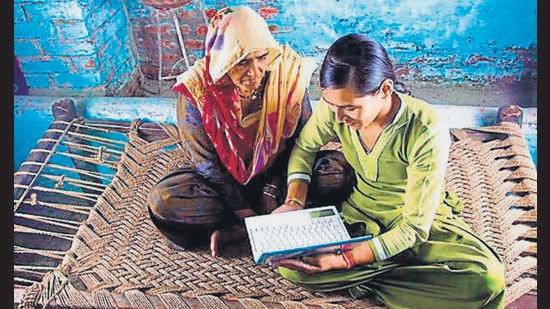
Statistics paint a grim picture. In 2018, the National Family Health Survey, 2018, noted that 33% married women in India have experienced physical, sexual, and emotional spousal violence, and around 90% women have experienced some form of sexual harassment in their lives. Adolescent girls are particularly vulnerable, they find themselves undervalued, neglected and unloved in their own homes and communities. Restricted mobility, low priority for schooling, early marriage, confine them to domestic roles.
Therefore, it is critical to look at the barriers that hold us back from becoming a gender equal world. Social development will be equally important to sustain India’s economic growth prospects. It is heartening to see the growing awareness among government and private sector stakeholders about the need for building a gender equal world. Over the years, government initiatives such as Beti Bachao Beti Padhao (BBBP), Mahila Shakti Kendra (MSK), the Adolescent Girls Scheme and Female Entrepreneurship Programme have helped improve the gender equality index but there is still a long way to go. Private sector participation will be critical in further enabling and ensuring this.
Emulating the Punjab model
Early this year, the government of Punjab partnered with Breakthrough and J-PAL South Asia to integrate a gender sensitisation curriculum for adolescents into the syllabus for all government middle schools in Punjab. The department of school education in Punjab will work with Breakthrough to train teachers to integrate the curriculum for Classes 6 to 8. The syllabus will be introduced in 4,500 schools across the state. With 23,000 trained teachers, the curriculum is expected to reach an estimated six lakh students. The education department will take responsibility to train the teachers and familiarise them with the curriculum.
Gender-sensitive programmes
In 2012, we created the ‘Taaron Ki Toli’ programme (TKT) or gang of stars to promote gender-sensitive behaviours among young adults. Taaron Ki Toli is a school-based, gender equity programme for adolescent boys and girls. The programme offered 28 fortnightly, 45-minute classroom sessions and 12 assembly sessions. It was piloted in Haryana, a state with the most skewed sex ratio in the country, to cover children in government schools in Classes 6 to 8. The programme was evaluated in a randomised control trial by JPal, South Asia, over 2.5 years, covering 14,000 children across 300 schools. The results were heartening: the gender attitudes and behaviours of both boys and girls had shifted.
Significantly, a more significant change was seen in boys’ behaviours, which might be because they have comparatively few social constraints. The most significant shifts were seen in perceptions around norms related to girls’ higher education and paid employment.
We ran a similar initiative called the adolescent empowerment programme in eastern Uttar Pradesh from 2016-2021. The programme sought to engage with adolescent girls and boys aged between 11-19 years to understand how they demand and access gender equity in health and education in their homes and community for themselves and others. The evaluation of the programme was done in February this by NRMC. The findings showed a significant decrease in earlya nd underage marriages.
Today, it is more than important to create similar programs to drive social and behavioural changes to build a gender equal world. These programmes, after due evaluation and testing, should be incorporated in the school curriculum. Schools provide the unique opportunity of directly dealing with the future change makers and through them, those closely associated with them.
Partnerships with governments
States like Kerala, Maharashtra have taken proactive steps to re-look at their school curriculum to make it more gender inclusive. Similarly, the programme adopted by the government of Punjab will increase student awareness on constitutional values and promote gender sensitive attitudes among students from an early age. Similar collaborations between the government and the development sector experts and organisations will yield significant positive results. The government of Punjab has taken a crucial step towards addressing it. Such initiatives by the governments both at state and central levels can encourage inter-gender and intergenerational constructive dialogues and build awareness about human rights to help adolescents identify their right for education, health and a violence-free life. Similar steps by other state governments can definitely help in building a gender-equal world.
(The writer heads the leadership building ,research and development programme at Breakthrough India, a women’s rights organisation in New Delhi)


