
 E-Paper



Haryana approves 604 new schemes to boost flood control measures
These schemes primarily focus on protection of ‘abadi’ (people), agriculture land, procurement of flood machinery, reclamation of agricultural land, conservation and reuse of water and renovation or reconstruction of structures for smooth flow of drains


: The Haryana government on Monday granted in-principle approval for 604 new schemes to fortify flood control measures.
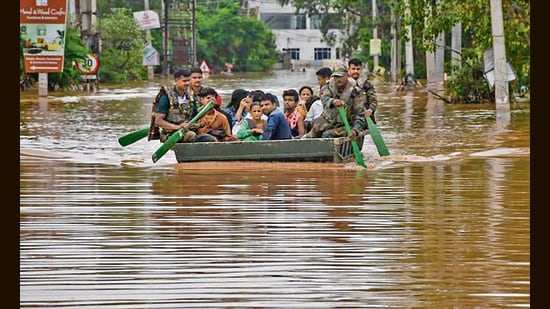
The new measures with a total financial implication of ₹1,205 crore were approved during the 55th meeting of the Haryana State Drought Relief and Flood Control Board, convened under the chairmanship of chief minister Manohar Lal Khattar.
An official spokesperson said most of these schemes primarily focus on protection of ‘abadi’ (people), agriculture land, procurement of flood machinery, reclamation of agricultural land, conservation and reuse of water and renovation or reconstruction of structures for smooth flow of drains.
The spokesperson said the new flood schemes included 77 for Yamunanagar, 42 for Sonepat, 67 for Jhajjar, 36 for Rohtak, 53 for Ambala, 43 for Kaithal, 31 for Kurukshetra, 16 for Hisar, 22 for Charkhi Dadri, 27 for Fatehabad, 20 for Karnal, 28 for Jind, 17 for Panipat, 15 for Bhiwani, 18 for Nuh, 5 each for Mahendergarh and Faridabad, 14 for Palwal, 42 for Panchkula, 10 for Sirsa and 3 each for Rewari and Gurugram.
The chief minister asked deputy commissioners to collect requests from residents in their respective districts for the construction of dams to mitigate any flood risks. They were further directed to collect resolutions in this regard from Panchayats and transmit them to the headquarter through the divisional commissioners.
Regarding the desilting of canals, rivers, or drains, Khattar proposed the establishment of a set standard for the depth at which desilting should occur to remove sand. The responsibility for desilting would rest with the irrigation department up to a specified depth, with the mining department taking over if the silt level is below that point. In addition, he also suggested that the departments set a minimum water flow capacity in canals or drains to prevent flooding during the monsoon season. This approach aims to improve the management of silt and water flow in these water bodies.


