
 E-Paper



Haryana completes pilot project to contain farm fires in Karnal villages
”We are planning to scale the initiative in the state to cover eight districts, namely, Fatehabad, Sirsa, Jind, Kaithal, Kurukshetra, Ambala, Yamunanagar and Karnal, which are responsible for approximately 90% of farm fires in the state,” said Narhari Bangar, director, department of agriculture and farmers’ welfare, Haryana.


The Haryana government has successfully completed the pilot project to target stubble burning in villages of Karnal district which have been declared in the red zone for reporting a maximum number of farm fires in the past few years.
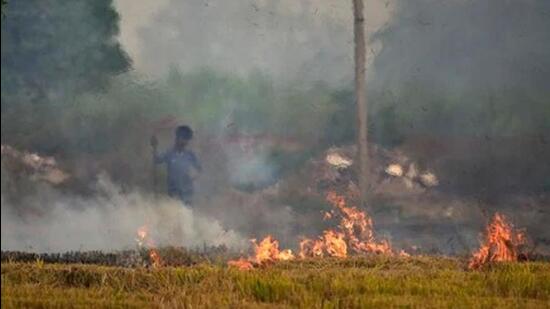
Earlier, the pilot project began in six villages under the red-zone category of Karnal district in 2022 kharif-harvesting season. Later, it was expanded to the entire district. The project has resulted in a 69% reduction in stubble-burning incidents bringing the number of farm fires to 301 in 2022 against 965 in 2021, claimed officials from the district agriculture and farmers welfare department.
“With the proof of concept and a working replicable model, we are planning to scale the initiative in the state to cover eight districts, namely, Fatehabad, Sirsa, Jind, Kaithal, Kurukshetra, Ambala, Yamunanagar and Karnal, which are responsible for approximately 90% of fires in the state,” said Narhari Bangar, director, department of agriculture and farmers’ welfare, Haryana.
The project is based on the crop residue management (CRM), which will help in reducing stubble-burning incidents and managing the air pollution situation in the region.
Aditya Dabas, deputy director, agriculture, Karnal, said the initiative included mobilising farmers, communities and private sector partners. An important element of the outreach is a multilingual mobile application called the Krishi Yantra Sathi, he added.
An innovative communication and awareness programme was also designed and implemented to educate farmers with a series of awareness-building initiatives like radio jingles, videos, and door-to-door awareness campaigns, periodical WhatsApp messages, videos on the “Progressive Farmer Mascot- Parivartan Prakash”, and distributing calendars and tote bags with targeted messaging.
The project was designed to bring together all the relevant stakeholders, including local farmers, various custom hiring centres (CHC) and farmer producer organisations (FPO).
Viral Thakker, partner and sustainability leader, Deloitte India, which was a partner in the project, said Deloitte supported this initiative by facilitating a sustainable ecosystem that helps bridge the equipment availability gap.


