
 E-Paper



Haryana farmers say Parmal varieties more profitable due to assured MSP
Haryana farmers who had grown premium paddy variety, Basmati are staring at financial losses after a sudden fall in prices in the open market


Haryana farmers who had grown premium paddy variety, Basmati are staring at financial losses after a sudden fall in prices in the open market.
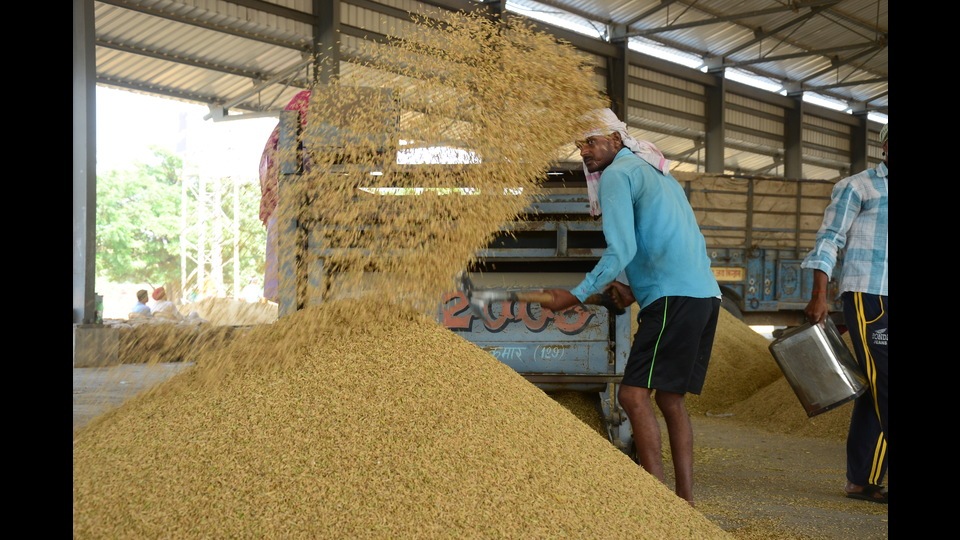
The prices of aromatic Basmati in the mandis have come down to around ₹3,600-3,800 per quintal against last year’s ₹4,500-5,000 per quintal. The premium Basmati varieties were grown in Kaithal, Karnal and Kurukshetra districts and harvesting is at its peak.
Farmers said they are not selling their produce as they expect a rise in the prices after Diwali.
“I have harvested my crop on three acre and harvesting is still on. I have not sold it yet because at this price, I will not be able to get any profit,” said farmer Raghubir Singh of Karnal’s Nilokheri.
Another farmer Krishan Kumar, who has nearly 30 acre Basmati crop in Sakra village of Kaithal district, said, “There is no stability in the prices of Basmati since the past couple of years. The prices keep fluctuating and causing huge losses to farmers.”
Parmal more remunerative than Basmati
Government agencies procure only Parmal varieties on the minimum support price (MSP) while the long-grained Basmati varieties are purchased by private traders. There is no stability in the prices of Basmati varieties.
Farmers said those who had grown Parmal varieties have earned more profit as they could sell their produce on MSP of ₹1,960 per quintal. Even early and high-yielding varieties of Basmati, including Pusa 1509 and Pusa 1121, also fetched good prices and were sold at around ₹3,000 per quintal.
“The average yield of Parmal varieties remain above 30 per quintal and farmers earn well but the yield of premium Basmati remains 12-14 quintal and at the present price, farmers will not be able to get ₹50,000 per acre,” said rice trader Praveen Kumar.
Need pricing policy
People associated with the rice industry have blamed the lack of a proper pricing mechanism for the Basmati varieties for their losses. They said due to lack of pricing policy for Basmati, farmers are left with no choice but to sell their produce at the prices fixed by private traders.
Former president of the All-India Rice Exporters Association, Vijay Setia said the fluctuating acreage of Basmati varieties caused instability of prices.
“Last year, prices of Basmati varieties were good. Following this, farmers had shown interest in traditional Basmati cultivation this year. That is why, this year, the prices had crashed as traders cannot purchase beyond their stock limits and demand,” he added.


