E-Paper



Haryana: NDRI decodes genome of Bhadawari buffalo to enhance breeding
Scientists at the animal genetics and breeding division of the central institute said for the first time, a linear reference whole genome “De-novo” assembly has been created, which will help them in genome-based selection and breeding of buffaloes

 Prefer HTon Google


The National Dairy Research Institute (NDRI) has announced a major scientific breakthrough by decoding the genome of Bhadawari buffalo that gives milk with a fat percentage nearly double that of other buffalo breeds.
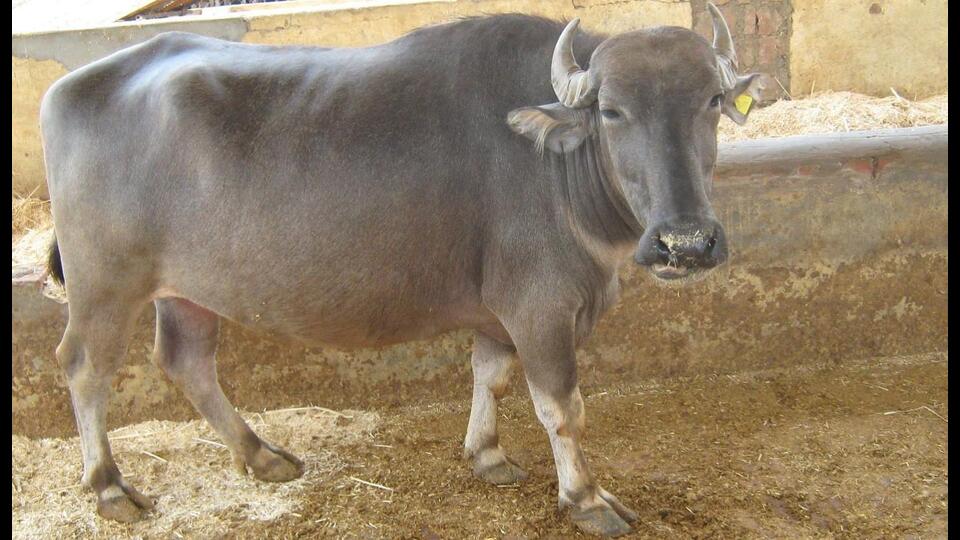
Scientists at the animal genetics and breeding division of the central institute said for the first time, a linear reference whole genome “De-novo” assembly has been created, which will help them in genome-based selection and breeding of buffaloes.
Bhadawari buffalo is one of the unique breeds having a very high milk fat percentage of up to 13%, compared to other buffalo breeds available in India. It is known for its ability to thrive on low-quality local fodder and can survive in harsh climatic conditions, scientists said.
On the other hand, other buffalo breeds have a fat percentage of about 7-8% and the lactation period is climate-sensitive. Similarly, cow milk also has a low-fat percentage of nearly 3-4%.
Speaking on this breakthrough, Dr Dheer Singh, director and vice-chancellor of ICAR-NDRI, Karnal, said this valuable germplasm can be identified with copper-coloured skin.
“Now NDRI is one step closer to enhance the genetic potential of the buffalo and the decoded buffalo genome is a result of constant but meticulous efforts by the institute. This genome decoding has important implications in future research and will help us to better understand and conserve our buffalo breeds,” he added.
The director said the animal genetics and breeding division and the National Dairy Development Board (NDDB) will benefit from this breakthrough as it can be used in their field-based buffalo selection programmes, and high genetic merit Bhadawari buffaloes can be selected based on the whole genome information.
Dr Vikas Vohra, principal scientist and head, animal genetics and breeding division, said this endeavour will help them in the genome-based selection and breeding of buffaloes.
“The insights from the mitochondrial genome predicted that the Indian, Egyptian, Chinese, and Iraqi were diverged to different Asiatic groups of buffalo about 0.72 million years from today,” he added.
The institute said that they will soon make this newly developed Bhadawari genome assembly publicly available through the National Centre for Biotechnology Information (NCBI) genome depository which can help other animal scientists across the globe.