
 E-Paper



Child not responding to their name? Paediatrician shares 7 developmental signs parents should know before age 2

 Prefer HTon Google


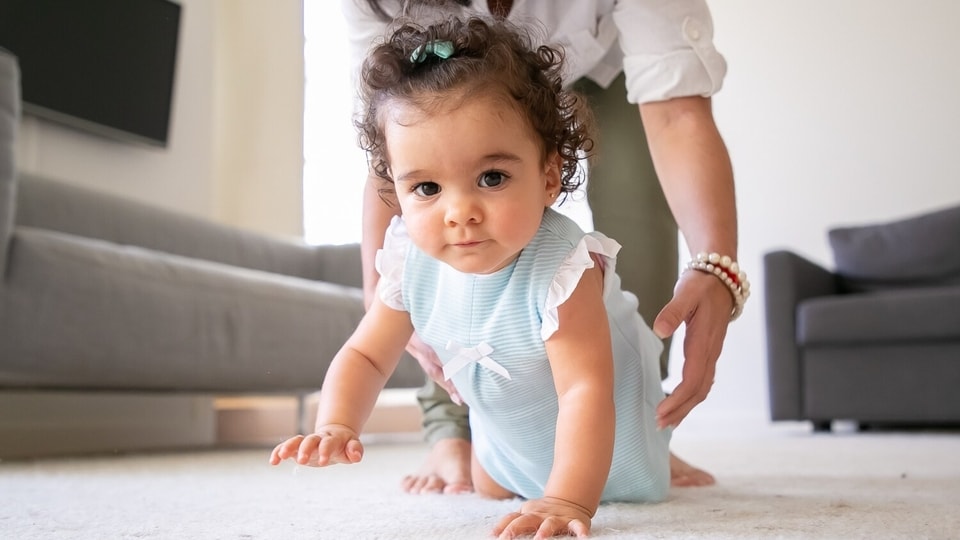
From delayed speech to limited eye contact, know which developmental signs parents should keep an eye on.
A child's development unfolds step by step, encompassing several areas, from language and communication to movement and social interaction. Parents may have several worries, such as whether their child responds to their name or is developing speech as expected.
When certain behavioural patterns appear repeatedly, or some signs linger for a long time, then it becomes critical to observe them closely and seek professional help.
Let's break down the major developmental milestones with the help of a specialist and understand how parents can determine whether their child is on the right developmental track as they approach the age of two.
Dr Ankit Desai, paediatric anaesthetist and founder and director of Children's Anaesthesia Services, shares with HT Lifestyle the main developmental signs parents should observe before their child turns two.
While every child develops at their own pace, a delay in one area may not necessarily signal a developmental concern.
Emphasising this point, the doctor elaborated, “The early years of a child’s life are quite extraordinary. During this time, a child’s brain develops a lot more rapidly than at almost any other stage of life and forms millions of neural connections every second. Yet, during this time, parents usually focus on some obvious milestones like ‘first words’ or 'first steps'; early development is often revealed through subtler behaviours that emerge long before a formal concern is raised.”
7 early signs of developmental signs every parent should know:
The paediatrician shared a brief guide, covering all seven early developmental signs that every parent should be aware of before their child turns two:
1. Limited eye contact or reduced social connection
- What to observe: Child constantly avoids eye contact, rarely smiles, appears disengaged or does not actively seek interaction.
- What it may mean: Reduced social reciprocity may suggest that the child's social communication is developing differently.
- Remember: This behaviour alone may not necessarily mean autism or another developmental condition.
2. Not responding to their name by around 9–12 months
- What to observe: Child repeatedly does not turn or react when their name is called, even in a calm, distraction-free environment. Usually, by the end of the first year, several babies start consistently turning towards familiar voices and reacting when their name is called.
- What it may mean: It may be associated with difficulties involving hearing, attention, communication or social responsiveness.
- Remember: Occasional non-response is normal, especially when a child is absorbed in an activity. Parents should see if it is happening consistently.
3. Using fewer gestures than expected
- What to observe: By 12-18 months, the child rarely points, waves, claps, reaches to be picked up or shows objects to caregivers.
- What it may mean: Limited gestures may indicate a communication delay because children begin communicating non-verbally before they develop speech.
- Remember: Pointing at an object or bringing a toy to share excitement shows joint attention, an important developmental skill.
4. Delayed babbling or speech regression
- What to observe: The child does not babble during infancy, uses few meaningful words by around 18 months or makes limited attempts to imitate speech. Child babbles with ‘ba-ba’ or ‘da-da’ sounds.
- What it may mean: Delayed babbling may point towards language or communication delay.
- Remember: If the child stops babbling, speaking or socially interacting after previously developing these skills, parents should promptly seek medical help.
5. Unusual sensory responses
- What to observe: Child is distressed by everyday sounds or textures, fixates on lights or spinning objects, barely reacts to loud noises or constantly seeks movement. Either under-responsive or over-responsive.
- What it may mean: These behaviours may suggest that the child processes sensory information differently.
- Remember: Sensory preferences are common among children. They become a concern when they are persistent, intense or interfere with everyday life.
6. Limited curiosity or play exploration
- What to observe: A child who rarely explores their surroundings, imitates others, experiments with objects, or participates in interactive and pretend play like feeding a toy, copying household chores.
- What it may mean: Limited curiosity or engagement in play may point towards a developmental difference that could benefit from screening.
- Remember: Play is not simply entertainment; it is the language of brain development.
7. Motor delays or persistent asymmetry
- What to observe: Child has difficulty sitting or crawling, appears unusually stiff or floppy, walks on their toes or consistently favours one side.
- What it may mean: These signs may mean underlying concern involving posture, balance, coordination or motor development.
- Remember: Using one hand much earlier than expected or dragging one side while crawling deserves closer attention.
Early physiotherapy or developmental intervention can significantly improve outcomes when concerns are identified early.
Why does early observation matter?
It is crucial to recognise developmental differences early. But approach with a calm demeanour instead of assuming the worst or instantly attaching a label to the child. The expert also emphasised this and said, “Early identification is not about labelling children; it is about supporting development when the brain is most adaptable.” While children do have different paces of development, some signs that linger for a long time should not be dismissed indefinitely. Dr Desai added, “While patience has its place, persistent concerns deserve professional evaluation.”
In a nutshell, parents should pay attention to recurring, repetitive patterns, instead of assuming the worst over one isolated delay. Dr Desai concluded by reminding parents that they do have the instinct to detect subtle changes: “Parents are often the first to recognise when something feels different, long before others notice.”
So, if a concern persists and your instinct as a parent tells you that something may be different, trust your gut and seek professional guidance.
Note to readers: This article is for informational purposes only and not a substitute for professional medical advice. Always seek the advice of your doctor with any questions about a medical condition.


Catch your daily dose of Fashion, Taylor Swift, Health, Festivals, Travel, Relationship, Recipe and all the other Latest Lifestyle News on Hindustan Times Website and APPs.


