
 E-Paper



Haryana okays panel suggestion on SC subclassification
The council of ministers had on August 8 made a reference to the State Commission for Scheduled Castes headed by former MLA Ravinder Baliyala to study data pertaining to SCs in the state and make recommendations to facilitate subclassification of SCs


The Haryana council of ministers on Saturday accepted the recommendations of the state commission for Scheduled Castes to create subclassification of scheduled castes (SCs) in the state, a step in line with the August 1 Supreme Court Constitution bench judgement that allowed states to create such categorisation.
The council of ministers had on August 8 made a reference to the State Commission for Scheduled Castes headed by former MLA Ravinder Baliyala to study data pertaining to SCs in the state and make recommendations to facilitate subclassification of SCs.
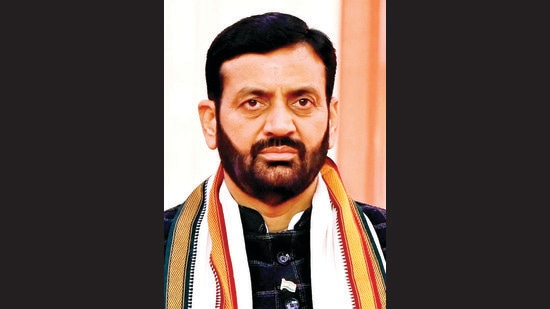
Chief Minister Nayab Singh Saini at a briefing on Saturday said the commission recommended subclassification be done for the purpose of reservation in government jobs into two categories — the deprived scheduled castes (DSC), comprising 36 castes such as Balmikis, Dhanaks, Mazhabi Sikhs, Khatik, and the other scheduled castes (OSC), comprising castes such as Chamar, Jatia Chamar, Rehgar, Raigar, Ramdasi, Ravidasi, Jatav, Mochi, Ramdasia.
By allowing subclassification, the Supreme Court had opened the door for states to identify and provide targeted benefits to the most disadvantaged subgroups within the broader SC/ST categories, provided they base their decisions on empirical evidence and rational criteria.
The commission concluded that the since deprived scheduled castes are not adequately represented in government employment, 50% of the 20% reserved vacancies for SCs will be reserved for them. However, if an eligible candidate is not available from among the DSC, the vacancy will be filled by a candidate from other scheduled castes, and vice versa.
“We have accepted the recommendations of the SC Commission. But since the model code of conduct is in place, it was decided that further steps to undertake subclassification would be taken only after the code of conduct ceases to be in effect,” the chief minister said.
In response to the developments, Congress MP from Ambala said, “This is a move aimed at dividing the scheduled caste community. The British started the policy of divide and rule which has been inherited by the ruling BJP.”
In their order, Chief Justice of India Dhananjaya Y Chandrachud and his apex court colleague Manoj Misra said states “must collect data on the inadequacy of representation [of a particular caste] in the services of the state”.
In his separate order, Justice BR Gavai held the state will have to justify that the group for which more beneficial treatment is provided is inadequately represented as compared to the other castes in the said list.
The apex court judgement had held that a November 9, 1994 Haryana government notification by which the scheduled castes in the state were classified in two categories – block A and B for the purpose of reservation is also valid.
The notification creating a subclassification among scheduled castes was quashed by the Punjab and Haryana high court on July 6, 2006. The special leave petitions challenging the 2006 HC judgment before the Supreme Court were tagged with the appeals involving the challenge to the Punjab Act.


