
 E-Paper



Haryana Police adds 27 dogs to squad
According to Haryana director general of police (DGP) Shatrujeet Kapur, Haryana Police use three types of dogs, tracker dogs, explosive detection dogs, narcotics dogs, categorised based on their specific skills.


Moving forward in capacity building and crime control, Haryana Police have increased its dog squad strength from 36 to 63 trained dogs, each equipped with advanced training to aid in solving crimes and catching criminals.
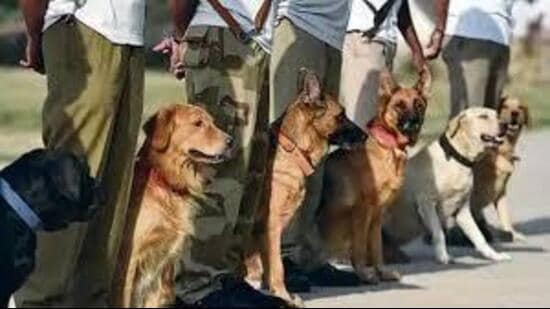
According to Haryana director general of police (DGP) Shatrujeet Kapur, Haryana Police use three types of dogs, tracker dogs, explosive detection dogs, narcotics dogs, categorised based on their specific skills.
The tracker dogs assist investigating officers in cases like thefts and murders and they are mainly Labrador breeds and are managed by the state crime branch. The explosive detection dogs are Labradors and used for VIP security and bomb detection at suspicious locations. These Labradors are managed by the CID, while narcotics dogs are specialised in detecting drugs in various locations like buildings, vehicles, and open spaces, these dogs play a crucial role in narcotics control.
Currently, Haryana Police have a total of 63 dogs, with five deployed in the State Narcotics Control Bureau and 58 across all districts. Each dog is handled by a dedicated dog handler and assistant dog handler. The squad includes three main breeds: Belgian Shepherds, German Shepherds and Labradors, all of which receive high-quality care and maintenance.
The DGP said that narcotics dogs are acquired from specialised firms when they are three to six months old and receive a rigorous six-month narcotics training course before deployment.
“After about 10 to 11 years of service, these dogs retire, at which point handlers and assistant handlers are given the first option to adopt them. If declined, the dogs are placed with NGOs or organisations,” the DGP said.


