
 E-Paper



Yamunanagar thermal plant: Haryana contests Union government’s argument on shifting power unit out of state
Cost benefit analysis taking into account coal transportation cost, free power to host state, land acquisition costs, raw water availability outweigh Centre’s suggestion


: Backing its stand to set up the 800 megawatt (MW) supercritical thermal power expansion unit at Yamunanagar with well-founded empirical justification, the Haryana Power Utilities has told the central electricity authority (CEA) that state-based power plants are more beneficial compared to pit head power plants considering every aspect of cost to the consumer.
The state power utilities were responding to an informal suggestion made by the Prime Minister to the Union power ministry to explore the feasibility of setting up the planned 800 MW unit at a coal pithead outside Haryana. A pithead power plant being located in extreme proximity to a coal mine is expected to bring down the energy generation cost as its location reduces the cost of coal transportation.
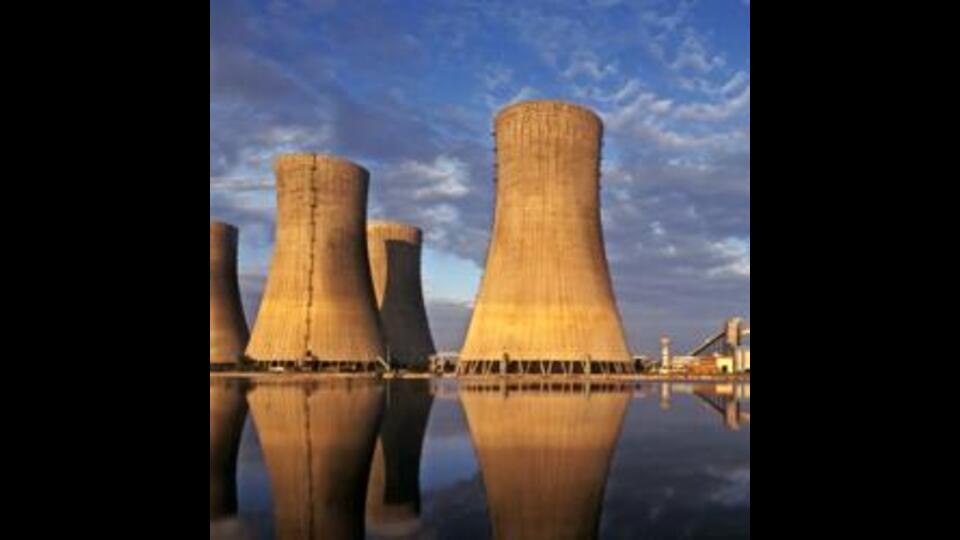
The Haryana Power Generation Corporation Ltd (HPGCL) had on January 16 floated a global tender for setting up the 800 MW unit as an extension of the two 300 MW units at Deenbandhu Chhotu Ram Thermal Power Plant (DCRTPP), Yamunanagar on engineering procurement and construction (EPC) mode.
Techno-commercial bids for the expansion unit will be opened on August 10 and the work is likely to be awarded by December this year.
In a June 27 communication to the CEA, HPGCL said that the total landed cost of power from a Haryana based power unit would be ₹3.23 per unit as compared to ₹3.38 per unit from a pithead-based power unit outside the state. The cost analysis done by the generator taking into account transportation of coal cost, point of connection charges impact, energy charge rates and return on equity estimated savings of about ₹185 crore per year.
The CEA is mandated only to advise the Central and the state governments on ways to improve generation, transmission, distribution, trading and utilisation of energy, conduct studies pertaining to cost, efficiency, competitiveness and conduct investigations for the purpose of generation, transmission and distribution of power.
“The state government in fact does not need approval of either union power ministry or CEA to set up the 800 MW thermal unit at Yamuna Nagar. The issue is as good as closed after our June 27 communique. The CEA or union power ministry would have to come up with an on the paper argument based on data and cost analysis to counter our rationale,’’ said an official.
During a June 22 meeting convened by Union power minister, RK Singh, with power officials of several states, including Haryana, the state government contested the contention of having a thermal power unit at a coal pithead.
“Host states like Chhattisgarh are pressing for 5% to 7.5% power on energy charge rate (ECR) basis through implementation agreement. Odisha is pressing for 14%/12% as per its August 8, 2008 policy. Therefore, the opportunity cost of non-availing of that much power from the pit head plant has been loaded,” the communication said.
Officials said that the savings expected from the coal transportation cost would get offset by the free power they would have to give to the pithead state on ECR basis.
Will save money on land, rail link, water at Yamunanagar
The communique to CEA said that Haryana would also save substantially by setting up a brownfield expansion unit at Yamunanagar on account of land availability, water, railway infrastructure, raw water reservoir, raw water intake channel and ash dyke for the new plant.
Moreover, there are no rehabilitation and resettlement issues related to land acquisition at Yamunanagar, an otherwise big challenge in power sector, the communique said.
Study also supports in house power unit
The state government also told the CEA that a study on network stability and voltage stabilisation by Central Power Research Institute (CPRI), an autonomous entity set under the aegis Union power ministry, stated that the state generators are cheaper as compared to some of the interstate generators on landed cost basis.
The CPRI study commissioned by Haryana power utilities said that the running of state generators was advisable to have more benefit in reducing power procurement cost and improve system reliability and optimising point of connection charges to reduce burden on consumer for future.
Officials said that the existing contracted power capacity of Haryana was 13,524 MW with the expected power demand during summer peak season being 13463 MW.
“Presently, 8,282 MW (61.24%) is being arranged from outside the state, while 5,242 MW (38.76 %) is being managed through internal generation. While the expected demand in 2030 will be 19,000 MW, the internal generation by that time will reduce to 4,532 MW on account of phasing out of 710 MW entire capacity of Panipat thermal power station.This will further result in an increased ratio of power import from outside the state and necessitates internal capacity addition, as otherwise it may create state network stability issues, they said.


