
 E-Paper



Himachal high court dismisses EIH plea related to Hotel Wildflower Hall
The court found that in the instant case, the appellant failed to make the hotel fully commercially operational in March 2002, which resulted in the automatic reversion of the property to the state government


The Himachal Pradesh high court dismissed a plea filed by East India Hotels Ltd (EIH) in a property dispute related to the ‘Hotel Wildflower Hall in Chharabra, near Shimla.
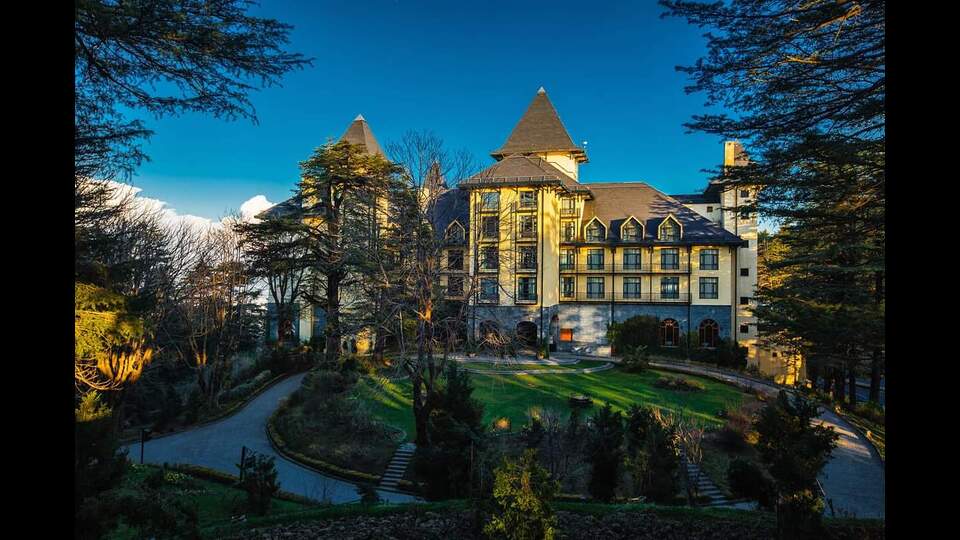
In the orders passed on Thursday, a Division Bench comprising Justice Tarlok Singh Chauhan and Justice Chander Bhusan Barowalia found no merit in this appeal and accordingly dismissed it.
The crux of the matter is that the Government of Himachal Pradesh was the owner of the ‘Hotel Wildflower Hall’ being run by the State Tourism Development Corporation.
In 1993, the hotel was gutted in fire, and the government started exploring possibilities to put it back into operation and invited global tenders from private operators to run a five-star hotel at the site.
The government partnered with the EIH, and both parties agreed to incorporate a Joint Venture Company by the name of “Mashobra Resorts Ltd. (”MRL”) to set up the Star Deluxe Hotel at Wildflower Hall.
The state government was entitled to terminate the Joint Venture Agreement (JVA) by written notice in the event the hotel was not made fully commercially operational within four years from the date of handing over of possession of the land.
According to JVA, the state government may at its discretion choose not to terminate the agreement even after the expiry of four years and in that case, the second party pays the penalty of ₹2 crore per annum. After the expiry of six years, the JVA would automatically terminate if the hotel was not made functional.
As decided, the hotel was not operational by the deadline of May 3, 2005, the government didn’t terminate the JVA, but, EIH failed to pay the penalty.
Subsequently, MRL applied for registration of 85 rooms of the hotel to the Tourism Department on October 31, 2000, and during the inspection, it was found that only 28 rooms were fully functional, a registration certificate of which was granted to MRL.
Since there was a breach of material terms of the JVA by the appellant the state government issued an order dated March 6, 2002, terminating the JVA with EIH inter-alia on the ground that the latter had failed to make the hotel at Wildflower Hall commercially operational even after lapse of six years.
EIH filed a petition before the Company Law Board against the action which was challenged by the government by way of a review petition before the high court.
On December 17, 2003, the high court, through a consent order, referred the dispute to a sole arbitrator. The arbitrator found that the government was legally entitled to terminate the JVA.
EIH challenged the award dated before the High Court in 2005, and the single judge dismissed EIH’s appeal in 2016, after which the instant appeal was made.
The appellants contended that the JV Agreement was executed only between EIH and the state and as such, it could not bind MRL, which had not even been incorporated. It was further submitted that there was no legal requirement for a completion certificate under the relevant HP local laws. The appellants also argued that there were various delays on the part of the state government which contributed to the delay in the completion of the project.
The court found that in the instant case, the appellant failed to make the hotel fully commercially operational in March 2002, which resulted in the automatic reversion of the property to the state government.


