
 E-Paper



Himachal Pradesh government begins paddy procurement with increased MSP
A total of 13 procurement centres have been established across the state to facilitate the purchase of paddy. The entire procurement process will be carried out through a grading system


The Himachal Pradesh government on Tuesday kicked off its paddy procurement operations with a 7% hike in the minimum support price (MSP), offering a much-needed relief to farmers in the region.
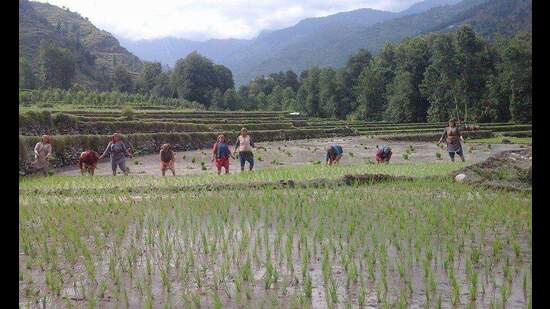
A total of 13 procurement centres have been established across the state to facilitate the purchase of paddy. The entire procurement process will be carried out through a grading system. The MSP for A grade paddy has been fixed at ₹2,203 per quintal, while normal paddy will be procured at ₹2,183 per quintal.
In a substantial boost to farmers, the price of paddy has seen a surge, rising from ₹2,040 to ₹2,183-2,203 per quintal.
The State Civil Supplies Corporation has also introduced an online portal for procurement, simplifying the registration process for farmers. So far, the portal has seen 1,154 registrations from farmers, with a majority of them hailing from Sirmaur district. Solan district comes at the second place. Kangra district has 61 registrations and Una has two.
The Food Corporation of India (FCI) warehouse in Kala Amb will not be involved in this year’s procurement due to the farmers not delivering their crops at the warehouse for the past few years. Instead of this, separate markets for paddy and ragi crops have been set up in APMC Paonta Sahib and Dhaula Kuan in Sirmaur district.
This year marks a significant shift as the State Civil Supplies Corporation is leading the procurement efforts, whereas FCI had previously been responsible for paddy procurement in the state. The procurement process will operate through a token system.
A substantial target of 6,250 metric Tonnes of paddy has been set for procurement in Sirmaur district, reflecting the scale and importance of this operation. Additionally, ragi crop will also be procured at the designated procurement centers.
In Chamba district, farmers are gearing up to harvest rajma (kidney beans), kulthi (horse beans), and maash (black skinned lentil) and other pulses.
These pulses are cultivated in various other panchayats in Chamba district, including Holi, Kuleth, Diola, Lamu, Kuthed, Kuvaransi, Chanuta, and Nyagran. They form a crucial source of income for the region’s farmers, and traders from outside districts are already expressing interest in purchasing these pulses, raising hopes for favorable prices.


