
 E-Paper



Private schools to turn mentors for government counterparts in Himachal
Himachal’s private schools will take on the role of mentoring their government counterparts in a bid to help teachers and students gain confidence and understand the strength of the private institutions


Continuing its push to improve the standard of education across the state, Himachal Pradesh government announced its decision to rope in leading private and convent schools to augment the same
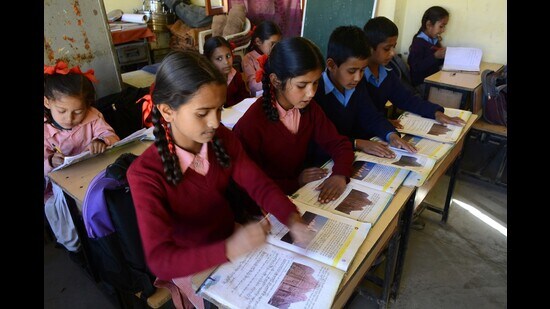
The private schools will take on the role of mentoring their government counterparts in a bid to help teachers and students gain confidence and understand the strength of the private institutions.
Speaking of the same, state education minister Rohit Thakur said, “Initially the government will take up the project on a pilot basis, we would study the results before implementing it for all the schools.”
The government has also approached some of the state’s leading schools including prestigious The Lawrence School Sanawar, founded in 1847, said to be the oldest co-educational residential schools in the world and Bishop Cotton School, founded in 1859 by Bishop George Edward Lynch Cotton in Shimla, the oldest boarding school for boys in Asia. The other schools include St Edwards, Convent of Jesus and Mary Auckland House, and Loreto Convent Tara Hall, all located in Shimla as well as Auckland House School, Pine Grove and Sacred Heart in Dharamshala.
“It’s not only that government school staff and students will learn from the private ones, it will be an altogether different experience for the private schools also. We have thought of something outside the box to increase our education standards,” Thakur said.
Government schools, which have a better student-teacher ratio in places, will share campus environment management, cleanliness and teaching methods with these schools.
Sarvshiksha Abiuyaan director Rajesh Sharma said exchange programmes will also run on this pilot basis, noting, “With this, the children of government schools will also get an idea of today’s competitive environment. Another good thing will be that the boarding school will be able to understand the needs of the children of the rural environment.” Sharma said the government will form the clusters of government schools to be mentored by private institutions.
Currently, Himahcal a total of 18,079 schools are across both the government and private sectors. Of these, 15,393 are government schools, while 2,619 are private schools. Among other schools, 47 are Kendriya Vidyalayas or Navodaya Vidyalayas, while 20 fall under other categories.
Notably, the state government has been shutting down educational institutions, including schools and colleges, with very low enrollment. The education department has identified 286 primary and high schools across the states running with zero student enrollments.
Thakur said the staff of the schools being closed will be shifted to the other schools, improving the efficiency. He said the education standards went on a downward spiral during the five-year term of the Bharatiya Janata Party government and the same reflected in the Annual Status of Education Report and Performance Grading Index.
Notably, the Jai Ram Thakur-led BJP government had set up 920 institutions and offices, of which more than 320 were schools.
“No budgetary provisions or recruitment of staff was done for these schools,” the education minister alleged, adding that still, the Congress government has not done away with all of them and instead set a criteria to continue running these institutions.
Primary schools with a minimum of 10 enrollments will not be shut down. Similarly, the criterion for middle school is 15 student enrollments, 20 for high schools and 25 for senior secondary schools.
As far as technical education is concerned the previous government had opened 18 institutions, of which 13 will continue running and five non-functional ones will be closed down.


