
 E-Paper



Himachal: Remote Kangra village to get gift of light this Diwali
The Himurja, in collaboration with KL Solar Company, will install 168 solar panels in the secluded twin hamlets of Ghraan and Phaal that constitute the Bara Bhangal village in Kangra of Himachal


Hidden away deep in the majestic Dhauladhar range of the Himalayas, the remote Bara Bhangal village of Kangra district would light up with solar power this Diwali after years of darkness.
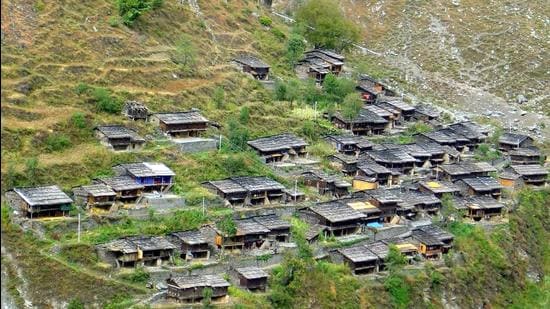
The Himurja, in collaboration with KL Solar Company, will install 168 solar panels in the secluded twin hamlets of Ghraan and Phaal that constitute the Bara Bhangal.
Residents of Bara Banghal, a nearly inaccessible valley, were living in the dark and struggling to get the electricity for long, submitting representations to the successive governments regarding their demand.
In absence of electricity, they used ‘jugnus’ (wooden sticks put on fire) or kerosene lamps to work at night.
The only 40KW hydropower project commissioned in 2004 was lying defunct for over a decade for want of repair. Even as the state electricity board was exploring the possibilities to restore the power project, the government found solar power system the best option to light up the village.
Kangra deputy commissioner Nipun Jindal said the solar panels were airlifted to the village on Monday while investors have already been transported on mules.
“This is an off-grid solar system with each panel having a capacity of 250KW with a battery backup,” said Jindal.
The battery comes with a five-year warranty. The power produced by one panel would be enough to light up four tubes and a TV, besides phones can also be charged.
About three months ago, the DC said, the government had announced to set up solar power system in the village. This Independence Day, Baijanth subdivisional magistrate Saleem Azam had also visited the village and promised to install the system before winters. Since then, the district authorities were making efforts to set up the solar power system.
Bara Banghal, located at 2,575 metre above the mean sea level, is so isolated that one has to undertake a 70km arduous trek from Bir village crossing over 4,665m high Thamsar Pass to reach the area.
It takes two to three days to reach Bara Banghal on foot. Two more treks, one from Holi-Nayagran in Chamba and other one from Manali, are equally long and gruelling. The Holi-Nayagran trek that runs parallel to the Ravi is the most dangerous. The trek from Manali involves an arduous hike over 4,800m high Kalihani pass.
Bara Bhangal has a population of about 700, most of whom are shepherds who migrate to Bir village in winters. However, elderly residents who cannot trek across the mountains stay back in the village during winters. The narrow valley also serves as grazing pastures for sheep of Gaddi tribe of Chamba and Kangra.
The district administration stocks food grains for these villages in month of September before snow blocks the passages.
The village was in news in 2018 after villagers ran out of food stock after the mule trek, the only supply route, to the village got destroyed by multiple landslides.


