
 E-Paper



Himachal’s novel initiative: A gender budget
Is the dissection of the annual budget to find out gender-based outcomes of government budgeting; government document states it is the process of converting gender commitment into budgetary commitments.


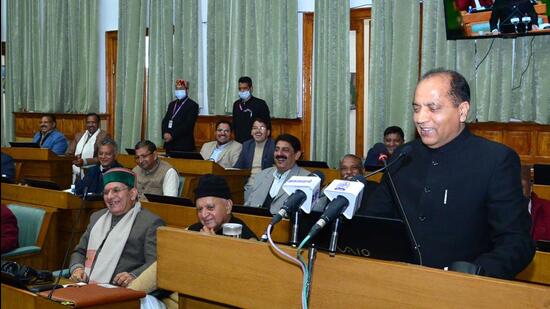
To address gender-sensitive vulnerabilities and achieving gender equality, the Himachal Pradesh government, for the first time, presented a “gender budget”.
In absolute numbers, ₹2,366.48 crore has been allocated to women-oriented schemes in the gender budget for the financial year 2022-23, which is 18.32% of the total development budget of ₹12,920 crore.
“With a view to capturing the actual status of participation of women and benefits provided to women through departmental schemes, the budget statements of gender responsive budgeting have been divided into two sections i.e. Financial & Physical,” it states.
Schemes targeting only women beneficiaries or 100% women-oriented schemes have been placed in Category-1 and schemes with less than 100% women beneficiaries are in Category-2.
The financial statements aim at undertaking expenditure analysis of women welfare-oriented schemes whereas physical progress statements relate financial allocations with physical outputs.
Out of the total outlay for women-oriented schemes, ₹319.03 crore (13.48%) is allocated for 100% women-oriented schemes and ₹2,047.44 crore (86.52%) is for women-oriented schemes having beneficiaries less than 100%.
The gender budget contains information about 28 schemes of nine departments, which are 100% women-specific and 69 other schemes of 14 departments which have less than 100% women-beneficiaries also form a part of it.
Women are the prime stakeholders of gender budgeting while the department of planning is mainly responsible for financial allocations based on discussions with the stakeholders.
Women & child development department is the nodal department and is responsible for promoting gender equality.
Departments like health, education, empowerment of SCs, OBCs, minorities & specially abled (ESOMSA), labour & employment etc., which mainly implement gender-sensitive schemes, are among other stakeholders.
Gender budgeting is the dissection of the annual budget to find out gender-based outcomes and results of the government budgeting and is the process of converting gender commitment into budgetary commitments, states the document.


