
 E-Paper



In multi-corner contest, BJP pins hope on consolidation of Punjab Hindu votes
To date, the Hindu vote bank, which has a sizeable numbers in as many as 34 assembly segments in Punjab, has remained a silent deciding factor in the state, especially in the post-terrorism election era.

 Prefer HTon Google


Amid the political churn in Punjab, which is seeing a four-cornered contest for the first time, all eyes are on the Hindu vote bank ahead of the upcoming Parliamentary polls. Though Sikhs and Dalits have a bigger vote share in the state, Hindus are considered the most strategic voters.
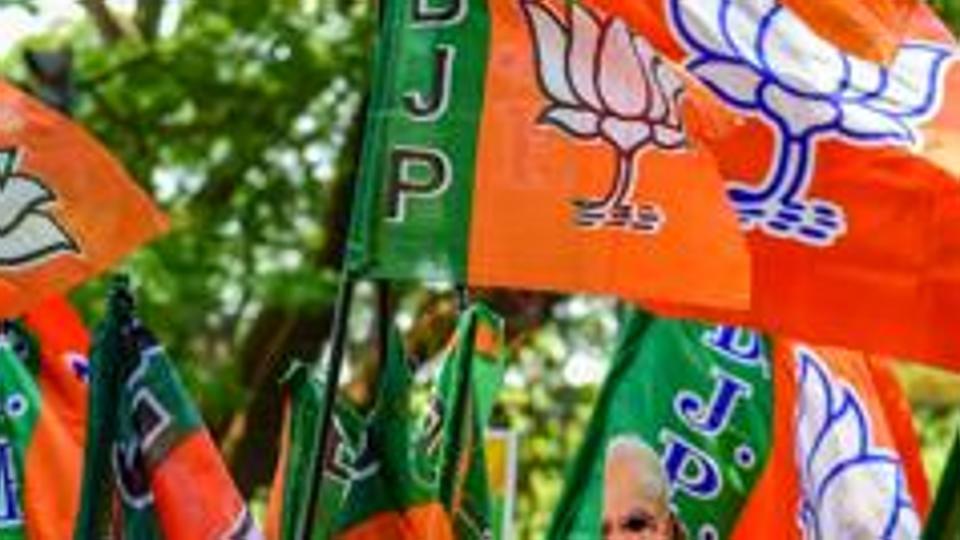
Riding on the Ram Mandir wave, the BJP, which is going solo for the first time since 1996 after its talks to re-stitch an alliance with Shiromani Akali Dal (SAD) failed, plans to consolidate this strategy voter base. To date, the Hindu vote bank, which has a sizeable numbers in as many as 34 assembly segments, has remained a silent deciding factor in the state, especially in the post-terrorism election era.
Hindus, who as per the 2011 census are 38.49 % of the population, have traditionally sided with the Congress in Punjab but have on a few occasions switched loyalties towards BJP, especially after the party allied with Akali Dal, giving both the former allies a bump in the seat share which eventually led to the formation of three SAD-BJP governments in the state. Similarly, the Congress has formed two governments led by chief minister Capt Amarinder Singh in which maximum urban seats were won by the party. In the 2022 assembly polls, AAP did phenomenally well in Hindu-dominated urban areas.
With BJP eyeing to become a serious fourth player in Punjab politics, it is focusing on securing a majority of Hindu-dominated areas by using ‘Modi Magic’ and ‘Ram Temple’.
Political expert Prof Jagrup Singh Sekhon, however, believes that there is a remote chance of polarisation of Hindu voters in the state.
“Punjab’s Hindus have a different psychology as compared to those in the Hindi heartland. Moreover, Hindus in Punjab are mainly in business which never supports any sort of fundamentalism,” claimed Prof Sekhon who is the former head of the department of political science department of Guru Nanak Dev University, Amritsar.
However, the BJP is sensing a chance and has decided to field its star campaigners for rallies starting from May 23 when the PM will address a rally in Patiala. He will address two more rallies the next day.
BJP has fielded a maximum of three candidates who are upper caste Hindus in the form of Sangrur candidate Arvind Khanna, Dinesh Babbu, a Rajput in Gurdaspur and Subhash Sharma, a Brahmin, from Anandpur Sahib. SAD, a panthic party, has fielded two upper-caste Hindu candidates — Anil Joshi from Amritsar and NK Sharma from Patiala. Both are Brahmin.
The Congress also has two candidates who belong to the upper Hindu community — Dr Dharamvira Gandhi from Patiala and Vijender Singla from Anandpur Sahib. The ruling AAP has only one upper-caste Hindu face in the form of Ashok Prashar Pappi from Ludhiana.
“I find no major reason to say that Hindus will vote for the BJP en-masse. Temple issue may have some resonance with the voters but converting that into support to win the seats is hard for the BJP in Punjab,” said Prof Ashutosh Kumar, former head of the department of political science at Panjab University Chandigarh.
The vote share of the BJP was 5.4% of the 23 seats it contested in the 2017 assembly elections in alliance with the SAD. It rose to 6.6% when it fought from 73 seats in the 2022 assembly elections alone. However, in the 2019 parliamentary elections, the party had secured a 9.63% vote share.
Many in BJP expect the vote share to shoot up this time, with a party leader, pleading anonymity, saying that the saffron party is expecting it to be anywhere between 17% and 20%. “Many surveys have also predicted the same,” he added.
However, political experts differ and cite the example of the 2014 LS polls when veteran BJP leader Arun Jaitley lost from Amritsar.
“Ram Temple, Article 370 issues or any other national narrative won’t find support in Punjab. Biggest example is 2014 Amritsar Lok Sabha polls when despite Modi magic and Hindutva agenda at its peak, veteran BJP leader late Arun Jaitley lost,” asserts Prof Parmod Kumar, chairperson of the Institute of Development and Communication.
Apart from this, the party has also made a steady outreach to the Sikh community. The BJP has fielded former ambassador to the US Taranjit Singh Sandhu from Amritsar, sitting MP Preneet Kaur, who joined the BJP recently, from Patiala, former IAS officer Parampal Kaur from Bathinda, sitting MP Ravneet Singh Bittu from Ludhiana, Manjeet Singh Manna from Khadoor Sahib and Rana Gurmeet Sodhi from Ferozepur. Barring Sodhi, all are Jat Sikhs. How the BJP performs in Punjab in the Lok Sabha polls will reveal if the party can emerge as a force in its own right or will remain a minor player.
Key factors
According to 2011 Census, 38.49 % of the population in the state are Hindus.
Out of this, the Hindu SCs and OBCs comprise 11% and 8.3%, respectively
Jalandhar, Gurdaspur, Hoshiarpur, Ludhiana, Amritsar and Anandpur Sahib have more than 40% Hindu voters
Overall, there are 34 assembly seats where the Hindu population dominates the other vote banks


