
 E-Paper



Last minute training push as Chandigarh police to double as crime scene videographers
As per the new laws, it is mandatory to videograph the crime scenes of all offences which attract a punishment of more than seven years – a move that will prove to be a gamechanger in police investigations as it will eliminate the possibility of evidence tampering and make the courtroom trials much easier


With the new criminal laws set to come into force from July 1, Chandigarh cops are gearing up to embrace a new way of functioning, including registration of online complaints, issuing of summons through electronic modes and most importantly, videography of all major crime scenes.
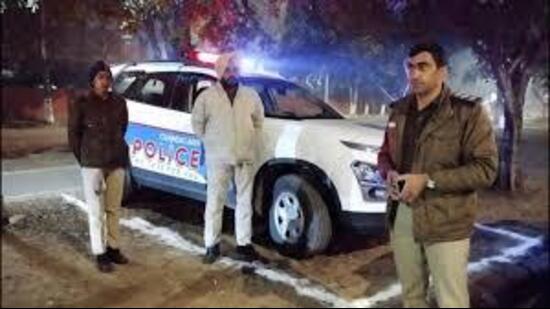
As per the new laws, it is mandatory to videograph the crime scenes of all offences which attract a punishment of more than seven years – a move that will prove to be a gamechanger in police investigations as it will eliminate the possibility of evidence tampering and make the courtroom trials much easier.
To facilitate videography, Chandigarh Police have procured 170 tablets on which the e-Sakshya application for evidence collection is to be operated.
On Wednesday, cops were giving practical training for using the app at crime scenes, at the Recruit Training Centre in Police Lines, Sector 26.
While the day began with the installation of the mobile application on police devices, many officers faced teething troubles as most of them are novices when it comes to videography of crime scenes. This inexperience poses a significant problem, as one of the major changes in the new criminal laws is the mandatory recording of crime scenes, including searches and seizures, through audio-video electronic means, preferably mobile phones. All footage and photographs captured on the e-Sakshya application by police officers will be submitted as evidence in court. With no room for human error, any mistakes could be exploited by the defense.
Despite detailed guidelines, a significant hurdle remains: many policemen in the city are not tech-savvy. Although training sessions are being conducted to familiarise officers with the use of cameras at crime scenes, many officers feel it is insufficient.
“We have to be very careful while shooting videos of crime scenes. Even though the application allows for retakes, once a video is submitted, it cannot be altered. This can lead to errors in the investigation, potentially weakening the case,” explained a police officer at the training center.
For now, some officers will use their smartphones to record crime scenes. The union territory has been designated as the model state for the implementation of these laws by the center.
Detailed SOPs for videography have been provided by the Bureau of Police Research and Development (BPR&D), but many officers have yet to read them. Despite the comprehensive guidelines, there remains a significant gap in actual implementation on the ground. No mock trials on shooting crime scenes have been conducted so far, raising concerns about the effectiveness and accuracy of crime scene documentation.
Under the new guidelines, forensic experts are mandated to visit crime scenes to collect evidence in all cases where the offense attracts a punishment of seven or more years. The process must be video recorded.
A senior police official told HT that although the Central Forensic Science Laboratory (CFSL) has prepared five teams for crime scene investigations, the videography aspect remains unclear.
“There are many hurdles in ground-level implementation. The IO will record the crime scene, and statements of witnesses will also be recorded. We also need to figure out how to mask the identities of rape victims in videos before recording their statement. Any mistake can hamper the case in court and strengthen the defense. When a new system is introduced after so many years, officers are bound to make mistakes,” said a police officer.
Police also indicate several challenges in ground-level implementation. For instance, recording a day-long seizure process, such as those conducted by the Central Bureau of Investigation (CBI), will be tedious. The mobile application allows only four-minute video uploads, requiring multiple videos of the search and seizure to be uploaded.
The video recording process begins with officers starting the recording before entering the premises, including a clear introduction with the date, time, location, case details, and warrant information.
Under these new SOPs, police officers must meticulously capture a 360-degree view of the crime scene, taking a full set of photographs including aerial, long-range, mid-range, and close-up shots. Officers must ensure proper lighting conditions, record continuously without breaks, and maintain strict silence while filming to avoid any potential contamination of audio evidence.
As the deadline approaches, Chandigarh Police face the daunting task of adapting to these new responsibilities, hoping that their efforts will lead to more accurate and reliable crime scene documentation.
Box:
Mandatory videography of heinous crime scenes
As per the new criminal laws, videography is mandatory for all crimes scenes where the offense attracts a punishment of seven or more years. As part of this, even the statements of witnesses will be recorded.
Benefits:
Ease of trial, prevention of delays Videos will be geotagged and time-stamped Hash value of every value of every photo and video will be preserved to prevent evidence tampering Preventing of contradictory witness testimonies Transparency in search and seizure proceedings Digital photographs/ video cannot be viewed with any device that would enable editing of the digital images
Challenges Lack of proficiency in using cameras and mobile devices for videography. Errors in recording or documenting crime scenes could weaken court cases. Limited opportunity for retakes once videos are submitted, leading to potential mistakes. Lack of mock trials or practical simulations for recording crime scenes. Coordination challenges between forensic teams and investigating officers.


