
 E-Paper



Ludhiana chokes despite drop in farm fires
The surge in pollution level has resulted in a significant rise in respiratory and ENT patients across hospitals in Ludhiana

 Prefer HTon Google


Despite a recent decline in stubble burning cases, the district continues to battle hazardous air quality, with the air quality index (AQI) soaring past 300 over the past five days, pushing the city into the “very poor” zone.
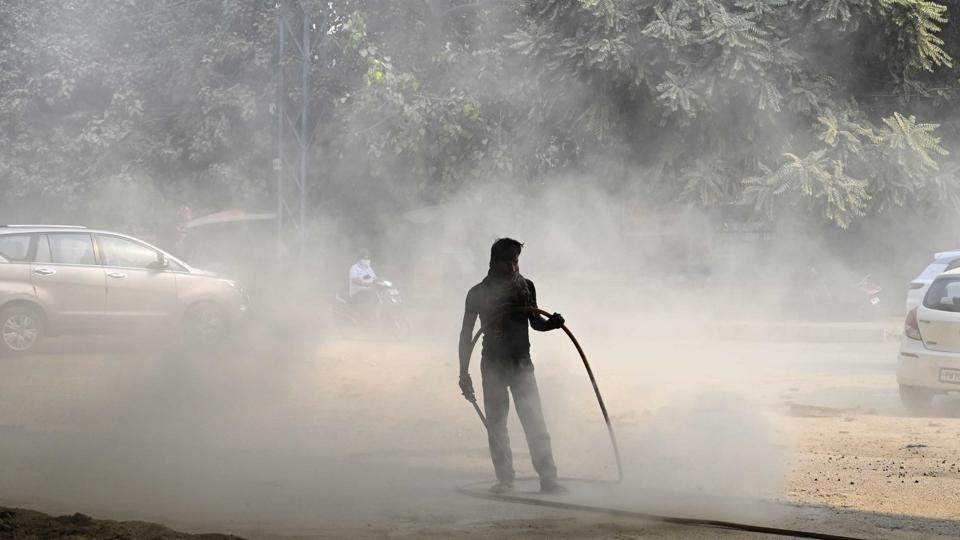
The surge in pollution level has resulted in a significant rise in respiratory and ENT patients across hospitals in the district.
Despite the limited occurrence of stubble burning in the region in recent days, the air quality has been consistently high. On November 26, with only one reported case of stubble burning, the AQI was 311. Similarly, on November 25, even in the absence of stubble burning, the AQI remained at 311.
On November 24, the occurrence of six stubble burning cases corresponded to an AQI of 317. The trend continued with four cases on November 23 resulting in an AQI of 338, and on November 22, 17 cases contributing to an AQI of 361.
Respiratory issues return
Patients in Ludhiana are reporting prolonged cough, fever, respiratory ailments, aggravated allergies, and viral infections. While pollution remains a major contributor to these ailments, the sudden change in temperature has also played a significant role.
Dr Anil Kumar Kashyap, a professor of pulmonary medicine at Dayanand Medical College and Hospital, with 20 years of experience as a respiratory expert, expressed concern over the situation. He said, “In the OPD, we have witnessed a surge of around 30 percent in patients, specifically in the last two weeks. Besides patients with preexisting conditions like COPD and asthma, individuals with no prior signs of respiratory illnesses are now presenting with persistent prolonged cough, days-long fever with no exact infection underlying, mainly due to pollution coupled with weather change.”
“Additionally, to manage symptoms, strong doses are prescribed, as normal medicines are proving inefficient. Non asthmatic patients even sometimes may need inhalers to alleviate symptoms,” the expert added.
Ear, nose, and throat specialists are warning against the long-term impact of these pollution-triggered symptoms. They state that what starts as a nasal allergy or sore throat can develop into bronchitis allergy, leading to serious ailments like COPD, asthma, and other respiratory illnesses. Experts also caution against the indiscriminate use of air purifiers.
Dr Navneet Kumar, head of the ENT department at Christian Medical College, emphasised, “People who use air purifiers should be extra cautious, as it purifies air in a closed environment where the AQI is between 20-50. However, when a person moves out from that closed environment, exposing themselves to the air with a quality index 10 times higher, their airways may react adversely, leading to health ailments.”
Residents of the district expressed dissatisfaction with the government’s response to the rising pollution levels. They point out the lack of effective plans and a helpline where complaints can be registered or solutions sought.
Jatinder Sandhu, a resident of Sarabha Nagar, stated, “We go on a morning walk to stay fit, but people burn dry leaves in the park, garbage collectors set heaps on fire, farmers burn stubble. Everything collectively is affecting our health, and the government is doing nothing about it.”
“It is high time they come up with a dedicated policy before this district turns into another Delhi in terms of AQI. They can at least create a helpline where common residents can file complaints and contribute to curb pollution,” he added.
Acknowledging the issue, Punjab Pollution Control Board (PPCB) officials mentioned that weather, stubble burning and vehicular emissions have contributed to the deteriorating air quality.
PPCB chief environmental engineer Pardeep Gupta said, “When it comes to deteriorating AQI, many factors contribute, such as stubble burning, vehicular emissions, industrial emissions, construction, and more. There are different stakeholders who can check on it, including the municipal corporation, transport department, district administration, and more. Weather conditions, mostly dry and with no wind for the last two weeks, also contribute as pollutants do not get dispersed, aggravating the air quality index.”


