
 E-Paper



Ludhiana: 2 years on, industrial discharge continues to poison Buddha Nullah
In October last year, the MC commissioner had issued directions to dyeing unit owners, asking them to stop dumping treated or untreated waste into sewer lines


Even after two years of receiving a list of nearly 40 dyeing units illegally discharging industrial waste into the municipal sewer system, the Ludhiana municipal corporation (MC) has failed to take action against the violators. The Punjab Pollution Control Board (PPCB) has identified and reported these units, but no concrete step has been taken by the civic body to stop the pollution.
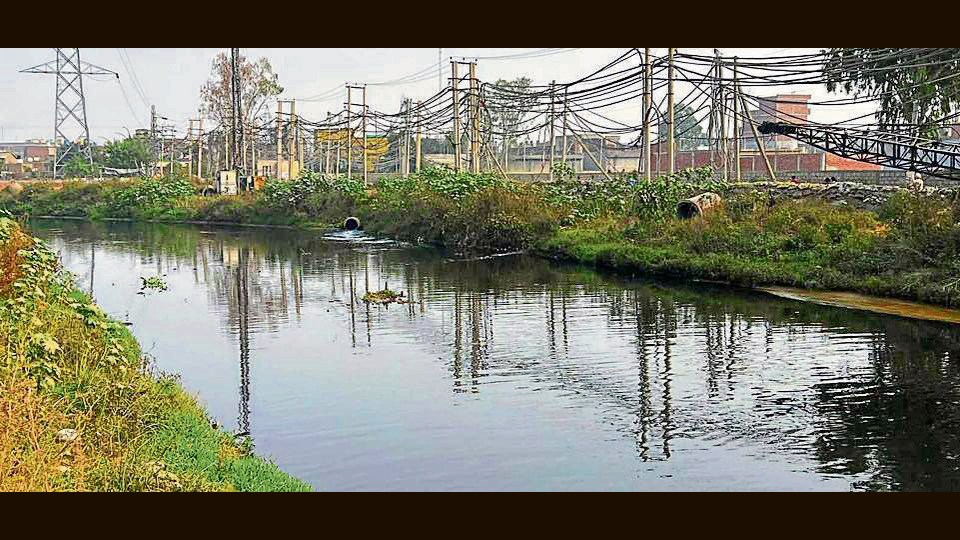
In October last year, the MC commissioner had issued directions to dyeing unit owners, asking them to stop dumping treated or untreated waste into sewer lines. The order followed PPCB’s warning that this practice violates not only environmental norms but also the guidelines of the Supreme Court and the National Green Tribunal (NGT) under the “Polluter Pays Principle”.
Around fifteen months ago, the PPCB also held hearings with several factory owners and instructed them to adopt zero liquid discharge (ZLD) technology or shift to a Common Effluent Treatment Plant (CETP). Despite this, many units continue to operate without any proper waste disposal system.
The issue resurfaced after workers at sewerage treatment plants (STPs) complained of receiving coloured water, which eventually flows into the already polluted Buddha Nullah. PPCB had issued notices under Section 33-4 of the Water (Prevention and Control of Pollution) Act and submitted a list of major violators — including 12 large dyeing units — to the Municipal Corporation for further action, such as disconnecting their sewer connections.
However, no such disconnections have taken place so far.
A senior PPCB official said, “We did our part by identifying violators and forwarding the list. Some units complied, others shifted locations or adopted ZLD methods, but several continue to discharge waste. Now it’s MC’s responsibility to act.”
Environmental activist Rupinder Kaur questioned the delay, saying, “While the MC blames industrial discharge for STP inefficiency, it has not disconnected the polluting units. This raises doubts over their seriousness.”
Residents from areas like Tajpur Road and Chandigarh Road have also raised concerns. “Sewer water mixed with coloured industrial waste often overflows on roads and into homes,” said Swaran Singh, a resident.
Despite crores spent on the Buddha Nullah rejuvenation project, the pollution continues, allegedly due to inaction and possible political pressure, say environmentalists.


