
 E-Paper



Ludhiana: Hazardous waste piling up amid rejuvenation claims
Despite crores of rupees being spent, there exists no mechanism in place to safely process or dispose of the sludge, which contains dangerous levels of heavy metals


Even as the Ludhiana municipal corporation (MC) has repeatedly claimed that Buddha Nullah is being cleaned and rejuvenated, serious lapses have emerged in the handling of toxic sludge generated by the city’s sewage treatment plants (STPs) and effluent treatment plants (ETPs). Despite crores of rupees being spent, there exists no mechanism in place to safely process or dispose of the sludge, which contains dangerous levels of heavy metals. Importantly, questions have been raised, where the sludge is being disposed off as STPs are running more than a decade ago.
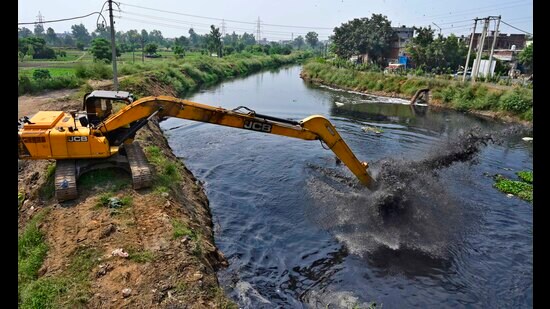
According to an official test report issued by the Central Testing Laboratory, department of soil science, Punjab Agricultural University (PAU) on April 29, 2024, sludge samples from five STPs — Balloke (60 MLD, 105 MLD, 152 MLD), Bhattian (111 MLD), and Jamalpur (225 MLD) were found to contain alarming concentrations of harmful elements such as cadmium, chromium, lead, and nickel.
The report, submitted by the Punjab Water Supply and Sewerage sub-division number 3, clearly flags that no proper sludge disposal system is in place at any of these locations. Despite this critical finding, no remedial action has been initiated by the civic body or any department concerned so far.
The report highlighted that the sludge samples showed concentrations of Cadmium, ranging from 2.38 mg/kg to 16.59 mg/kg; Chromium as high as 2,501 mg/kg; Nickel as 901 mg/kg; and Lead at 97.91 mg/kg, among others.
All these metals are hazardous for human health and the environment, especially if the sludge is dumped in open areas or used as landfill, which is reportedly being done in some areas.
Environmental experts warn that prolonged exposure to such contaminants can lead to serious health problems, including kidney damage, neurological disorders, and even cancer. Additionally, if this untreated sludge seeps into groundwater or is carried into rivers, it poses a grave risk to aquatic life and agriculture.
Despite these glaring risks, the corporation has no concrete plan or infrastructure for treating or safely disposing of the toxic sludge. Officials privy to the matter confirmed that the matter had been flagged several times internally, but has not received the attention it deserves.
MC commissioner Aaditya Dachalwal said, “We are already in process of this and few of the companies have shown their interest in managing the sludge. Soon this problem will be solved.”
While the STPs were built with the intention of treating sewage before it enters Buddha Nullah, the absence of a sludge disposal system essentially nullifies the impact of such treatment. It has also come to light that the sludge is being stored within plant premises or dumped nearby, increasing the risk of environmental contamination.
Environment activists and residents have now begun to question the accountability of authorities, especially when so much public money has been spent, yet there is no transparency or follow-up on critical pollution sources.
Rahul Verma, an industrialist, said, “Our CETP of 40 MLD produces a sludge in large quantity. But, these STPs are disposing off sludge with heavy metals in large amounts, which in fact cannot be disposed off as it is risky. But this can waste also be used as fuel like several countries are already doing.”


