
 E-Paper



Ludhiana: Ombudsman pulls up PSPCL for ₹9L solar billing error
Punjab State Power Corporation Limite had issued a demand notice of ₹9,03,276 to a Khanna factory on November 5, 2024, claiming that it had exported excess electricity to the grid

 Prefer HTon Google


The Punjab Electricity Ombudsman has pulled up Punjab State Power Corporation Limited (PSPCL) for overcharging a Khanna-based industrial unit by more than ₹9 lakh, exposing lapses in the utility’s billing practices. The dispute involved M/s Gupta Steel Udyog in Khanna, which operates a rooftop solar system at its factory.
Reportedly, the PSPCL had issued a demand notice of ₹9,03,276 on November 5, 2024, claiming that the factory had exported excess electricity to the grid. However, the firm challenged the notice, alleging that the utility had misread solar export data and used kWh instead of kVAh units, a technical error that inflated the bill and violated the Punjab State Electricity Regulatory Commission (PSERC)’s prescribed billing method.
In its complaint, the firm explained that kWh (kilowatt-hour) measures only the energy consumed, while kVAh (kilovolt-ampere-hour) accounts for total energy, including system losses. However, PSERC regulations require the PSPCL to bill large industrial and solar consumers using kVAh to ensure accuracy. Using the wrong unit, the firm argued, directly violated these standards and caused overbilling.
When the firm contested the inflated demand, the PSPCL defended its action by blaming the capacitor banks installed on solar panels, claiming these caused “false export” readings when the unit was idle. Acting on this assumption, the utility calculated the bill by deducting kWh export units from kVAh import units, which resulted in the ₹9.03 lakh charge.
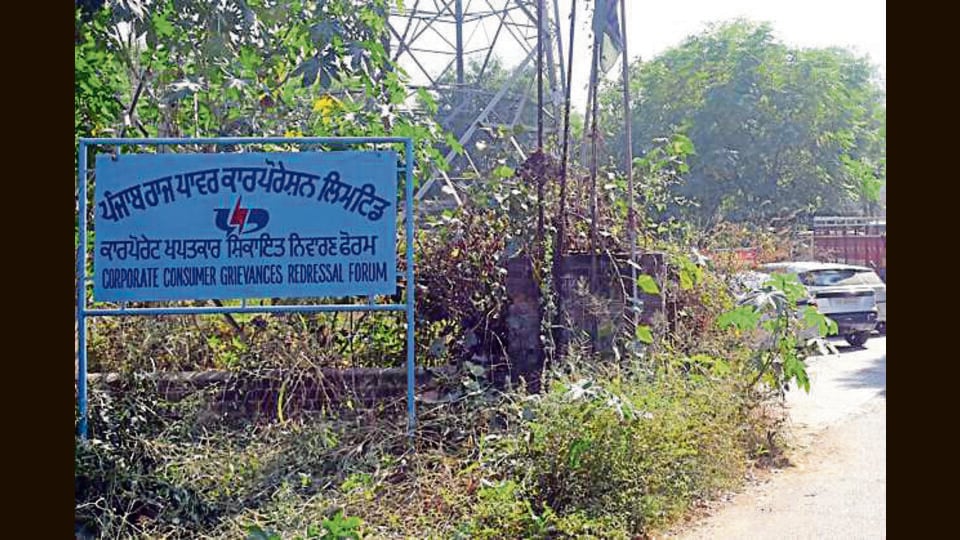
The firm later approached the Corporate Consumer Grievance Redressal Forum (CGRF) in Ludhiana, which in February 2025 quashed the bill, declared the meter defective and ordered the PSPCL to overhaul the account from April 2022 to September 2024.
However, the company again moved the Punjab Electricity Ombudsman, arguing that the Forum’s decision, though partly in its favour, was flawed. It said the CGRF had wrongly allowed the PSPCL to revise the account for over two years even after declaring the meter defective, a move that violated PSERC norms, which limit billing corrections for faulty meters to six months.
After reviewing the case, the Ombudsman found that the bi-directional meter installed at the factory had recorded inconsistent export readings and abnormal power factor variations, clearly indicating it was defective.
The Ombudsman said the PSPCL should have treated the matter as meter failure under Regulation 15 of the PSERC (Grid Interactive Rooftop Solar Photovoltaic Systems) Regulations, 2021 and Regulation 21.5.2(d) of the Supply Code, 2014.
Additionally, the Ombudsman rejected PSPCL’s defence based on an internal circular issued by its Patiala chief engineer (IT) in November 2024, which claimed that capacitor banks at consumer premises caused excess export readings. The Ombudsman noted that this circular had never been approved by the PSERC and therefore had no legal validity, adding that the PSPCL had breached multiple regulations by relying on unapproved instructions and revising the consumer’s account beyond the permitted period.
In its final ruling, the Ombudsman directed the PSPCL to revise the account only for the six months preceding the meter’s replacement (April 1, 2024, to September 30, 2024), based on corresponding data from the following year. The utility has been asked to comply with the order within 21 days of receiving it.


