
 E-Paper



Lumpy skin disease: Punjab officials directed to procure 3 lakh more doses of Goat Pox vaccine
Finance Minister Harpal Singh Cheema and Animal Husbandry Minister Laljit Singh Bhullar directed the officials that 3.33 lakh more doses of Goat Pox vaccine to treat lumpy skin disease should immediately be ordered from approved veterinary research institutes and distributed to all the districts in the state


The Group of Ministers (GoM) formed by chief minister Bhagwant Mann for effective monitoring for the prevention of lumpy skin disease in Punjab on Friday directed officials to procure 3.33 lakh more doses of the Goat Pox vaccine to check the spread of the contagion.
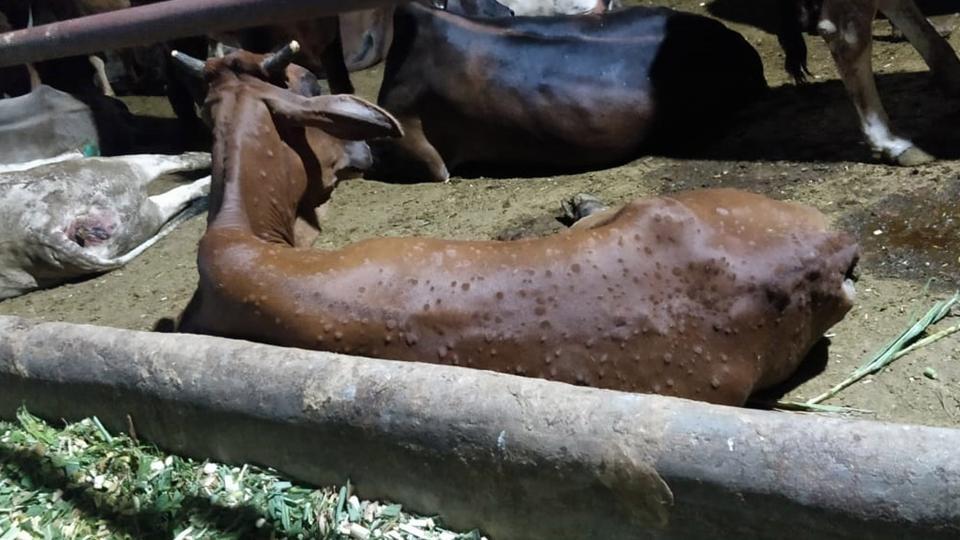
During a meeting here at Punjab Bhawan, Finance Minister Harpal Singh Cheema and Animal Husbandry Minister Laljit Singh Bhullar directed the officials that 3.33 lakh more doses should immediately be ordered from approved veterinary research institutes and distributed to all the districts in the state.
“Chief minister Bhagwant Mann is personally monitoring the situation and daily taking report of the ongoing relief operations in the state,” they said.
While reviewing the vaccination drive, the ministers directed that the vaccination target should be doubled to 50,000 per day besides ensuring that vaccination is being done free of cost. They said that so far, more than 1.30 lakh cattle have been vaccinated in the state.
The ministers directed senior officials of the concerned departments to issue instructions to the district authorities for providing calcium, vitamins and other necessary medicines for the animals.
They also asked the officials to ensure that the guidelines regarding prohibition of entry of livestock from other states into Punjab and holding of animal fair should be implemented till the disease is contained. The ministers also reviewed activities related to spraying of mosquito repellent in the state.
The ministers said that to shun the practice of throwing carcasses of dead animals in the open, the government has issued funds to the BDPOs and directed them to arrange JCBs to ensure burial of dead cattle and remain in touch with sarpanches of villages. The ministers also urged farmers not to throw the dead animals in the open.
Rejecting rumours about consuming milk of the affected animals, Bhullar said that this disease does not affect the human body if the milk is well boiled.
Committees to check proper disposal of carcasses
Following reports of carcasses of cattle suffering from lumpy skin disease being dumped in open or water bodies, the state animal husbandry department has constituted committees, involving block development and panchayat officers (BDPOs), from across the state for proper disposal of the carcass.
Besides, 273 teams, involving an animal husbandry officer and two staff members, have been constituted to carry out field visits in the villages and check the infected animals, said director, animal husbandry department, Subash Goel.
He said that Pathankot and Gurdaspur are the least affected districts, while Moga, Fazilka and Ferozepur were the worst affected districts.
Goel said that the rural development department will bear the cost of disposal of carcasses. “The funds have been allocated to the department concerned for arranging earthmover to dig pits, lifting and ferrying of animals,” he said.
He said that a total of 60,329 animals have been infected so far and the contagion has claimed the lives of as many as 2,114 cattle, including cows and buffaloes across the state. On Friday, 4,946 new cases of the disease were reported from across the state.
According to deputy director, animal husbandry, Parminder Singh Walia, there are around 6,000 infected animals in Ludhiana district, out of which 190 died due to the disease. As many as 690 fresh cases of the disease were reported on Friday in Ludhiana.
Walia urged farmers not to abandon the infected animal as it could further increase the spread of infection and take the infected animal only to a qualified veterinarian.
Dr Jasbir Singh Bedi, director, Centre for One Health, Guru Angad Dev Veterinary and Animal Sciences University (GADVASU), said the disease neither spreads to humans through direct contact nor through drinking the milk of affected animals.
Bedi said that the carcasses of affected animals should be disposed of through incineration or buried in a 6 x 6 x 6 pit with lime.


