
 E-Paper



National space technology conclave | India set for a global leap in space sector: Experts
YVN Krishnamurthy, former scientific secretary, ISRO, said India’s space strength lay not only in launching satellites but also in developing cost-effective solutions, extending satellite life and using space technology for societal benefit

 Prefer HTon Google


The opening of the space sector to private participation in June 2020 fuelled a boom with more than 450 space start-ups now operating in India, revealed Vinod Kumar, director, promotion directorate, IN-SPACe, at the two-day National Space Technology Conclave-2026 hosted by Chandigarh University on Monday.
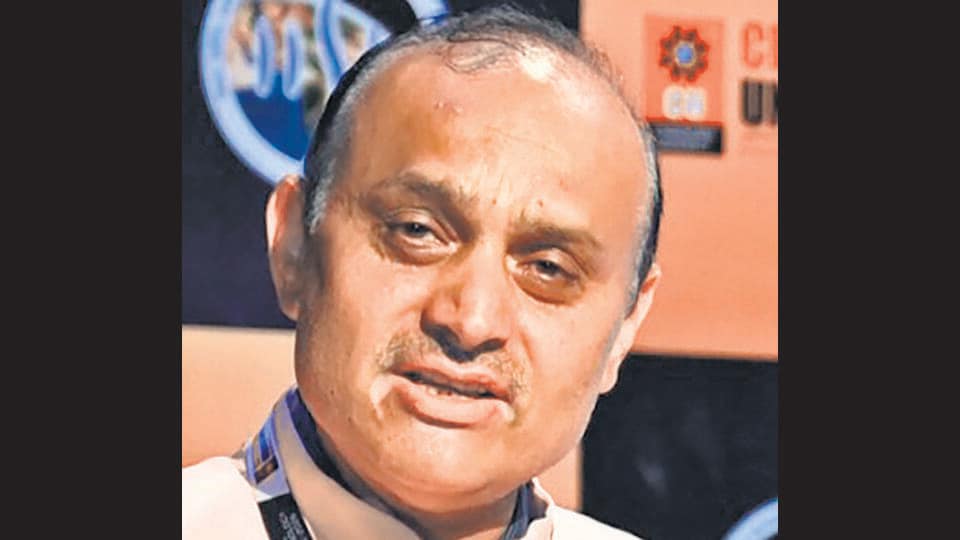
The conclave, organised by the Kalpana Chawla Centre for Research in Space Science and Technology in collaboration with the Indian Space Research Organisation (ISRO) and Indian Institute of Space Science and Technology (IIST), brought together 30 eminent scientists, mission leaders and technologists, besides CEOs and senior representatives of the Indian space industry.
Kumar, who was the chief guest at the event, further said that the Indian Space Research Organisation (ISRO) had turned India into a major space power. More than 70% of the country’s demand was earlier met through outsourcing, he explained.
He said the Indian Space Policy 2023 had clearly defined the roles of ISRO, Indian National Space Promotion and Authorisation Centre (IN-SPACe), NewSpace India Limited (NSIL) and non-government entities. Schemes including the space seed fund, technology adoption fund, venture capital fund and pre-incubation entrepreneurship development programme were helping young innovators take ideas from ideation to demonstration.
YVN Krishnamurthy, former scientific secretary, ISRO, said India’s space strength lay not only in launching satellites but also in developing cost-effective solutions, extending satellite life and using space technology for societal benefit. He urged students to think beyond textbooks and develop solutions that benefit humanity, saying India must prepare for future capabilities including habitation on the Moon and Mars.
Nilesh M Desai, former director, Space Applications Centre, ISRO, said the university’s initiative would help promote space activities among students and create a talent pool to address the shortage of skilled professionals in areas such as communication and navigation.
Sanjay, CEO, Dhruva Space, said India had the potential to move from meeting its domestic requirements to serving the global space market.
A key highlight was Chandigarh University becoming the first university to unveil the ‘Chandigarh University Declaration on Space Technology for Viksit Bharat 2047’, aimed at strengthening universities’ contribution to space education, research, innovation, skill development and industry collaboration.
Prof (Dr) Eswar Sunkara, senior director, Kalpana Chawla Centre, said the declaration would provide strategic direction for universities to contribute to India’s space ambitions.


