
 E-Paper



NGT seeks replies from BBMB, Centre, Punjab over flood mgmt
Ludhiana-based NGO, public action committee (PAC) said the process would discover whether the statutory duties under the Dam Safety Act, 2021, including duties relating to data disclosure, flood cushion maintenance, and precautionary dam operation, were complied with or not.

 Prefer HTon Google


The National Green Tribunal (NGT) has issued notice to the Bhakra Beas Management Board (BBMB), the ministry of jal shakti, the Punjab government, and others on Monday over the recent floods in the state. BBMB manages both the Bhakra Dam and Pong Dam on the Sutlej and Beas rivers.
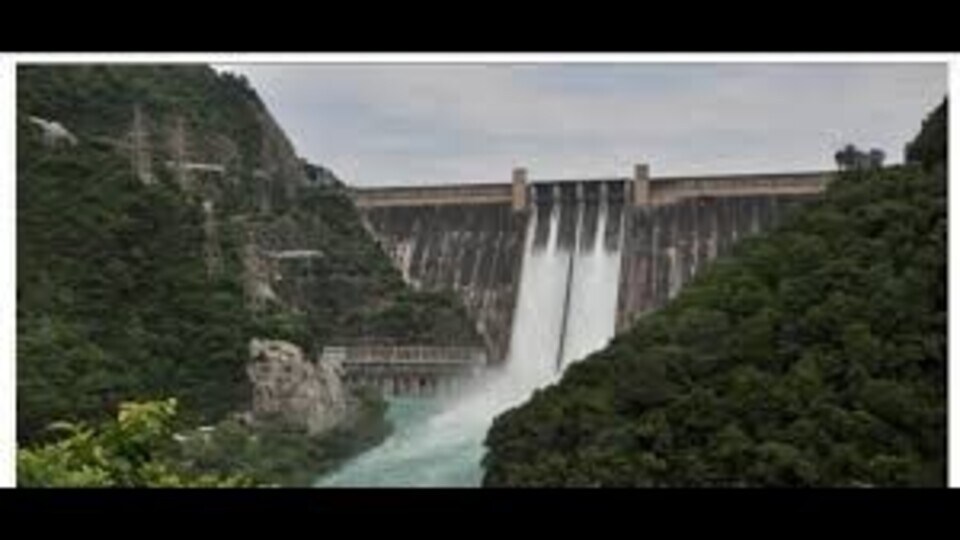
As many as 60 people lost their lives in flood-related incidents, and crops over lakhs of acres, along with several houses, were destroyed. The petition was filed by the Ludhiana-based NGO, public action committee (PAC).
The PAC said the process would discover whether the statutory duties under the Dam Safety Act, 2021, including duties relating to data disclosure, flood cushion maintenance, and precautionary dam operation, were complied with or not.
“Despite IMD forecasts of heavy rainfall from mid-August, reservoir levels of Bhakra Dam continued to rise, and water releases were subsequently carried out under high inflow conditions, leading to floods in Punjab,” PAC said in its petition. Consequently, when Punjab experienced heavy rainfall in the fourth week of August, the BBMB was compelled to increase the outflow drastically instead of regulating or reducing it, thereby aggravating and worsening the flood situation in Punjab.
The PAC, in their petition, said that by August 1, 2025, the Bhakra Dam had already reached 53% of its storage capacity. The outflow from the dam during the period August 1 to August 18 was maintained only at an average of 22,000–23,000 cusecs, and it was only on August 19 and 20 that the spillway gates were opened for the first time in two years. By that time, the water level had already risen to 1,666 ft, just 14 ft below the full reservoir level (FRL).
The PAC further submitted in their petition that during this period, the inflow into the reservoir was 180% higher than the outflow, thereby causing the reservoir to exceed prudent storage levels.
The petition further submitted that the reservoir operations were faulty and appeared arbitrary and unscientific, given the ageing infrastructure, unchanged rule curves since 1990, and altered climate patterns. According to PAC, these factors had contributed to flooding in Punjab.
“After receiving information from the reliable sources, the PAC has analysed the dam operation data and apprehended a renewed flood risk in Punjab. We (PAC) served a notice dated August 9, 2025, upon BBMB, the ministry of jal shakti, and the Punjab government, to regulate water releases dynamically in accordance with IMD weather predictions. Despite this, BBMB took no corrective action,” Kapil Arora, a member of PAC, said.
The petition further added that the Punjab government failed to stop illegal mining in and along both the rivers, and despite complaints, protests and issues raised by nearby villagers, the mining has continued, resulting in weakening of dhusi Bundhs. Further, continuous illegal mining along the Sutlej and Beas, as well as in the Gaggar river, is also one of the major causes of damage due to floods in Punjab.
Jal shakti ministry denies poor management
The ministry of jal Shakti, in a written reply during the ongoing winter session of Parliament, has denied any poor management claims.
“Recent floods in Punjab were not aggravated due to poor reservoir management at major dams, Pong and Bhakra. In the year 2025, there were extensive rains in the catchments of Pong and Bhakra dams, leading to huge inflows of 3,49,522 and 1,90,603 cusecs into the reservoirs of the two dams, respectively. The reservoir regulation was done to achieve maximum moderation/absorption of floods. The releases were made as per decisions taken by the Technical Committee comprising members from partner states i.e. Punjab, Haryana, & Rajasthan, Central Water Commission (CWC) and Bhakra Beas Management Board (BBMB), keeping in view the rule curve, dam safety aspects and constraints of the limited carrying capacity of river Sutlej/Beas downstream of Bhakra and Pong dam, respectively. The releases from dams are made after giving a minimum advance notice of 24 hours,” the ministry said in its reply.
The ministry further said that the reservoir level/storage in dams before the onset of monsoon were very much in the range of average values, and requisite buffer levels/storage were in place.


