
 E-Paper



Over 200 patients in Ludhiana benefited from state scheme in 2024
The scheme provides financial help of up to ₹1.5 lakh to patients, who are not covered by the Ayushman Bharat scheme. The patients can take treatment with this aid.


Around 227 cancer patients benefited from the Mukh Mantri Punjab Cancer Rahat Kosh Scheme in the district in 2024. A sum of ₹2.87 crore was sanctioned under the scheme.
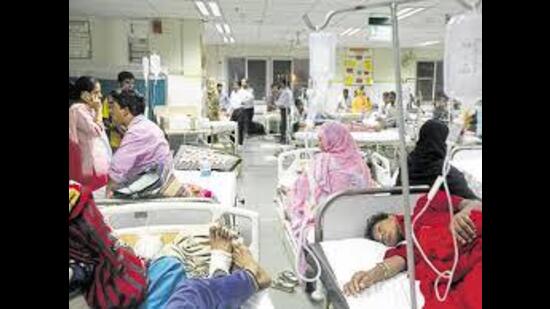
The scheme provides financial help of up to ₹1.5 lakh to patients, who are not covered by the Ayushman Bharat scheme. The patients can take treatment with this aid.
“The scheme is meant to provide the patients with funds for treatment in the hospital of their choices from the empanelled hospitals,” said officials from the district cancer cell.
Dayanand Medical College and Hospital, Christian Medical College and Hospital, and Mohandai Oswal Cancer Hospital in the district are linked to the scheme. Besides these other tertiary care facilities in the state and PGI Chandigarh are also empanelled. Patients can go to any of these hospitals for their treatment.
The hospital applies for the patient online or offline and after a verification of the case by the local cancer cell the file is processed to the state cancer cell which then transfers the sanctioned amount to the hospital directly.
Once a patient is registered to the scheme, they are given a number. They can use the amount depending on their treatment expenses. While some patients need the entire amount at once, others can draw as much as they need and the balance can be used later if the disease comes back.
“There were many cases last year where patients who had used a part a couple of years ago needed help again since their disease came back. They were sanctioned the amount required from their balance,” said the official.
District cancer cell head, Dr Ramneek, said that while the cases included various types of cancers, the most common were breast and cervical cancers in women and oral and lung cancers in men.
Whether the amount was enough for cancer treatment depended on multiple factors, according to Dr Raja Paramjeet Singh Benipal, radiation oncologist, at the Rajindra Hospital in Patiala, a government tertiary care facility.
“There have been thousands of patients who have used these schemes and had complete treatment. It depends on the type of cancer, what stage it is in, and the hospital. If it is a government hospital, then most cancers can be treated in this sum,” he said.
He emphasised that the most important factor was the type of cancer. “There are some specific types of cancers that may require expensive treatment, which may not be possible in this amount.”


