
 E-Paper



Paddy sale above fixed yield: 30K farmer accounts under lens in Punjab
Around 30,000 farmer accounts in Punjab are being probed for booking paddy for sale to procurement agencies higher than the fixed average per acre yield

 Prefer HTon Google


Around 30,000 farmers’ accounts in Punjab are under the scanner of the food and civil supplies for purportedly booking paddy for sale to the state’s procurement agencies higher than the average per acre yield of 34 quintal fixed by the department.
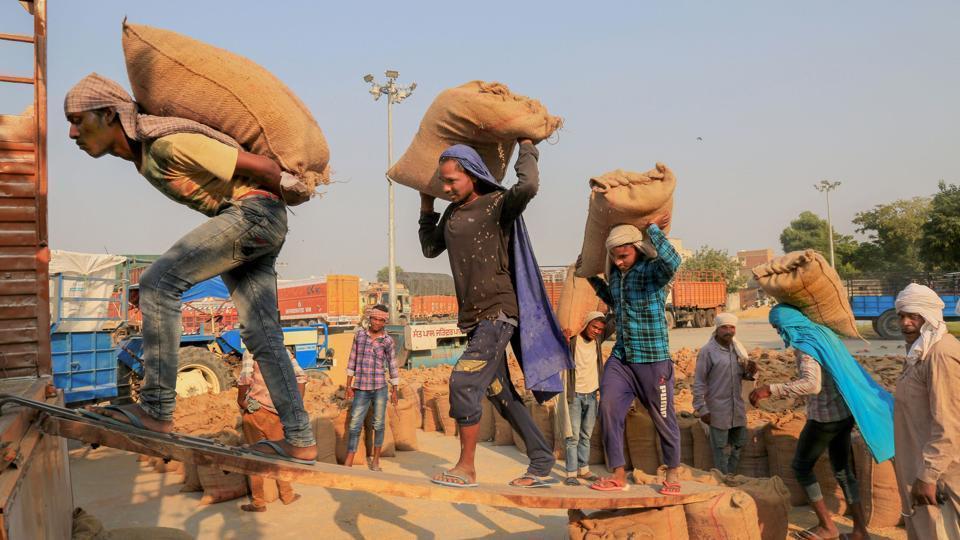
The kharif (paddy) procurement ended on November 30, and after that the state’s four procurement agencies — Pungrain, Punsup, Markfed and warehousing corporation — besides the food department and Mandi board, which manages the grain market operations, are busy settling the accounts.
For the first time in the state, paddy stocks were procured by fixing the per acre yield, as the Centre has made it mandatory to link crop payment with land records. Initially, there were 5.2 lakh accounts of 9 lakh farmers under the scanner, and even though most have been settled, there are still 30,000 accounts that show sale of paddy more than the average.
The ceiling was fixed to check bogus billing and to end the malpractice of mixing rice and paddy of the previous crop seasons to the fresh crop. The crops are mixed to earn on the difference of price at which the crop of past seasons is procured and the higher minimum support price (MSP) offered in the prevailing season. The practice is adopted by a section of arhtiyas (commission agents) by manipulating the farmers’ accounts.
“We have made red entries on all farmers’ accounts that show sale of crop more than the average, and are in the process of verifying their antecedents. The farmers and arhtiyas found guilty of selling more than the average yield will face action. These accounts could even be frozen or a penalty could be imposed,” said state food and civil supplies minister Bharat Bhushan Ashu.
According to a senior official of the state department, it’s a tedious process to match purchase from each farmer’s account with land tilled by them. “This being the first season, we are facing many challenges to reconcile the records. We have formed committees at district level, with members of procurement agencies and the Mandi board, to verify the purchase,” said the official, who didn’t wish to be named.
In the recent kharif season, 188 lakh tonne of paddy was procured by government agencies, against an all-time high of 203 lakh tonne in the previous season, for which paddy from outside the state and bogus billing were alleged to be the main contributors.
Every year, the food department and procurement agencies face an uphill task to check the flow of old paddy from other states. This year, amid heightened vigil, a many trucks were seized at the state borders, or illegal stocks were found at godowns of rice shelling mills during physical verification.
‘Linking Aadhaar to land records a solution’
The food department and Mandi board finds it impractical to device a method to verify the land owned by a farmer with the payment portal.
“The only solution is connecting the land record to Aadhaar card, so that even if farmers have more than one farm in the state, all could get a unique ID by connecting it to the Aadhaar number of the owners,” suggested a Mandi board official, on the condition of anonymity.
The Centre’s ministry of food and public distribution is pushing Punjab to implement the Aadhaar linking, but the process is facing delays. There are at least 45 lakh “khewat” (account) numbers in the name of 8.5 lakh farmers. “We have a plan to do the Aadhaar linking, but let’s see how and when it will be implemented,” said an officer of the food procurement agency.


