
 E-Paper



Patients suffer as OPDs completely suspended at Mohali civil hospital
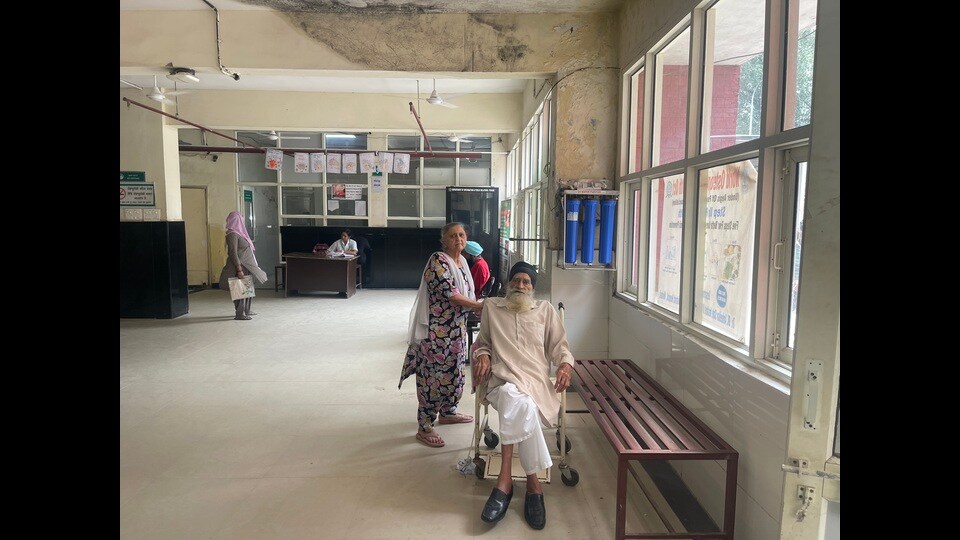
After several patients reached the OPD area of Mohali’s civil hospital and insisted on treatment, hospital staff closed the doors, citing the ongoing strike; only patients who required emergency treatment were allowed in

 Prefer HTon Google


Patients were forced to return unattended as outpatient department (OPD) services were completely suspended at the local civil hospital on Thursday.
Government doctors in Punjab on Wednesday announced that they will proceed with their call for a complete suspension of OPD services from Thursday after the state government failed to issue a letter accepting their demands.
The announcement came after a meeting with the Punjab cabinet sub-committee here after the doctors failed to get a written communication from the government stating acceptance of their demands, including a decision on the restoration of assured career progression (ACP) and other important demands, including a definite framework on security.
Bhupinderjit Singh, 62, a resident of Sector 123 reached the hospital with his wife for a follow-up examination following a kidney stone surgery. But despite several requests, doctors refused to entertain him.
“My check-up was scheduled on Thursday. I am a retired government employee and requested the doctor to examine me, but he refused, citing a state-level strike. Doctors should also remember their duty while demanding incentives from the government. Now, I won’t return here, as it is not easy for me to repeatedly visit the hospital,” Singh said.
Harjinder Singh, 85, who reached the hospital on a wheelchair with his octogenarian wife, voiced the same concern.
His wife was seen requesting the female staff at the reception to get them an appointment with the doctor concerned for her husband’s throat and stomach infection, but to no avail.
It was only after the public’s requests and insistence that a female doctor agreed to attend to Harjinder.
The dental OPD attended to emergency cases, but others were asked to return later.
After several patients reached the OPD area of the hospital and insisted on treatment, hospital staff closed the doors for an hour, citing the ongoing strike. Only patients who required emergency treatment were allowed in.
A senior doctor said facilities like medical examination for new government appointees, dope tests, VIP duties, enquiries and reporting to the state headquarters were not being done. However, services related to judicial work, emergency trauma patients, medicolegal working, ultrasounds and X-rays were uninterrupted.
Senior medical officer Dr Vijay Bhagat said, “We have increased the number of doctors in the emergency area. We won’t let patients who require urgent treatment suffer.”
Earlier on Wednesday, the cabinet sub-committee headed by finance minister Harpal Cheema, and comprising health and family welfare minister Dr Balbir Singh, renewal energy minister Aman Arora and NRI affairs minister Kuldeep Singh Dhaliwal, had held point-wise discussions with the Punjab Civil Medical Services Association (PCMSA) representatives. The meeting lasted three hours.
Around 2,500 government doctors are holding protests under the banner of the PCMSA to press for their demands, including reinstatement of the ACP scheme, timely recruitment of medical officers (MOs), clearance of pending CPC arrears and adequate security measures for healthcare professionals.
The ACP scheme provides financial benefits and higher pay scales to government employees.
Starting Monday, the PCMSA had suspended OPD services for three hours — from 8 am to 11 am — in all district, sub-divisional hospitals and community health centres.
In the second phase of the strike, which started on Thursday, a complete boycott of OPD services will be observed, indicating tough times for patients across government hospitals.


