
 E-Paper



The idea of democracy takes centre stage at Chandigarh’s St Kabir
The right to protest is essential in a democracy, political scientist Zoya Hasan said while speaking at the two-day long “The Idea of Democracy” conference organised by St Kabir Public School, Chandigarh


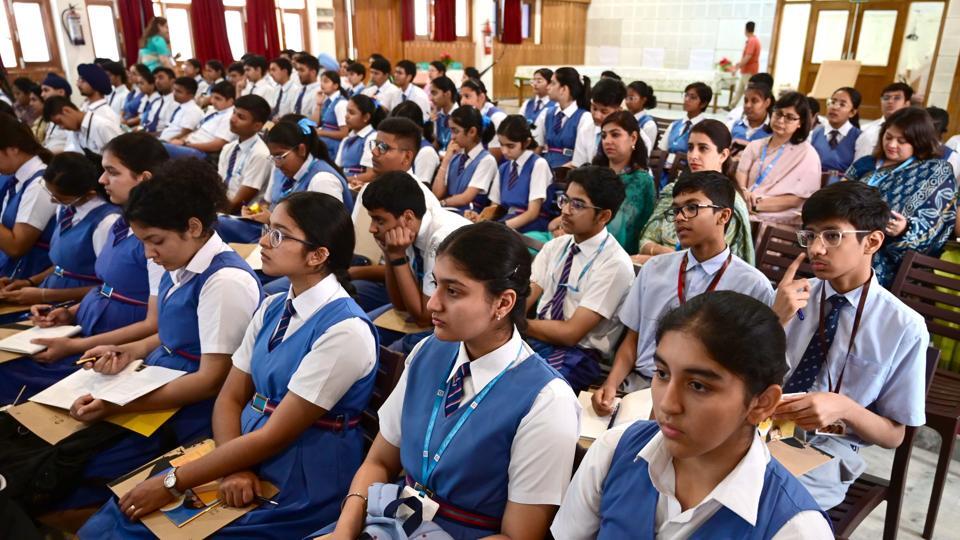
The right to protest is essential in a democracy, political scientist Zoya Hasan said while speaking at the two-day long “The Idea of Democracy” conference organised by St Kabir Public School in Sector 26 in association with History for Peace.
Hasan, addressing the challenges to India’s democracy as the keynote speaker, spoke about the ongoing wrestlers’ protests against the Wrestling Federation of India (WFI) chief Brij Bhushan Sharan Singh. She also likened the same to the farmers protest held in New Delhi and protests against Citizenship Amendment Act.
“The strength of democratic society depends on a system of checks and balances. Muscling of dissent is taking place through coercive and non coercive means,” she said, adding that disallowing people from protesting at specific places amounted to “protest by appointment”.
“The idea of a ‘Congress mukt Bharat’ is no longer limited to Congress. It has now become an ‘opposition mukt Bharat’,” she added.
Concluding on a positive note, however, Hassan said Indians have not been silenced being silenced and that the various protests indicate that they continue to make their presence felt. She also added that comparisons with Pakistan are useless as the country has failed because of religious extremism and India should compete with China instead.
Journalist P Sainath, meanwhile, spoke about his experience interviewing some of the ordinary Indians who worked as couriers, cooks or homemakers and their extraordinary bravery in facing the British Raj — which he had compiled in his book “The last Heroes: Foot Soldiers of Indian Freedom.”
“It is unfortunate that in five years time no one will be left of this golden generation which fought the British,” he said, while quantifying the actual deaths and loot which the British had pioneered under their rule.
“The first battle for independence wasn’t in 1857. The adivasis were the first to die for freedom. And last to benefit,” he added as he discussed the contribution of freedom fighter Mallu Swarajyam and her ilk for India’s independence. He said this group did not fit into the conventional definition of “freedom fighters” because they did not spend a particular period of time in jail or were not declared proclaimed offenders by the British Raj. “Would we ask the guards at Aushchwitz who the prisoners were during the holocaust?,” he questioned.
Former National Council of Educational Research and Training director Krishan Kumar, also a speaker at the event, discussed how democracy was an “abstract” concept for children, who probably understand monarchy better as they can see who is in charge. He went on to say tolerance for views of others even if you do not agree with them was essential in a democracy.
He illustrated everyday sociology in his interactions with hawkers and showed how the undercurrents of the caste system are seen even in small interactions till date.


