
 E-Paper



Pollution panel sounds alarm over blind eye to rising dust in Chandigarh
Chandigarh Pollution Control Committee has issued notices to key government departments, PSUs, educational institutions, demanding immediate measures to contain air pollution, warning of steep penalty

 Prefer HTon Google


In a city like Chandigarh, often hailed for its urban planning and cleanliness, government agencies and private establishments alike are surprisingly neglecting basic measures to keep air pollution in check.
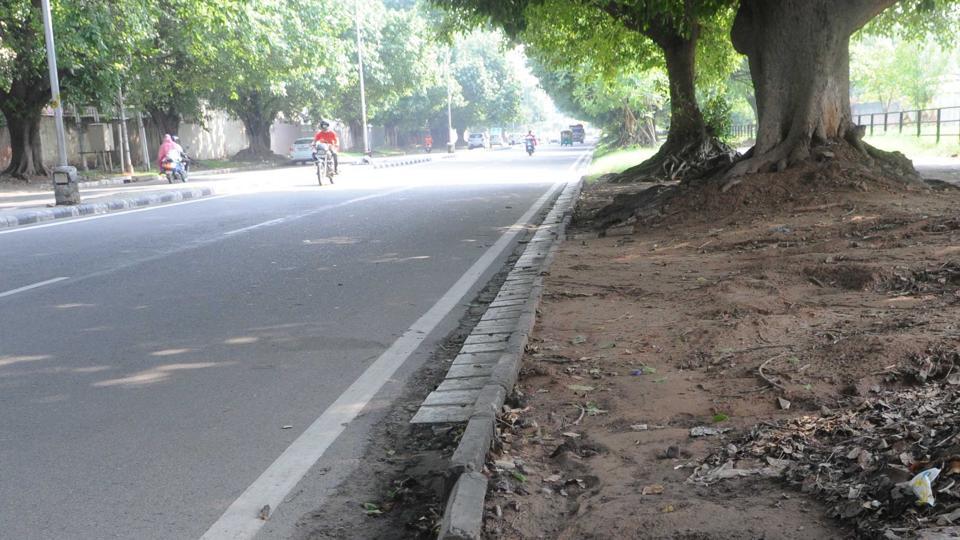
Land along roads and on central verges has been left uncovered, allowing dust to rise in the air due to vehicular movement, winds and soil erosion. Construction also continues across the city without any measures to contain the dust dispersed into the air.
Taking note of these glaring lapses, the Chandigarh Pollution Control Committee (CPCC) has shot off notices to a slew of government departments, public sector undertakings, educational institutions and large private entities across the city, demanding urgent dust mitigation measures to curb the alarming rise in air pollution.
These include the municipal corporation, UT engineering department, Panjab University, PGIMER, Punjab Engineering College, Steel Authority of India, Rashtriya Ispat Nigam Limited, along with several private establishments operating in the city.
The CPCC’s directive, issued under Section 31-A of the Air (Prevention and Control of Pollution) Act, 1981, highlights the rising dust levels in the city, particularly in hotspots like the Daria industrial area, and demands immediate action to address the crisis.
Despite Chandigarh taking pride in its “City Beautiful” moniker, the situation is far from ideal when it comes to pollution control.
CPCC’s notices reveal that basic infrastructure to prevent dust dispersal is either non-existent or poorly implemented.
Open lands, including roadsides and central verges, under the jurisdiction of several government, semi-government, public sector undertakings and large private institutions—including PGIMER, Panjab University, PEC, MC and UT engineering department — remain uncovered, exacerbating dust pollution.
Even ongoing construction projects, and the loading, unloading and transport of construction materials continue without any dust-mitigation measures.
Issuing directions for immediate implementation, the CPCC has asked stakeholders to submit their comments, if any, before final orders are issued under Section 31-A of the Act.
CPCC’s solutions to clear the air
All government, semi-government, PSUs, educational institutes and large private establishments must cover all open land under their jurisdiction with either thick vegetation or gravel to prevent soil erosion and dust dispersal due to vehicular movement or winds.
UT engineering department and MC must cover central verges of roads with eco-friendly honeycomb paver blocks or similar aggregates to bind loose soil and reduce airborne dust.
Major roads should be washed at night using tertiary-treated wastewater. Pipelines should be laid along key routes to enable regular water spraying, thus suppressing dust, particularly on high-traffic roads.
Byproducts from MC’s Construction and Demolition (C&D) Waste Processing Plant should be used to cover exposed soil wherever required.
MC must also procure adequate water-sprinkling vehicles—preferably electric—to ensure morning road spraying before manual sweeping operations, reducing dust re-suspension.
Both MC and UT engineering department have been ordered to clear all C&D waste from recently evacuated lands in Sector 25 and Industrial Area.
MC must also establish a mechanism for proper collection and disposal of fallen leaves, which contribute to air pollution when left unmanaged.
All construction projects in the city, private and government, are required to incorporate comprehensive dust mitigation plans, including the use of tall site enclosures, frequent water sprinkling, anti-smog guns and green barriers.
UT engineering department must cover both sides of Daria’s main road with green paver blocks and ensure regular water spraying to minimise dust levels.
In response to the very high dust levels in Daria village area caused by the loading, unloading and transport of construction materials, various entities have been directed to adopt stringent dust control measures, including improved handling and storage practices.
Penalties for non-compliance
Entities that fail to comply with these directions may face penalties ranging from ₹10,000 to ₹15 lakh under Section 37 of the Act.
Continuous violations will attract an additional penalty of ₹10,000 per day.
In the case of government departments, heads of departments and negligent officers may face fines equivalent to one month’s basic salary under Section 38-A of the Act.
The environment secretary, designated as the adjudicating officer, is empowered to conduct inquiries and impose penalties. Failure to pay imposed penalties within 90 days could lead to imprisonment of up to three years, fines up to twice the penalty amount, or both.
It’s worth recalling that Chandigarh dropped to a disheartening 31st place out of 47 cities with population over 10 lakh in the 2024 Swachh Vayu Survekshan. This marked a significant decline from its already dismal 22nd position in 2023, slipping nine spots.


