
 E-Paper



Post floods, over 1,200 cases of eye flu in Ambala
The first set of eye-flu cases had emerged on July 13 when the flood water started receding in a few pockets, but the graph has been going up since then.

 Prefer HTon Google


As many as 1,225 cases of conjunctivitis (eye flu) have surfaced in flood-hit Ambala since July 13, with 90 cases being reported on Tuesday alone.
The first set of cases had emerged on July 13 when the flood water started receding in a few pockets, but the graph has been going up since then.
Apart from this, 4,310 cases of skin diseases have also been recorded till Tuesday, while 3,032 residents have suffered from fever in the past few weeks.
As per the health department, most of the cases were reported in 61 villages of the rural belt and in four wards of the urban belt.
Disease prevention activities and mosquito-breeding control measures have been undertaken by ASHAs/ANMs workers and other teams. So far, the district has not reported any case of malaria, dengue or chikungunya.
Apart from the available staff, a total of 15 doctors on deputation were posted at CHC Chourmastpur that covers the worst-affected Naggal belt of Ambala City. Four deputy civil surgeon-level officers have also been attached with the CHC.
Officials said that floods can potentially increase the transmission of water-borne diseases like typhoid fever, cholera, leptospirosis and hepatitis A and E, and vector-borne diseases such as malaria, dengue and dengue hemorrhagic fever and West Nile Fever.
According to the department, in such cases there is an increased risk of infection of water-borne diseases contracted through direct contact with polluted waters, such as wound infections, dermatitis, conjunctivitis, and ear, nose and throat infections.
District epidemiologist Dr Sunil Hari said orthotoluidine tests have been conducted in 2,800 water samples and merely 321 were found ‘negative’, while bacteriological tests were conducted in 240 water samples and 38 were found to be unfit.
“Despite flooding, when sewage water gets mixed with drinking water, there are no cases of dysentery, jaundice or cholera. This could have happened due to the reach of bottled water and distribution of chlorine tablets by the health department,” he added.
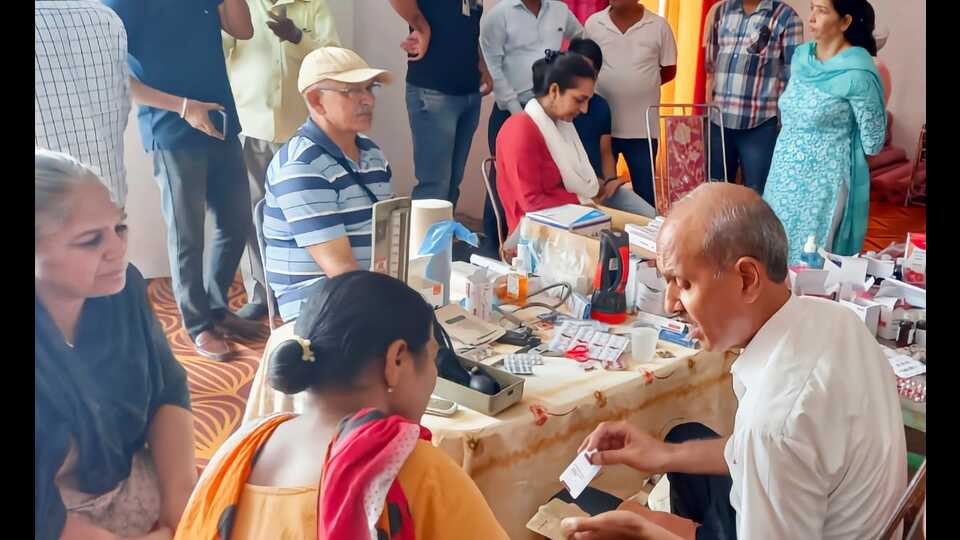
Civil surgeon Dr Kuldeep Singh, said that over 800 medical camps have been organised in Ambala where 18,405 patients were examined.
Two die of snake bite
Two cases of death due to suspected snake bite were reported by the health department on Wednesday. Ambala has recorded a total of 42 cases of snake bite till date. Civil surgeon Dr Kuldeep Singh said that the deceased were identified as Nisha, 15, a resident of Ranjeet Nagar and Rukmani,14, a native of Bihar.
He said that Nisha was brought to the district civil hospital with three bites on her body from where she was referred to GMCH, Chandigarh.
“However, they opted for exorcism rather than treatment and she was brought dead at MMU, Mullana. Rukmani was living with his parents in Durana village, where a snake bite was reported. She was brought dead at the district civil hospital with a single bite,” he added.


