
 E-Paper



Process underway for GI tag for Amritsar shawls: Centre in Lok Sabha
Centre has begun the GI registration process for Amritsar shawls, a move that could boost branding and protect the city’s ₹1,700-crore industry

 Prefer HTon Google


The Centre has initiated the process to secure Geographical Indication (GI) registration for the traditional Amritsar shawl, offering the city’s ₹1,700-crore shawl industry a potential branding and market boost.
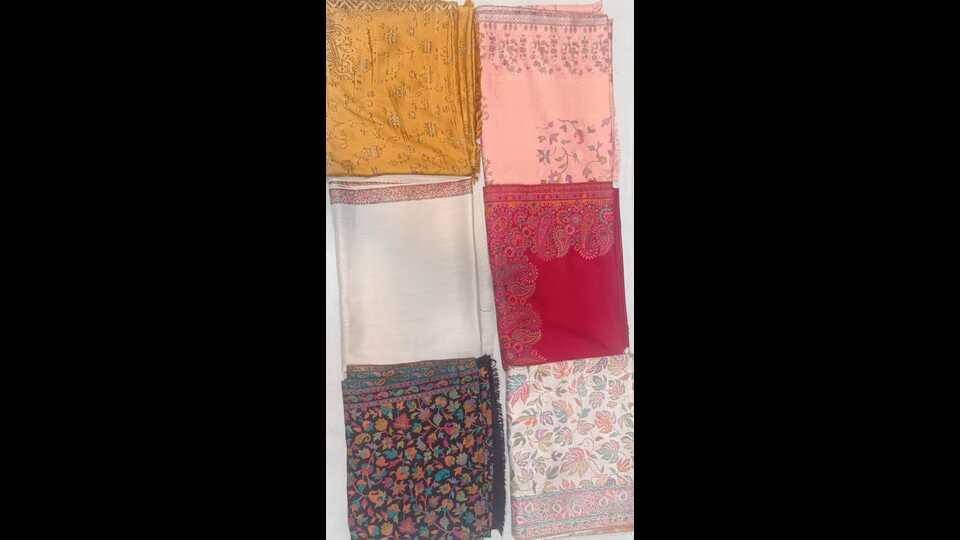
Centre moves to secure GI tag for Amritsar shawls
The issue came up in the Lok Sabha last week, when the Centre was asked about measures to preserve and promote Punjab’s traditional textile industry. In its reply, Union minister of state for textiles Pabitra Margherita said the Textile Committee had filed an application under the Geographical Indications of Goods (Registration and Protection) Act for registration of the traditional Amritsar shawl.
A GI registration gives legal recognition to a product whose quality, reputation or other characteristics are linked to a particular geographical region. For Amritsar shawls, the move could help protect the craft’s traditional identity, curb misuse of the name and strengthen its branding and commercial value in domestic and overseas markets.
Also read: Ker Sangri is now GI-tagged. And the world is finally noticing
₹1,700-crore industry accounts for major share of shawl market
Amritsar accounts for about ₹1,700 crore of India’s roughly ₹3,000-crore shawl and stole market, including around ₹600 crore in exports. Its manufacturing base comprises nearly 2,000 traditional powerlooms and 450 modern electronic jacquard machines, besides hundreds of small-scale micro and powerloom units. Amritsar shawls are valued for their intricate hand embroidery and distinctive traditional motifs. Traditionally made from fine Pashmina, wool, silk and blended fabrics, they combine lightweight warmth, softness and elaborate craftsmanship. Techniques such as crewel and aari embroidery, along with vibrant floral and traditional patterns, give Amritsar shawls their distinctive identity and premium appeal.
Also read: Assam Guv highlights GI-tagged products in enhancing local artisans, economy
Textile units received ₹12.9 crore subsidy since 2018
The most specific assistance cited for Amritsar is under the Amended Technology Upgradation Fund Scheme. Between 2018 and 2024, 70 cases were settled and ₹12.9 crore in capital investment subsidy was released to textile units in the city.
The subsidy peaked at ₹4.70 crore in 2022, followed by ₹2.83 crore in 2020 and ₹2.19 crore in 2021. Assistance stood at ₹1.83 crore in 2024, while ₹11 lakh and ₹3 lakh were released in 2018 and 2019, respectively.
The Centre said several schemes, including the Scheme for Integrated Textile Parks, Production Linked Incentive Scheme, SAMARTH, ATUFS, Integrated Wool Development Programme, National Handloom Development Programme and Raw Material Supply Scheme, were being implemented in Punjab.
Punjab has three textile parks under SITP, with ₹40 crore released for Lotus Integrated Textile Park in Barnala, ₹36 crore for Rhythm Textile & Apparel Park in Nawanshahr and ₹36 crore for Ludhiana Integrated Textile Park. None is located in Amritsar.
Also read: Bihar assembly takes a sweet turn as MLAs push for GI tags for local delicacies
Industry seeks support beyond GI recognition
Vinod Arora, general secretary, Shawl Traders’ Association, Amritsar, said the central government has not disclosed any separate scheme-wise or year-wise funding specifically for the Amritsar textile cluster over the past decade. Also, the challenge now is to translate the proposed GI recognition into tangible support for technology upgradation, common facilities, design and skill development, branding and export infrastructure—areas that could determine whether Amritsar’s traditional shawl industry can retain its competitive edge, he said.
On skilling, the Centre said 4,737 beneficiaries in Punjab had completed training under SAMARTH, its demand-driven, placement-oriented programme for the textile sector.


