
 E-Paper



Punjab DGP hails success of anti-drug campaign, says fight isn’t over
Punjab DGP Gaurav Yadav noted that the intensified police action has had a marked effect on the drug market. Intelligence reports and informal surveys show that street-level prices for heroin have surged by 50%, and prices for synthetic drugs have risen by 40% due to disrupted supply chains.

 Prefer HTon Google


As the deadline set by the Punjab government to eliminate the availability of drugs by May 31 came to an end, director general of police (DGP) Gaurav Yadav claimed significant success in the ongoing anti-drug campaign, ‘Yudh Nashian Virudh’. However, Yadav stopped short of declaring Punjab a “drug-free” state, acknowledging that while substantial progress has been made, the challenge remains.
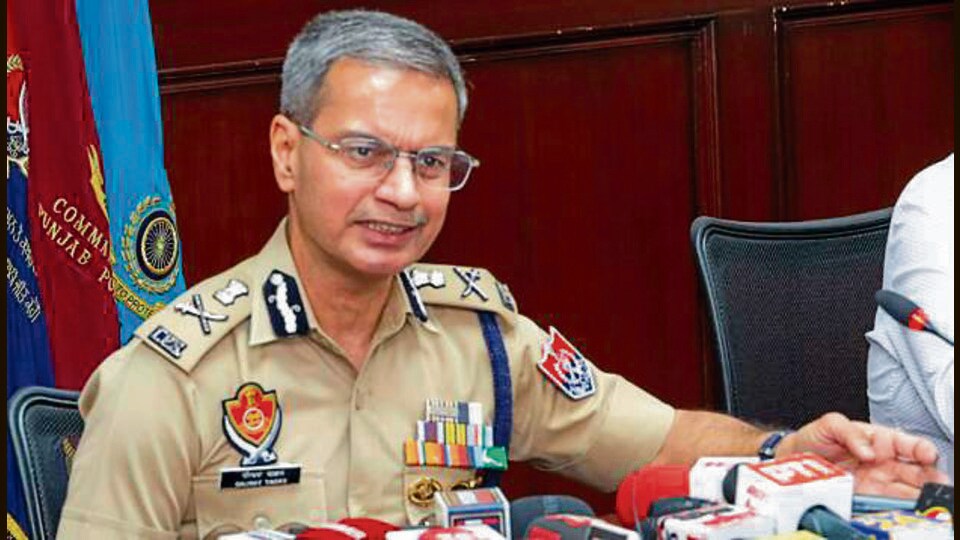
Addressing the media on Saturday, Yadav emphasised that the campaign, which has been active since March, has succeeded in reducing the availability of narcotics in the state through a combination of strict enforcement, intelligence gathering and public cooperation.
“Our assessment indicates that the campaign has not only been successful in India but is being recognised internationally as a role model for combating drug abuse,” Yadav said adding: “The efforts have made a tangible impact in reducing drug availability in Punjab, but there are still areas where narcotics remain accessible.”
‘Not drug-free, but significant progress’
When asked whether Punjab could now be considered drug-free, the DGP gave a measured response. Referring to an English proverb, “Two people are looking from a window, one sees the star and the other sees the mud,” Yadav said that while drug availability had significantly decreased, there are still pockets where drugs remain a problem.
“I won’t say drugs have been completely eliminated. It’s a cyclical issue, but the availability of drugs has been drastically reduced,” he said, adding that the overall situation has improved.
Economic impact of strict enforcement
Yadav noted that the intensified police action has had a marked effect on the drug market. Intelligence reports and informal surveys show that street-level prices for heroin have surged by 50%, and prices for synthetic drugs have risen by 40% due to disrupted supply chains.
“This increase in prices shows that we’ve effectively disturbed the drug supply network,” the DGP said.
Focus shifts to long-term strategy
Looking ahead, the Punjab Police will continue their crackdown on drug smugglers and peddlers while focusing on three key strategies: Enforcement, de-addiction, and prevention. Yadav also highlighted that the police will be monitoring individuals released on bail, especially repeat offenders.
“We are developing a system to track the activities of repeat offenders using the help of village panchayats and local communities,” he said. “Additionally, we are exploring the use of GPS anklets to monitor the movement of major drug smugglers released on bail.”
Technological innovation in anti-drug operations
Punjab Police has been at the forefront of using technology to combat crime. In 2019, the state launched the Punjab Artificial Intelligence System (PAIS), and now an AI-powered hierarchical database is being developed to track individuals arrested under the Narcotic Drugs and Psychotropic Substances (NDPS) Act.
Yadav also announced the deployment of advanced anti-drone systems along the Indo-Pak border to combat cross-border smuggling of drugs and other illicit materials. “These systems will help detect, identify, and neutralize drones, disrupting the cross-border drug trafficking network,” he said.
Campaign achievements
Since the launch of ‘Yudh Nashian Virudh’ on March 1, Punjab Police have made significant arrests and seizures, including 8,344 first information reports (FIRs), 14,734 arrests — 13,038 drug peddlers and 1,696 drug suppliers/distributors, 586 kg of heroin, 247 kg of opium, 14 tonnes of poppy husk, 9 kg of charas, 253 kg of ganja, 2.5 kg of ICE, 1.6 kg of cocaine, and 25.7 lakh intoxicant pills seized, ₹10.76 crore in drug money recovered, 144 illegally acquired properties worth ₹74.27 crore frozen, and 104 illegal properties demolished.
In addition, the hawala network was effectively disrupted with the arrest of 48 major hawala operators, leading to the recovery of ₹10.76 crore, the DGP said.
Public engagement through technology
The ‘Safe Punjab’ WhatsApp Chatbot portal has been a critical tool in encouraging public participation. With the portal’s confidentiality feature, the public has submitted 7,635 tips, resulting in 1,596 FIRs and 1,814 arrests, Yadav said.
‘Each One Adopt One’ programme
In a new initiative to aid in rehabilitation, Yadav announced the ‘Each One Adopt One’ programme, where every police officer, from the rank of DGP downwards, will adopt one drug user to assist with their de-addiction and rehabilitation.
“Starting with myself, every officer will adopt one drug user and help them through the rehabilitation process,” Yadav said. “I encourage more people to come forward and join this initiative to help drug users reintegrate into society.”
Despite the campaign’s notable successes, the DGP said that the fight against drugs is far from over. “We will continue our enforcement efforts, while also focusing on long-term strategies for prevention and de-addiction,” he said, adding: “The work of the Punjab Police will remain relentless in ensuring that Punjab is free of the drug menace.”
Has war against drugs been won or is there a ceasefire: Warring
Punjab Congress president Amarinder Singh Raja Warring launched a scathing attack on chief minister Bhagwant Mann, questioning the status of the much-publicised campaign “Yudh Nashian Virudh” (war against drugs).
Taking to social media platform X, Warring reminded the CM of the deadline and asked whether the battle against drugs had actually been won or if the government had silently called a “ceasefire”.
“Today is May 31, 2025, the DEADLINE you set for defeating drugs in Punjab. Will you please tell us about the status of the ‘War on Drugs’?” Warring posted.
The Punjab Congress chief added: “Please tell us, whether the ‘War’ has really been won? Or, is there a CEASEFIRE? If it has been won, the people of Punjab would like you to make the grand announcement yourself—straight from the horse’s mouth. And if there is a victory, let it be followed by a ‘Victory Parade’.”
Speaking informally to reporters later in the day, Warring dismissed the anti-drug campaign as a publicity stunt, accusing the Aam Aadmi Party (AAP) government of prioritizing optics over substance.
“Setting unrealistic deadlines to eliminate drugs was part of a media strategy, not a serious policy measure,” he said. “The money wasted on publicity could have been better spent on establishing more de-addiction centres and treatment facilities,” he added.


