
 E-Paper



Punjab staring at severe DAP shortage amid unstable supply
The state has a supply of 2.12 lakh tonne against the rabi sowing season’s requirement of 5.5 lakh tonne DAP, a key fertiliser used to provide growing crops with the requisite levels of nitrogen and phosphorus.

 Prefer HTon Google


The ongoing war between Iran and Israel has pushed Punjab’s farming sector into a crisis, with the state facing acute shortage of di-ammonia phosphate (DAP) fertiliser.
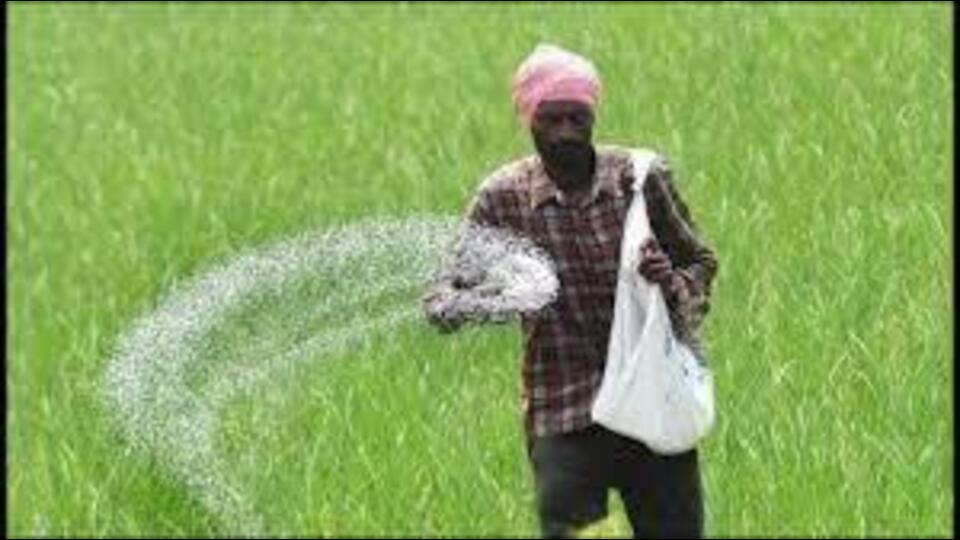
The state has a supply of 2.12 lakh tonne against the rabi sowing season’s requirement of 5.5 lakh tonne DAP, a key fertiliser used to provide growing crops with the requisite levels of nitrogen and phosphorus.
India earlier sourced DAP from China but had been bringing in the supply from Morocco and Jordan since last year. Notably, Indian Farmers Fertiliser Cooperative (IFFCO) runs a manufacturing plant in Jordan.
The movement of ships carrying the fertiliser from Morocco and Jordan has been hit amid the escalation in the Middle East. Earlier, the ships would sail via Yemen but with the Houthis opposing Israel and siding with Iran, the ships have come under threats of attacks. The vessels are now taking a detour all the way across from Cape Town, South Africa, resulting in a significant increase in sailing time, logistics and insurance cost.
The state’s annual DAP requirement stands at 8.5 lakh tonne, making for 10% of the country’s yearly requirement of 80 lakh tonne. “The ongoing Iran-Israel war has impacted supplies to the entire country and Punjab needs the fertiliser now is feeling the severe impact,” state agriculture department joint director Gurjeet Singh Brar said.
In Punjab, 3 lakh tonne DAP is required during the kharif (paddy) sowing and the remaining 5.5 lakh tonne during the rabi (wheat cultivation) season.
During a 15-day period between October 20 to November 5, which coincides with the start of rabi sowing, farmers in the state add 50 kg DAP per acre for better yield. The Punjab State Co-op Supply and Marketing Federation Limited, known as Markfed, looks after the supply.
“October days are crucial, in case we do not receive the required stocks things will become very difficult,” an state agriculture department officer said.
Problematic alternatives
Owing to the shortage, the Centre has asked Punjab to turn to DAP alternatives such as triple super phosphate (TSP), NPK (12-32-16) or single super phosphate (SSP). However, according to officials in the state agriculture department, the alternatives are more expensive and still do not meet the soil requirement as effectively as DAP.
A 50 kg DAP bag costs ₹1,350; TSP ₹1,450, NPK ₹1,480 and SSP ₹350. To meet the soil’s nutrient requirement, three bags of SSP are required per acre.
Officials from Punjab had last month met the Union chemicals and fertilisers minister JP Nadda in New Delhi, informing him about the shortage and the state heading towards 35 lakh hectares of wheat sowing (after paddy harvest, which has started) and needing 5.5 lakh tonne DAP.
The Centre, which allocates the fertiliser supplies, had agreed to provide 4.5 lakh tonne DAP, 1.5 lakh metric tonnes of NPK (nitrogen, phosphorus, and potassium) and 1.5 lakh metric tonnes of SSP (single superphosphate) to Punjab for the rabi season.
Speaking on the alternative fertilisers, an official in the state agriculture department said companies are reluctant to bring the fertilisers as they fear losses in case the DAP supply streamlines.
Despite the Centre’s assurance, the supply to the state is inadequate. Against August’s allocation of 1.1 lakh tonne, the state received 51,000 tonne. In September, the complete allocation of 80,000 tonnes was received, while for October, 2.5 lakh tonne has been allocated, of which so far 20,000 tonne has been received and another 27,000 tonne is in transit.
“During the corresponding time last year, the state had 3.18 lakh tonne DAP in the stock, a number that currently stands at 2.12 lakh tonne, which means the shortage is very severe and we should get stocks in the proceeding four weeks to fulfil the shortfall,” the official not willing to be named said.
“We are trying to fulfil the shortage, but in the wake of the scenario, we suggest farmers use DAP in the right proportion as suggested by the Punjab agricultural university,” state agriculture department joint director Brar said.


