
 E-Paper



Punjab to impose district-wise cap on wheat procurement
Even during the kharif season, four procurement agencies of Punjab and Centre’s FCI had purchased paddy on the basis of district-wise average yield

 Prefer HTon Google


The Punjab government will impose a district-wise limit during wheat procurement scheduled to start on April 1. The state’s food and civil supplies department, which oversees procurement, and agricultural marketing board, which manages mandi operations, are working out the limit on the basis of a report from the agriculture department.
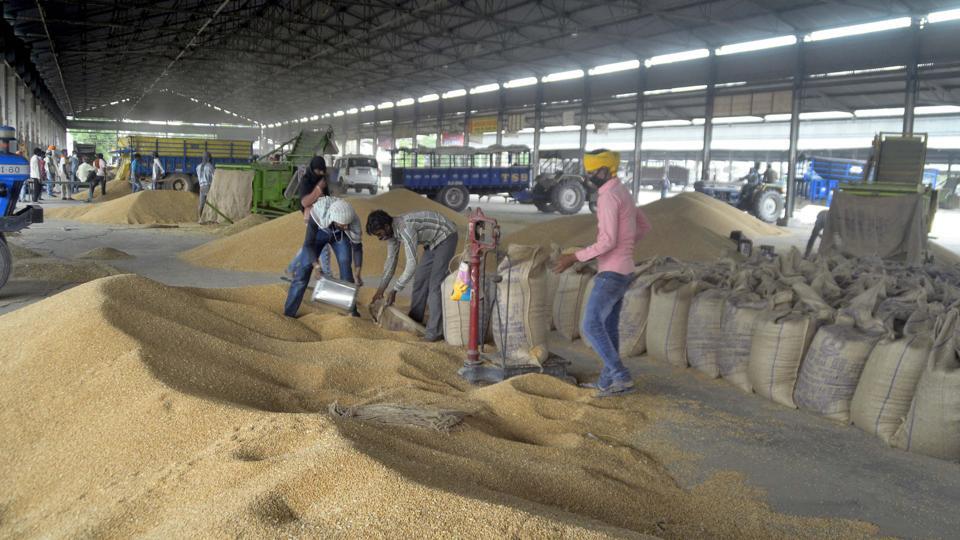
Even during kharif season, Punjab’s four agencies and Centre’s Food Corporation of India (FCI) had procured paddy on the basis of district-wise average yield. For example, it came out to 40 quintals per acre in Sangrur and 29 quintals per acre in Pathankot.
“It would become a practice, as restrictions were imposed ahead of the last kharif season as well,” said an officer of the state food department.
The Centre’s ministry of food and public distribution has asked the state government to restrict wheat procurement to 131 lakh tonne in the rabi season, as was in the last rabi marketing season of 2021. However, the state food department is making arrangements for 135 lakh tonne and has sought a cash credit limit (CCL) of ₹29,500 crore, offering a minimum support price of ₹2015 per quintal.
The Centre is gradually tightening the noose around Punjab’s procurement system, pushing the state’s food department to streamline the process which annually involves at least ₹60,000-70,000 crores for lifting of two crops in rabi (wheat) and kharif (paddy) seasons.
The officials of the state food and civil supplies department and the four procurement agencies feel that the restrictions were in the offing for the past few years because discrepancies that had cropped up with the passage of time were hitting the state’s finances severely. The ₹31,000-crore recovery of legacy amount imposed on Punjab is said to be the cause of mismanagement, as the state is supposed to pay up ₹250 crore every month for the next 20 years to clear the dues.
The mandi board officials said linking of land record to procurement has reached an advanced stage as all transactions of agriculture lands in Punjab have been completed till September last year. “The details of sale and purchase of the land and the new owners are being updated and matched with our records,” said an official, not willing to be named.
Meanwhile, in a meeting between the officials of the mandi board and state food department on Wednesday, it was decided that the board will set up additional mandis to maintain social distancing due to the ongoing Covid-19 pandemic. There are 1,850 regular mandis in the state, and the additional number will be decided when procurement begins.


