
 E-Paper



Punjab: Area under basmati rice shrinks by 25% this kharif season
According to figures released by Punjab Remote Sensing Centre, basmati rice was sown over 4.4 lakh hectare this season, against last year’s area of 6 lakh hectares

 Prefer HTon Google


Punjab’s diversification plan has suffered adversely as the area under the premium paddy variety basmati has shrunk by one-fourth this kharif season.
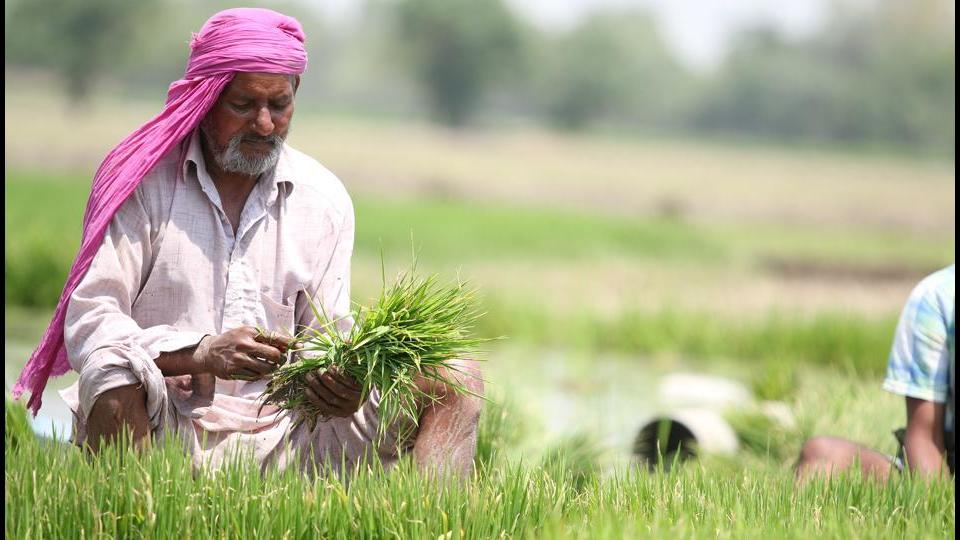
According to figures released by Punjab Remote Sensing Centre (PRSC), basmati was sown over 4.4 lakh hectare this season, against last year’s area of 6 lakh hectares under cultivation, witnessing a steep fall of around 25%. For the past half a decade, the centre has been studying the cropping pattern, recording areas under different crops in kharif and rabi seasons.
Basmati is the best bet for diversification as it consumes half the water required to grow parmal varieties, which consume 3,367 litres of water for a kilogram of rice.
Adding to the glory, Punjab has the GI (geographic indication) tag for this aromatic variety, which makes it the native crop of the region and a favourite of rice eaters worldwide. The premium crop is cultivated in the border districts of Amritsar, Tarn Taran and Gurdaspur, and some parts of Moga, Muktsar and Faridkot.
Farmers shifting to parmal
The fall in area is attributed to poor economics attached with the premium crop, forcing the basmati growers to shift to parmal, which is covered under the system of minimum support price. This season, parmal varieties have been cultivated over 26 lakh hectares of area.
“An acre of basmati gives a yield of 18-20 quintals, which sells for ₹2,400 a quintal making a total sale of ₹48,000. While the yield of an acre of parmal variety is 30-32 quintal, which sells at a fixed price of ₹1,940 per acre,” said an official of the state’s food and civil supplies department. He added that parmal fetches per acre value of ₹58,000-62,000, leading to ₹10,000-12,000 profit.
According to officials, there needs to be a system to regulate prices offered to basmati growers by traders to ensure they don’t get fleeced.
‘Sanctions on Iran hit exports’
Ashok Sethi, director, basmati exporters’ association, said the fall in prices is due to the closure of business with Iran, which used to import grain worth ₹12,000 crore from the state. “We are hopeful of an upward swing in the basmati market once the sanctions imposed on Iran by the US are lifted. The sanctions have disturbed the basmati trade in India, particularly in Punjab,” he said.
Annually, basmati export from India is worth ₹34,000 crore (USD 4.66 billion), out of with Punjab contributes 40%. The quantum of Indian basmati rice consumed in Saudi Arabia is 50% of the total import to Middle East, which is 70% of the exports. Other countries and regions that import from India majorly include Iran, Iraq, Lebanon, North America and Europe.
Harpreet Singh, a basmati grower from Batala, said basmati’s 1509 variety sold for ₹2,400 to ₹2800 per quintal this season. “Let us see how much price the late varieties, expected to arrive in mandis within 10 days, are able to fetch,” he said. He said the continuous fall in prices over two to three years has forced farmers to stop cultivating the premium grain and shift to water guzzling parmal varieties.


