
 E-Paper



Surviving on hospitality in war-torn Afghanistan
SPICE OF LIFE: A plush car along with an escort vehicle with four commandos was waiting to receive him. That was a first for a harmless scientist


My father, Dr PC Gaur, once headed a special assignment to Afghanistan, under the United Nations Development Programme. He was an illustrious scientist who had done extensive research on potato cultivation and had travelled to many countries.
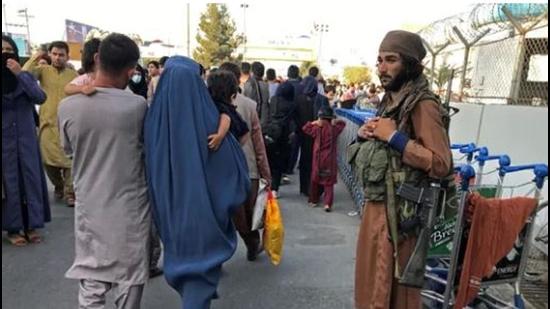
This time it was Afghanistan, and we as a family were concerned since there were security issues. We made him promise that he would regularly inform us about his wellbeing. So, for the next four weeks, all of us virtually travelled with him, feeding on his first-hand account of the incredible journey.
It was the autumn of 2003 when he landed at Kabul airport. A plush car along with an escort vehicle with four commandos was waiting to receive him. That was a first for a harmless scientist who had only dealt with plants and seeds all his life.
Taliban was taking shape, and though it was in a nascent state, the rumblings of their nefarious activities had already been felt. On the other hand, Hamid Karzai was heading a transitional administration, and was yet to be formally instated by the elections the next year. So, the law and order was precarious.
The fields of Ghazni were first on the itinerary. The advisory had come in the morning. It clearly stated that they were to take the entire journey of four hours without a break. The car had been replaced with a heavy metalled Land Rover with rustic interiors. Nobody was allowed to de-board the vehicle at any point.
The tense journey eased with the warmth of the local people. All went well. In fact, one of them gifted a handmade shawl, which we learnt was called Afghan in their language.
Next on the agenda was the arduous road travel of 820km to the province of Herat. Here one had to get used to the bumpy ride and make peace with the long stretches of sand dunes, bearing down the craggy hills and driving through the shallow rivulets. The Central Route that took them to their destination was nothing but a ravaged, war-torn countryside.
All modes of communication were primitive and so were the check posts. There would be armed men suddenly banging on my father’s vehicle to check his identity. They could have easily been terrorists instead, and that is when the commandos came to assist. Being in the hinterland also meant that one could come across landmines and unexploded ordnance.
At an overnight halt in a hamlet, everyone sat on the floor where dinner was served lovingly, in a common tray, filled with mostly mutton. Despite the hospitality, dare I say, my father lost his appetite.
There were many more stories that spoke of the courage and enthusiasm of the common people despite the formidable circumstances in Afghanistan. It was heartening to see that the common people never lost hope and were willing to work hard to make their lives as normal as possible.
The news of Taliban taking over last month saddened my father. He was also worried about what would happen to the potato fields. alkagaurkashyap@gmail.com
The writer is a Chandigarh-based advocate


