
 E-Paper



Too early to say if rise in temperature could impact yield of wheat crop, says PAU V-C
The PAU V-C said that medium to heavy fog is witnessed during the morning hours in outer areas of the city, especially in the wheat fields


With the days getting warmer in the winter month of February, vice-chancellor of Punjab Agricultural University Dr Satbir Singh Gosal assured the farmers not to panic by the sudden rise in temperature as it would be too early to predict that the soaring mercury could lead to shrinking of the wheat seed and impact the crop yield.
He said that the prevailing condition of fog during the morning hours is helpful for the growth of the wheat crop.
The V-C said that medium to heavy fog is witnessed during the morning hours in outer areas of the city, especially in the wheat fields.
The fog carries a lot of moisture which helps in maintaining soil moisture.
The Vice- chancellor said that teams of experts from PAU are carrying field inspections to check the impact of sudden rise in temperature.
So far, there has been no report of damage to the crop due to the rising weather.
Besides, the teams are also observing the progress of newly introduced heat tolerant wheat variety PBW 826.
Even the plant breeding and genetics department of Punjab Agricultural University (PAU) in its report had stated that the rising temperature had affected the yield of the wheat crop.
PAU principal agronomist (wheat) Hari Ram stated that the heat stress experienced at the end of the wheat season is called terminal heat stress.
“Wheat is very sensitive to high temperatures, especially at the grain development stage due to the direct effect on grain number and grain weight which are important from crop yield and quality point of view.
The sudden rise of 2.1 to 6.6 degree Celsius of minimum and 2.6 to 6 degree Celsius of maximum temperature at the end of March during 2021-22 became unfavourable for the wheat crop.
This time we are witnessing this phenomenon in the month of February,” said Hari Ram. The farmers are being advised to irrigate the wheat field to maintain moisture in the soil.
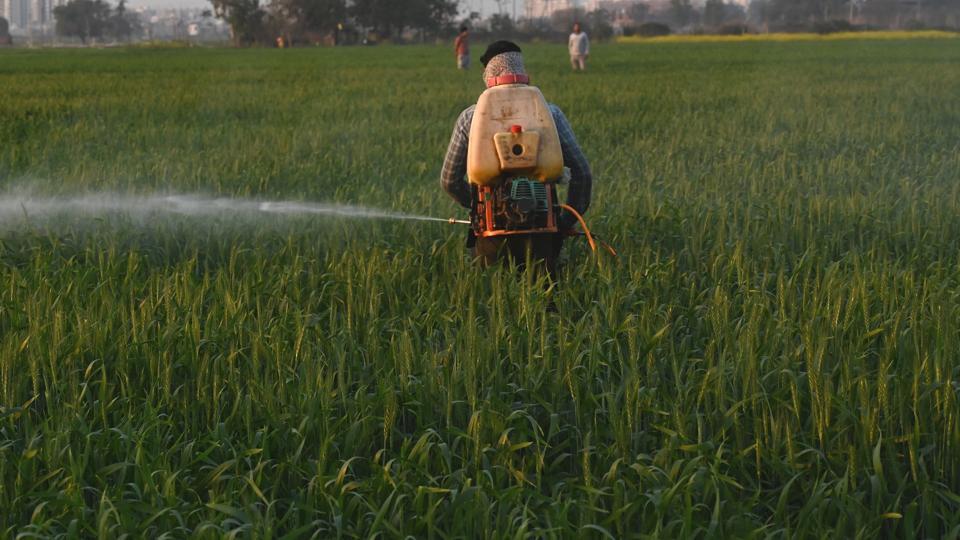
Simultaneously, they are asked to spray potassium nitrate on wheat crop as per PAU guidelines. Spray of potassium nitrate reduces heat impact, Hari Ram said.
The agricultural university in August had introduced a new genetically stronger wheat variety, PBW 826, which has better heat tolerance as compared to other existing varieties available in the market.
Introduced after four years of clinical and field trials, the new PBW 826 variety had witnessed 31 and 17 percent more yield than HD 3086 and HD 2967 varieties of wheat.
The variety also takes 148 days to mature while other varieties take 150 days to mature.
The city on Tuesday recorded a maximum temperature of 29.6 degree Celsius, 7.4 degrees higher than normal, the hottest day recorded on February 21 since 1970, the time the meteorological observatory was established to compile weather records.


