
 E-Paper



Wildbuzz: All’s well that ends in a well
A recent incident in Maharashtra's Rajuri village saw a golden jackal and a spectacled cobra fall into an open well and maintain a safe distance from each other until a Wildlife SOS team rescued them. This showcases how wild creatures possess situational awareness and can refrain from turning aggressive towards natural foes when confronted by a common adversity. Similar incidents have occurred in the past, highlighting how some animals exhibit an unspoken agreement to not harm each other in critical situations.

 Prefer HTon Google


Wild creatures possess an acute sense of situational awareness. They can refrain from killing or turning aggressive towards a natural foe when confronted by a common adversity. Nothing illustrates this better than the predicament of creatures falling into open, uncovered wells.
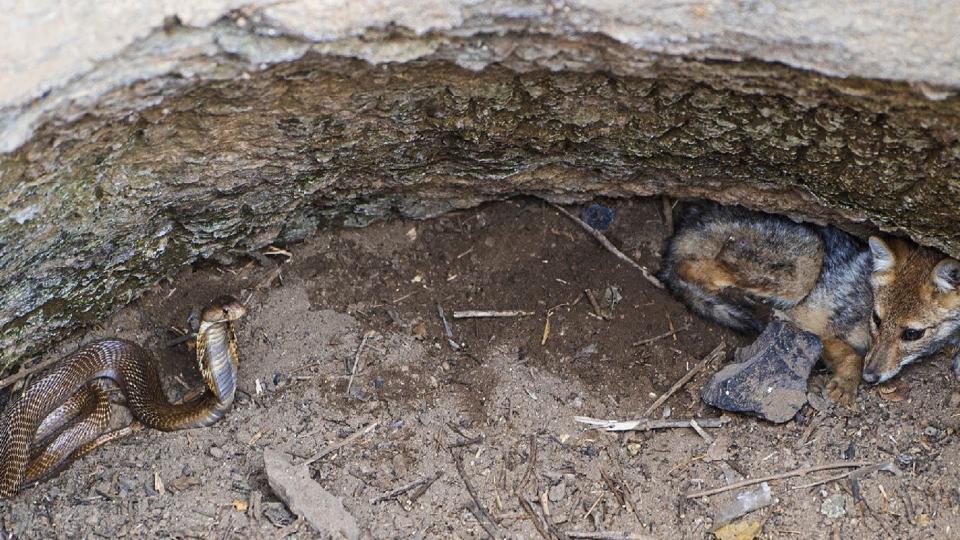
A recent case from Maharashtra’s Rajuri village (Junnar taluka) was a heart-warming one. A golden jackal and a spectacled cobra were found in the well and it took a two-hour rescue operation by a Wildlife SOS team to extricate them. Though cobras and jackals are mortal enemies at the best of times, both had maintained a safe distance from each other in the cramped well from which they could not have escaped on their own. An honourable truce had been effected between enemies, having realised the human-made prison doomed both.
Referring to the cobra-jackal mutuality, Wildlife SOS conservation projects director Baiju Raj MV told this writer: “Both animals seemed to understand the danger they were in, leading to an unspoken agreement to not harm each other.”
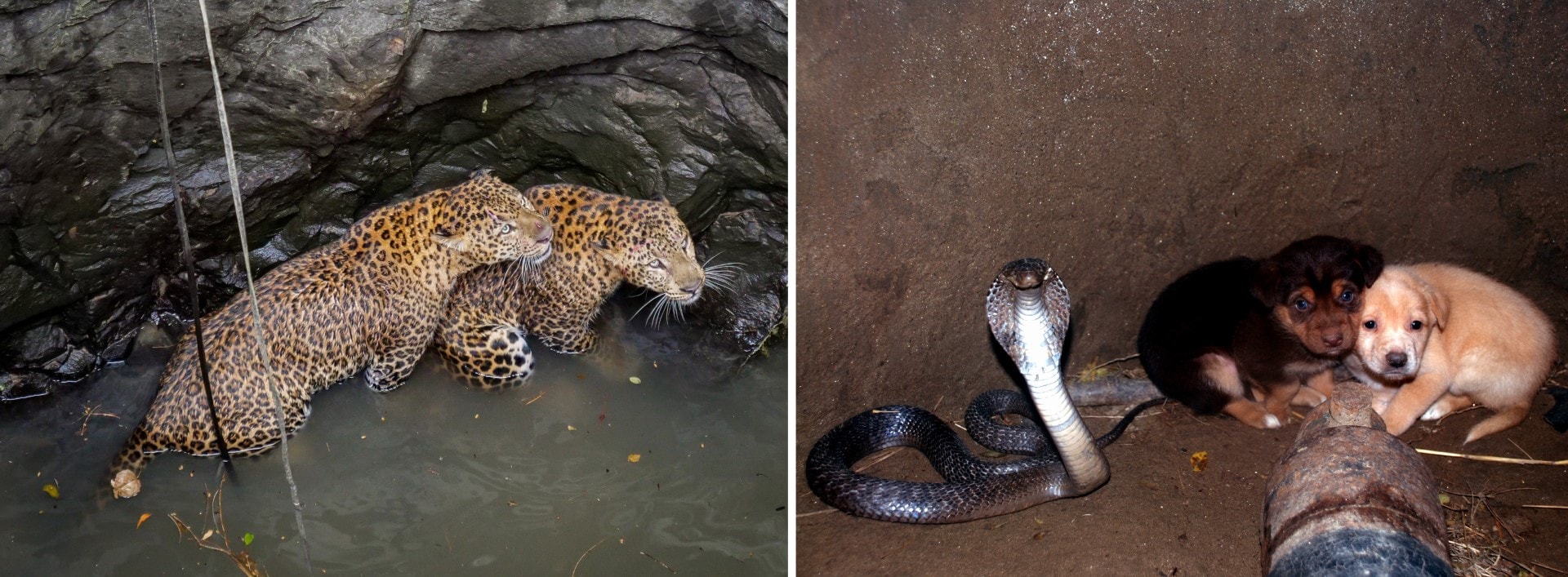
The episode recalled a similar incident from the Jaffarpur village in Nawanshahr, Punjab, in 2012. A cobra and two pups had fallen into a dry well and it was 48 hours before they could be rescued by wildlife conservationist Nikhil Sanger. In that critical period, the panicky, innocent pups had clambered onto the adult cobra, but the mature snake had not bitten them. Instead, the cobra had taken recourse to warning hisses and an inflated hood to nudge the pups away or even striking at them with the hood sans fangs. The reason why the cobra did not bite was because it did not feel sufficiently threatened by the pups owing to their non-intimidatory sizes and lack of barking. Had the cobra killed the pups, it would have been useless. The pups were too big to swallow for the cobra.
The cobra’s reluctance to expend its venom on a meaningless kill, such as a pup, manifests itself in certain cases of human bites. Even though the cobra bites the human, it does not inject venom as it seeks to save venom for hunting edible prey. The bite is only meant to warn and deter the human, not kill. Such cases are described as “dry bites” or a venom-less penetration of fangs into human flesh.
The “ceasefire in a well” scenario was brought out even more dramatically in Bhatkalwadi Ottur village, Maharashtra, in 2019. Two warring male leopards, fighting bitterly over territory and resident females, had tumbled into a well with deep water.
The fighting ceased abruptly and both leopards made common cause by scrambling onto a small, elevated ledge to keep themselves from drowning. Instead of roaring at each other, both males with bodies virtually touching on the cramped ledge emitted distress calls which alerted villagers and brought a Wildlife SOS team rushing to the spot for rescue.
vjswild1@gmail.com


