
 E-Paper



Wildbuzz | Beas mein sunhe, ek Lata awaaz
No one, harbouring even the remotest of inclinations for birds and music, could be indifferent to the Blue Whistling thrush, singing as if Lata Mangeshkar was perched on a Beas boulder


A certain Missy Miss, who loved misty mornings upon the mountains, heard the dark blue whistler and she called it bliss.
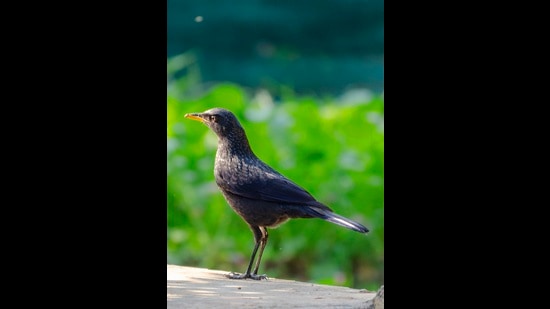
No one, harbouring even the remotest of inclinations for birds and music, could be indifferent to the Blue Whistling thrush, singing as if Lata Mangeshkar was perched on a Beas boulder. “Dashing across the face of some precipitous crag, flitting through the trees of the gloomiest pine forests”, the thrush is a bird whose songs triumph the belligerence of the Beas.
When all lesser sounds are drowned in the river’s rush through gorges, the thrush’s call notes are acoustically so pitched to travel high above the waters and to its companions. The song is unforgettable, and is like an idle school boy whistling ecstatically with no doubt his pretty teacher in mind. An “ear candy” for mountain lovers, thrush songs are melodious passages of clear, short and high-pitched whistles designed to sweetly mock the vanities of ‘dragons frothing in cascading melts’.
The thrush is reckoned a “flautist of unbridled creativity” and so figures in myths associated with Krishna. One of its vernacular names, Kastūrikā, heralds the thrush as a companion of the Musk deer. In Bhutan, its sweet songs at dawn assign to it the status of “an unfailing alarm clock in season”. The dark, violet-blue hues of the bird coupled with silver specks and shiny spangling on tips of feathers bring to mind Van Gogh’s evocation of cosmic colours in ‘The Starry Night’.
Come winter, and some thrushes flee to the plains as Pakeezah-like courtesan-singers of the avian “durbar move”. Though not as vocal as they are in the summery mountains, you may seize upon this silent bird in Chandigarh’s withering gardens. Then close your eyes, let its mountain melodies fill your imagination and promise yourself a Manali holiday as soon as summer steals in.
Museums will miss her
The globe’s tiniest wild cat, the rusty-spotted cat, does not lend itself to close scrutiny, unless found fresh-dead and less mutilated. Photographs of live cats taken with long lenses or camera trap images provide the standard “look” at this secretive species. A complication is that camera trap images may go wrong in identification of this cat because they are often taken at night and do not always capture specific features that conclusively define this species. Few zoos maintain these cats.
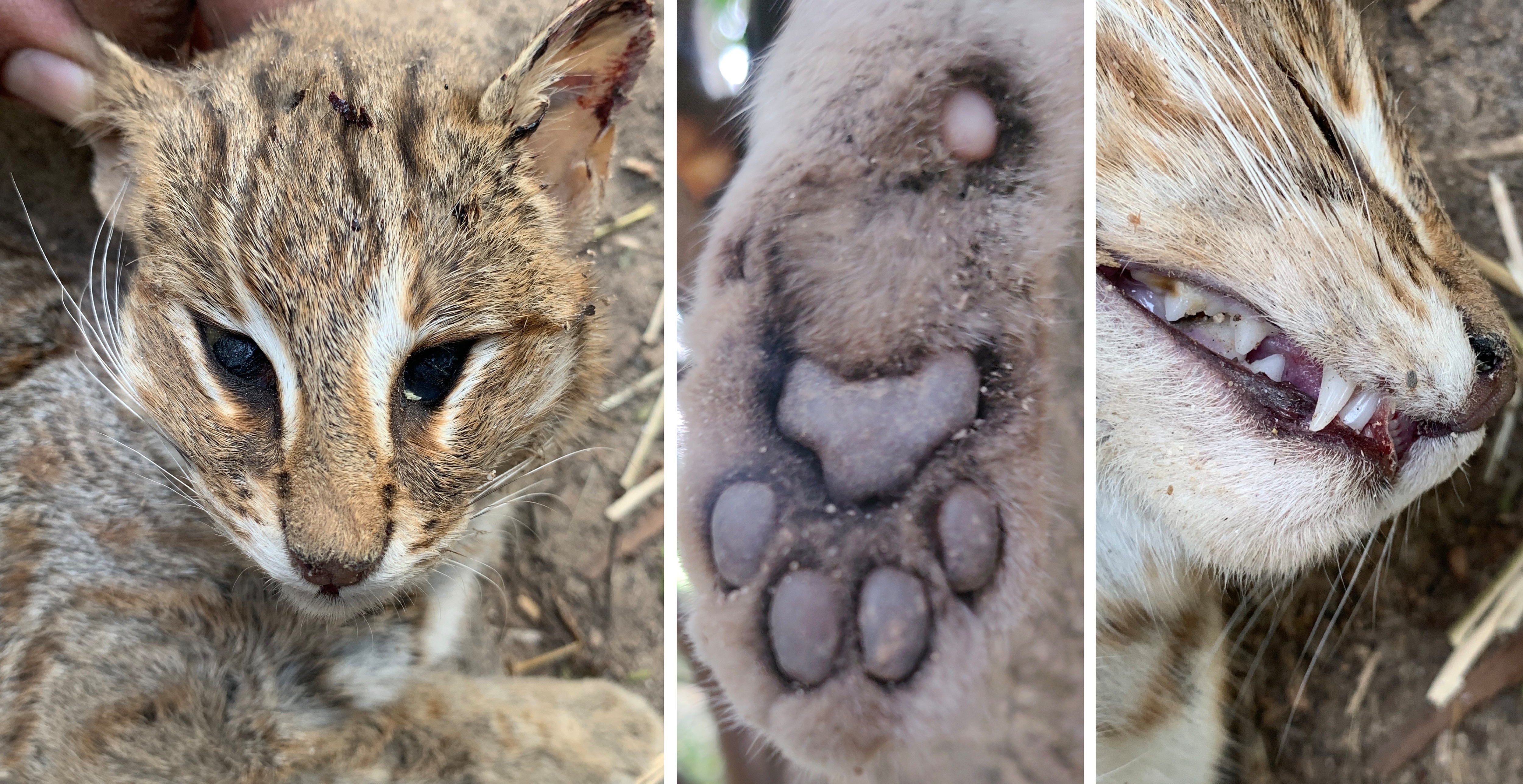
A golden opportunity to have a really close look at this little cat came our way, albeit in tragic circumstances, through a fresh road kill near village Kasauli, SAS Nagar, in the foothills north-west of Chandigarh. It was a female draped in a fawn coat and apricot-colour markings, reminiscent of an exquisite Kashmiri shawl.
I measured physical specifications. The busy tail, bearing the faintest suggestion of rusty bands, was 20.32 cm while the body length from nose to beginning of the tail was 38.1 cm, which fits in with the textbook description of tail as around half body length.
The height at shoulder was 18.5 cm while the height of the hind leg from hip down was 18 cm. The weight was just over a kilogramme, which fits in with the standard female weight of 1.1-1.6 kg. The condition of the teeth was excellent, including that of vital canines.
Road kill or naturally-dead specimens of such elusive species are best collected and dispatched to zoological collections curated at Bombay Natural History Society (BNHS), Zoological Survey of India and Wildlife Institute of India. Collected specimens enhance scientific / taxonomic precision, especially as killing rare creatures for collecting specimens is a practice outmoded and best avoided. However, some wildlife departments tend to exhibit a lethargic, inhibitive attitude towards collection. Bureaucratic formalities associated with field collection dissuade non-government individuals and entities.
“If specimens are collected despite the systemic constraints, the use to science is that they can be put to genetic tests to determine the gene pool of the species from the particular area. The dead cat’s stomach contents helps us assess prey base,” associate professor Rajiv Kalsi, a field researcher who broke new ground on the wild cats of Kalesar National Park, Haryana, told this writer.
vjswild1@gmail.com


