
 E-Paper



Wildbuzz: Cats of a lesser God
mall cats are so elusive at Kalesar that even field researchers hardly sight them as they dart furtively across open spaces during the day and hole up in trees and undergrowth before launching hunts in the remote hours between 1am and 3am


Unlike charismatic species such as tigers and elephants, the habitats and well-being of the less popular and poorly-researched species such as small wild cats hangs in uncertain balance. The pressure on the habitats of these non-VIPs or the common folk of the jungle, so as to say, is intense. If action plans to save these species are not drawn up in earnest, these humble creatures may well go extinct in a region without the people ever knowing they had existed right under their noses from the proverbial times immemorial.
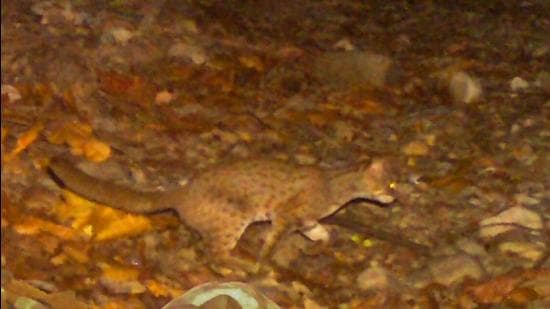
A two-year study, ‘Spatial Ecology And Prey Base Of Lesser Cats’, deployed sophisticated digital camera traps at night while seeking to rectify the historical neglect of the presence of small cats at Kalesar National Park, Haryana, nestling in the biodiversity-rich Shivalik foothills. The research project was funded by the Government of India’s department of science and technology. It involved use of camera trap data from 40 trapping stations operated during 2018-2020 at Kalesar and resulting in a total of 8,082 trap nights. Despite their wide-ranging distribution in India, very few field studies have been done on small cat species and there is paucity of knowledge about ecology and behaviour of these species from the conservation and scientific viewpoints.
Conducted by Rajiv S Kalsi, author and zoology head at MLN College, Yamunanagar, the research revealed the presence of four species of small cats at the park: leopard cat, rusty-spotted cat, jungle cat and Asiatic wildcat. The study was revelatory: the first two species were not known to exist at the park. Small cats are the most elusive creatures at the park as they are reeling under intense habitat pressure and competing with high leopard densities. Small cats are thus forced to maintain a low, virtually invisible profile. It was only the sustained use of advanced technology provided by US-made Cuddeback camera traps that conclusively established their existence. The research project’s findings provide a basis for the executive to draw up future management and conservation plans to firewall the cats’ threatened lives from intrusive, overlapping human interests.
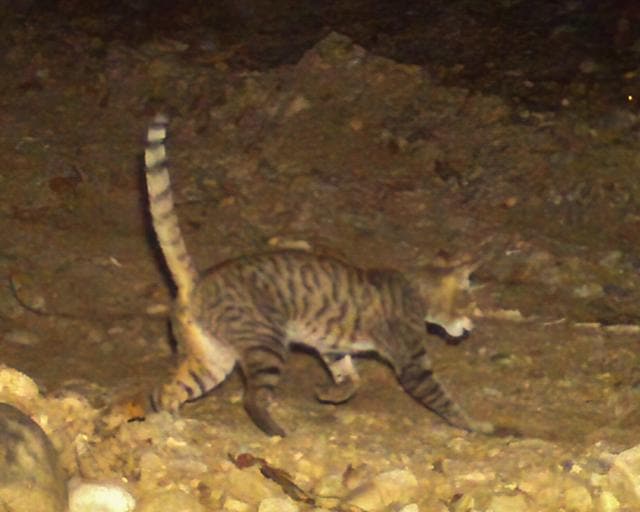
Elucidating upon the reasons for small cats escaping the radar, Kalsi told this writer: “Cats are by their very nature elusive and secretive. Small cats at Kalesar are also mindful of keeping away from leopards as the latter are an apex predator species and compete with small cats for prey such as junglefowl, hares and rodents. Since small cats can easily be mauled and killed by leopards, they tend to stay away from leopard territories and hunt when leopards are not active in the area. That implies that small cats can exist only in small densities because of high leopard densities at Kalesar. Thirdly, there is sustained disturbance in the park because of national highway 907 that passes through. In fact, my interest in small cats was triggered by a road kill of a jungle cat and it got me thinking that there must be more such cat species in Kalesar’s remote, unexplored depths.”
Small cats are so elusive at Kalesar that even field researchers hardly sight them as they dart furtively across open spaces during the day and hole up in trees and undergrowth before launching hunts in the remote hours between 1am and 3am. Road kills thus provide solid though tragic evidence of the existence of such unknown species. “In addition, the park suffers from a high level of disturbance by grazing cattle and locals collecting firewood in large amounts, and poaching. Due to this reason, small cat species were mainly distributed in the denser parts of the habitat and away from trails and fire lines,” Kalsi added.
A byproduct of the research project on small cats, Kalsi’s camera traps revealed a very high density of leopards at Kalesar. Leopards were recorded in 199 independent camera trap images. His modelling indicates there may be 26 to 28 leopards at Kalesar. “Leopards are very opportunistic predators and their diet very varied. They can kill species ranging from sambars to bandicoots and thus come into conflict with the smaller cats, who kill smaller species, which overlap with the leopards’ comprehensive dietary menu,” he added.
vjswild1@gmail.com


