
 E-Paper



Wildbuzz | Dogs at war with trench rats
The ultimate horror of trench rats was suffered in WWI when the rodents fed off food, wastes and corpses, promoting disease and affecting troops’ morale

 Prefer HTon Google


The military history tradition of the West meticulously records for digital and museum posterity the contribution made by each and every animal/bird and non-combatant to the war effort. The remembrance of the varied contributions is instilled in western children from an early age. The Imperial War Museums of the UK founded in 1917 lists 12 ways in which animals have helped the war effort, ranging from modes of transport and communication, as protectors, companions, detecting gas in trenches to locating improvised explosive devices (IEDs) et al.
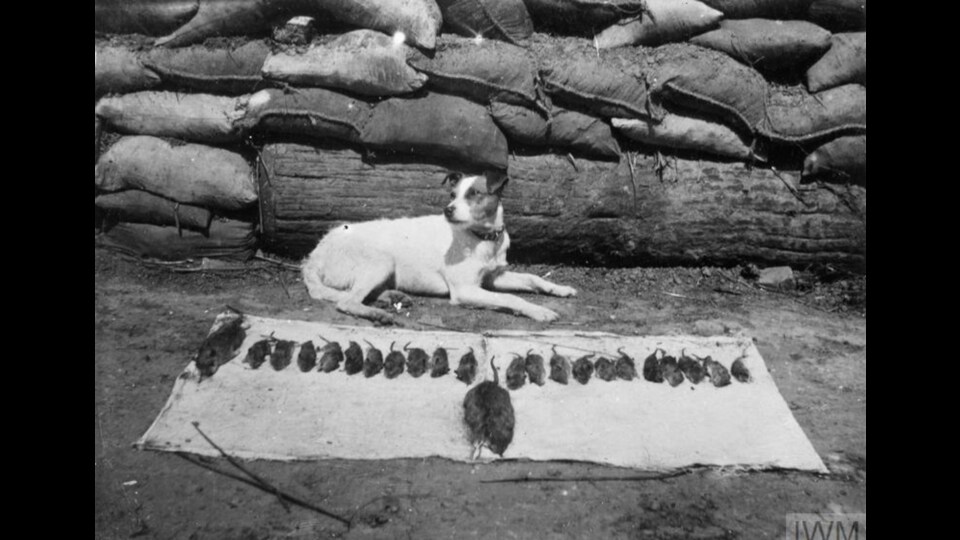
One of the most critical tasks performed by cats and dogs was to rout the rats infesting the trenches of the World War I (WWI). Military history has come a full circle because the ongoing Russia-Ukraine War reports a similar rodent invasion in the trenches. A Ukrainian servicewoman fighting in southern Zaporizhzhia told CNN: “Imagine going to bed, and the night begins with a mouse crawling into your pants or sweater, or chewing your fingertips, or biting your hand. You get two or three hours’ sleep, depending on how lucky you are,” said the woman soldier going by the call sign, Kira. She estimated there were around 1,000 mice in her dugout of four soldiers. “It was not the mice who were visiting us; we were their guests,” Kira quipped.
The ultimate horror of trench rats was suffered in WWI when the rodents fed off food, wastes and corpses, promoting disease and affecting troops’ morale. Trench conditions were ideal for rats. They would cross the faces of sleeping soldiers during the night. Soldiers could hear the rats gnawing at the corpses of their comrades, starting with the eyes, who had fallen ahead of the trenches in “no man’s land”. It was not uncommon for rats to snatch food from trench soldiers or gobble candles kept for night illumination. A British soldier recalled his sleeping comrade bitten on the forehead by a rat, forcing a hospital visit. An eerie, relentless rattling at night would disturb soldiers: it was rats foraging in the thousands of food tins discarded outside trenches.
Dogs such as terrier breeds, which had been traditionally trained for hunting vermin, were pressed into war service as ratting dogs and they performed with distinction. Though it must be said, dogs and cats ultimately failed against the resilience, adaptability and the explosive breeding of the WWI rats.
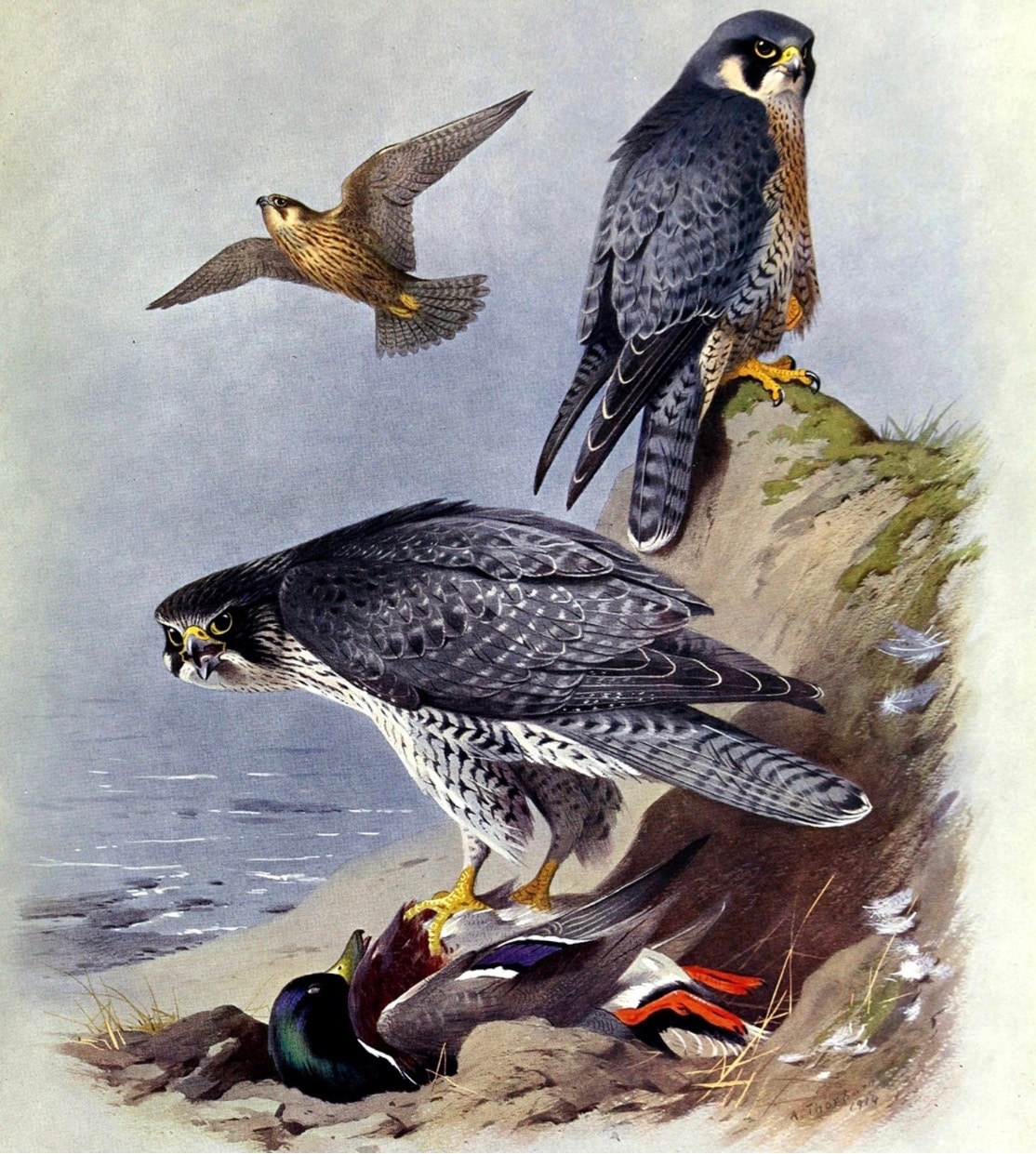
Freedom of the peregrine eye
The peregrine falcon (‘Bhyri’) is the globe’s fastest creature, achieving speeds of 390 km per hour when swooping in accelerating spirals on prey flying far below. Its speed is famous, the peregrine’s superlative vision less so; though the “eye in the high sky” can pick a prey a mile away.
JA Baker’s 1967 masterpiece of nature writing, “The Peregrine”, conjures up the magic of the proverbial ‘hawk’s eye’: “The eyes of a peregrine weigh approximately one ounce each; they are larger and heavier than human eyes....The whole retina of a hawk’s eye records a resolution of distant objects that is twice as acute as that of the human retina. Where the lateral and binocular visions focus, there are deep-pitted foveal areas; their numerous cells record a resolution eight times as great as ours. This means that a hawk, endlessly scanning the landscape with small abrupt turns of his head, will pick up any point of movement; by focusing upon it he can immediately make it flare up into a larger, clearer view,” wrote Baker.
In Baker’s lyrical prose: “The Peregrine’s view of the land is like the yachtsman’s view of the shore as he sails into the long estuaries. A wake of water recedes behind him, the wake of the pierced horizon glides back on either side. Like the seafarer, the Peregrine lives in a pouring-away world of no attachment, a world of wakes and tilting, of sinking planes of land and water. We who are anchored and earthbound cannot envisage this freedom of the eye. The Peregrine sees and remembers patterns we do not know exist: the neat squares of orchard and woodland, the endlessly varying quadrilateral shapes of fields. He finds his way across the land by a succession of remembered symmetries.”
vjswild2@gmail.com


