
 E-Paper



Wildbuzz: Fishes under a half moon
Every night since March 13, a fleet of 17 boats sets out to net the biggies; the fish-thinning and stock-taking operation — conjoined with a research thrust — will continue till March 22.


As the night deepens star by star over the Sukhna lake, a deadly battle gets underway between adept fisherman and agile monster carps. The carps, which weigh up to 15-16 kg each, are not dumb creatures. They are slippery customers, as wary as nimble deer flushed from a hunt in the jungle.
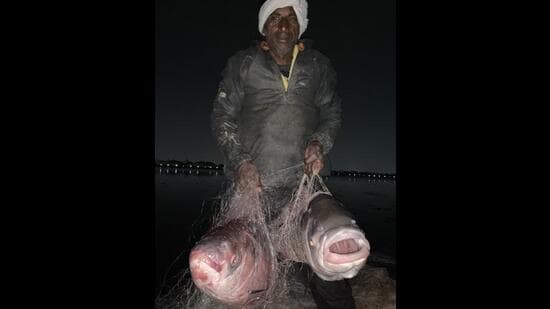
Under the surface of Sukhna’s opaque waters, the hierarchy of fishes is characterised by the sheer dominance of big and old carps, which outcompete smaller fish species, Benthic invertebrates and particular algae by monopolising food resources. In order to restore ecological balance on the recommendation of fisheries experts, the department of animal husbandry and fisheries auctioned the fishing rights for ₹33 lakh.
Every night since March 13, a fleet of 17 boats sets out to net the biggies. The fish-thinning and stock-taking operation — conjoined with a research thrust — will continue till March 22. Till Saturday, 169.77 quintals had been netted over five nights. Similar carp-thinning exercises were carried out in 2010 and 2015.
On Thursday, at 3.45 am, this writer accompanied fishermen to witness the struggles waged at the aquatic LOC of a ghostly Sukhna. The lake looked ethereal, necklaced with the twinkling lights of the faraway promenade. I was moving in a rickety country boat, perched awkwardly between fisherman Raees and his oarsman, Danish. The small, light boat tilted and swayed nervously on a breezeless night as the fishermen went about the strenuous task of net retrievals.
Right under me and around my legs were trapped carps in retrieved nets. In their death throes, as life ebbed, the carps defiantly thumped my thighs with mighty whacks of their tails. Overhead was the lingering gaze of a waning moon, an “aadhi bindiya ka chand”. In the soft moon rays, the carps’ scales and droplets reflected ethereal silver. It took about 30 minutes for each to die. The odour of nooses, fish and slow deaths on a starry night permeated my soul.
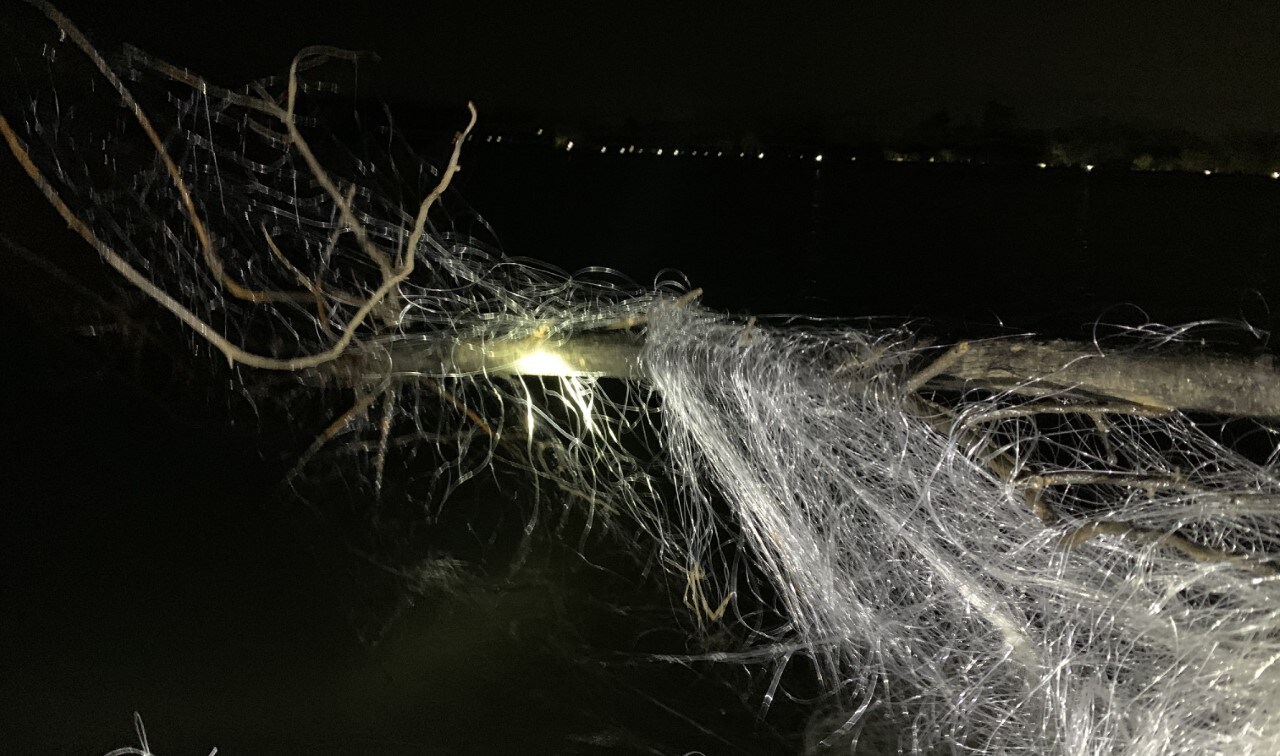
Declining catches over five nights indicates that some escaped the grid of nets. “Fish realise soon enough that nets are being put out. They slink to the sides where vegetation and tree roots prevent nets from being laid. Driftwood entangles nets damaging them and creating gaps through which fish escape. Nets cost ₹2,000 for 25 feet of fine, enmeshed nylon,” fishing contractor, Tahir, told this writer.
Raees struggled with a dozen pieces of driftwood entangling just two of multiple net lines. His dexterous fingers unravelled the driftwood like a Rubik’s Cube speed-solver. Speed was critical as he had been ordered to remove all nets by 6 am. Raees’ hands bore the attrition of thorns, rough wood and exposure to all kinds of waters.
The dying fish gaped at me with their mouths cavernously open, gasping for water. They were screaming, silently, like the muted stars above, as if Edvard Munch’s iconic painting, The Scream of Nature, had come alive. As more fish were caught, they were prised from nets and flung into the chamber underneath the boat’s seating planks. The fish jumped and thumped with astonishing vigour at the chamber’s water-denying walls. But their time had come knocking. They were “convicts” on death row, banging in futility at the cell’s deaf walls.
vjswild1@gmail.com


