
 E-Paper



Wildbuzz | The spectre of avian flu
Those lobbying for the reintroduction of domesticated ducks as a ‘’tourist attraction’’ are virtually signing the death warrant for these innocent birds, apart from endangering other life forms, nearby poultry and humans

 Prefer HTon Google


Two domesticated ducklings appeared out of the blue at the regulator end of the Sukhna lake last week. Though walkers tried hard to get the ducklings to take to water, the little ones were not interested. Strangely, the stray dogs, too, were not interested in gobbling the juicy tidbits.
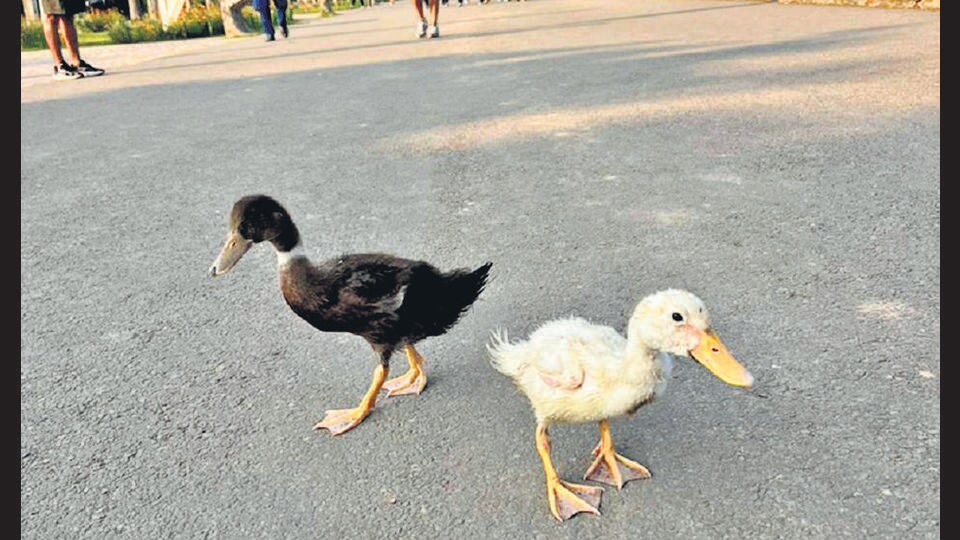
The ducklings had been surreptitiously released at the lake. The possibility of it being the handiwork of those who want domesticated ducks back at the lake cannot be ruled out. Public memory is short but recall those ghastly days of December 2014 when 150 such domesticated ducks/geese were culled by dislocating their necks and by clubbing them to death following the detection of the High Pathogenicity Avian Influenza (HPAI) of the H5N1 strain in a dead duck. Just prior to the cull, 35 ducks / geese had died mysteriously causing alarm bells to ring in VVIP residences neighbouring the lake.
The lake was closed to all visitors for a month following the cull. The forest and wildlife department did not allow reintroduction of domesticated ducks. Domesticated ducks are highly susceptible to avian influenza. Migratory waterfowl, which winter at the lake, are carriers of avian influenza and pass it on to domesticated ducks.
Those lobbying for the reintroduction of domesticated ducks as a ‘’tourist attraction’’ are virtually signing the death warrant for these innocent birds, apart from endangering other life forms, nearby poultry and humans. An affliction of avian influenza in reintroduced domesticated ducks will require another cull.
Two adult domesticated ducks were also seen at the lake in recent years. One was killed by dogs while the other one is still at large. The undesirable presence of the adult and ducklings at the lake has been brought to the notice of the chief wildlife warden.
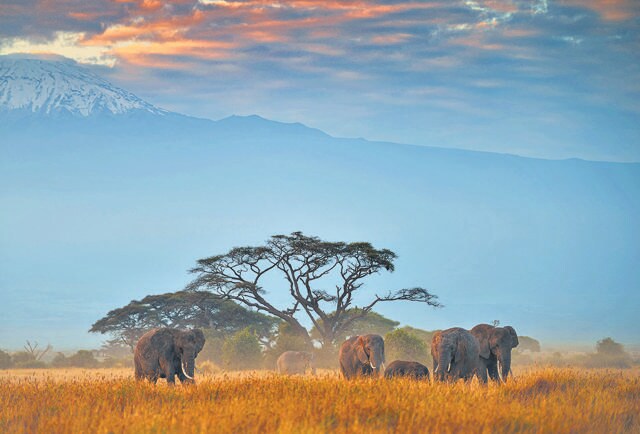
Light from an African dawn
Virtually anyone can click a pic nowadays, courtesy the all-pervasive culture of the cellphone. But true photographers are mystics of the light. They embrace photography as an art, seeking instants that snatch beauty from chaos and ordinariness.
The “celebration of creativity, passion and the timeless spirit of photography” was showcased at FOTO - 2025, an exhibition held under the aegis of the Photographic Society of Chandigarh at Punjab Kala Bhawan. A well-organised exposition, the quality of viewer experience was enhanced by the photographers present alongside their exhibits. They provided a running commentary on context, ideation, technical aspects and the challenges --- unimagined and inherent --- in framing unique visual perspectives of life.
Among nature-oriented exhibits, Rahul Gupta’s African odysseys enticed a lingering gaze. Gupta is an enthusiastic man --- he threatens to erupt any moment into a volcanic ferment of creative forces! His photographs scooped the spirit of Africa and stood distinct from other generic, portrait-oriented frames.
The moon had sailed into the horizon like a fleeing lover. Sunrays had begun to weakly spill over the Masai Mara (Kenya). Gupta captured a Cheetah circling a sharp, still, vigilant gazelle. Both, looking each other in the eye. The night-stained silhouettes framed a timeless tussle. Circumstance, capabilities and the indeterminate play of chance would outcome whether the Cheetah filled his/her shrivelled belly. Or, the gazelle lived another day to flick his tail under the gaze of the cosmic dome.
“Big cats hunt in the early hours before heat incapacitates them. So, I camp inside national parks, procure off-road permits and foray into the deep bush before dawn. Unlike tourists, who enter during the day for ‘sight-seeing’ and traverse well-beaten tracks. Off-roading is thrilling and opens the treasures of the African wilderness like an Aladdin’s cave. One has to endure bumpy, turbulent rides --- in 2021, our vehicle turned turtle leading to severe equipment damages,” Gupta told this writer.
At the Amboseli National Park (Kenya), Gupta captured a veritable African postcard: elephants stealing across the plains at dawn and under the looming gaze of the continent’s stand-alone eminence — Mount Kilimanjaro at 19,341 feet in bordering Tanzania. As Gupta penned it: “In the soft mist, the landscape came alive, vibrant and timeless, as the elephants moved in harmony with the rhythms of the wild.”
vjswild2@gmail.com


