
 E-Paper



Worries of grain shortfall mount as godowns clear wheat stocks in Punjab
Soon, the entire wheat stocks from the godowns will be supplied to consumer states and the Food Corporation of India (FCI) has asked the Punjab government to start with a clean slate from the 2023 rabi harvest

 Prefer HTon Google


The clearing out of the entire wheat stocks from Punjab’s godowns is likely to stir up a hornet’s nest, as it would highlight the shortfall in stocks from past years, which might lead to initiation of inquiries and registration of criminal cases against officials of the food department and procurement agencies.
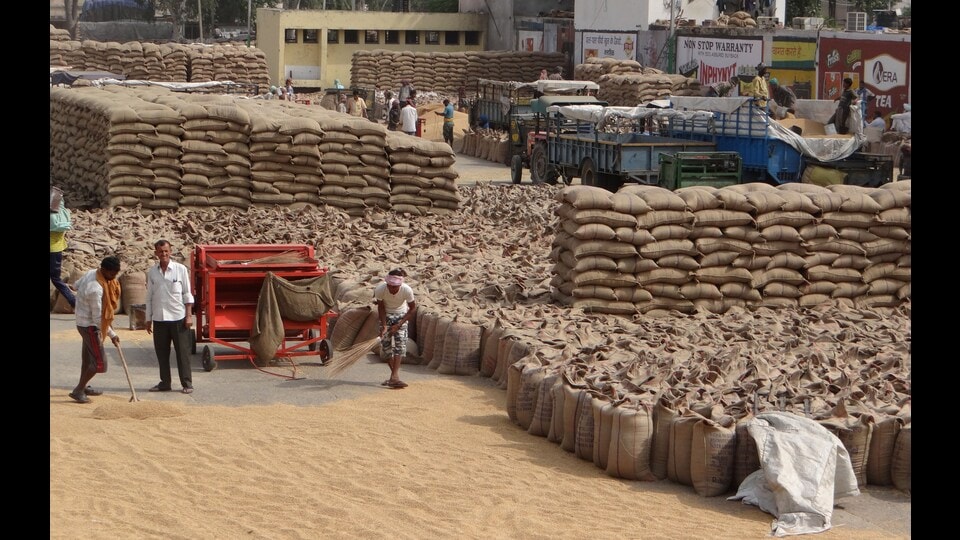
Soon, the entire wheat stocks from the godowns will be supplied to consumer states and the Food Corporation of India (FCI) has asked the Punjab government to start with a clean slate from the 2023 rabi harvest.
Even as emptying of grains is good news as there would be no piles of wheat waiting to perish, it has increased the worries of the staff of the food department and the procurement agencies for the reason that ferrying away of all the stocks will bring to light the shortfall in grains that was registered during past seasons, which may lead to initiation of fresh inquiries and investigations and subsequently registration of criminal cases.
“The practice during the previous seasons was to carry forward shortfall of one season to the next seasons, which led to gap in the stocks which now will be highlighted when the amount of missing stocks is actually known,” said an officer in the state department.
Sensing the impending shortfall, the state food and civil supplies agencies have already started physical verification of the grain stored, including wheat and rice, in each godown across the state.
“At present, physical verification is going on in godowns of Ferozpur, Moga and Patiala and shortfall has been recorded in all the three districts for which the probe has been initiated,” said a senior officer of the food and civil supplies department.
The food department is already in trouble after the state vigilance bureau registered a case last week over irregularities in transportation and cartage of food stocks and also arrested a contractor. The complaint on the basis of which a case was registered against contractor Telu Ram also has mention of three senior officers in the department and former food minister Bharat Bhushan Ashu.
At present, the state godowns have 30 lakh tonnes of wheat stored which the FCI, country’s food agency that drives public distribution system, will take away in three to four months’ time. During the same time, there was 155 lakh tonnes of wheat stored in 2018; 159 lakh tonnes in 2019; 181 lakh tonnes in 2020 and 183 lakh tonnes in 2021.
As against the expectation of procuring 135 lakh tonnes wheat this season, the procurement was restricted to 96 lakh tonnes, leading to a shortfall of at least 30 per cent. The state has a capacity to store 170 lakh tonnes in the covered godowns and about 100 lakh tonnes in covered area plinths (CAP) storage. Of the total CAP storage, almost 60% will go empty, leading to heavy losses to the godowns owners.
Owing to low stocks, most of the CAP – storage facility made in the open over the raised structures and covered with tarpaulin to save stocks from the vagaries of weather- have already been left empty.
New specifications for tarpaulin purchase
The food and civil supplies department on Sunday approved revised tender specifications for purchase of tarpaulins used to protect paddy stocks against inclement weather.
The revised tender terms and conditions have now been brought on par with the terms and conditions approved by the FCI for its own purchases across the country.
To encourage new entrepreneurs, the policy has now done away with the experience clause, opening the doors for new industrial units to bid for tenders. Further, in order to encourage wider participation, suppliers, who are authorised by the principal manufacturers, have also been allowed to participate in the tender process.
This is expected to increase the competition since it was felt that manufacturers, who are located far away, often did not participate in the tender process.
The minimum quantity of tarpaulins to be offered by the bidder has been reduced in order to encourage smaller industries to participate in the tender process. The tenders shall continue to be called on the e-tendering website of the Punjab government to ensure complete transparency.
Comprehensive inspection protocols have also been introduced to check the quality of the tarpaulins being supplied. These include inspections in both factory premises as well as delivery point, making these protocols even more stringent than those adopted by the FCI.
Recognising the monetary benefit of the existing specifications for tarpaulins, which provide for usage of 2 years, the state specifications have been retained. It may be noted that for the past many years, the state government has its own specifications for tarpaulins, which offer a significant financial saving to the government over tarpaulins purchased with FCI specifications, which has a life span of only one year. ENDS


