
 E-Paper



Covid-19: Punjab institutes design containment box for protecting frontline healthcare workers
The aerosol containment box that can be manufactured out of readily available materials was jointly developed by Dr Ashish Sahani from IIT Ropar along with Dr Vivek Gupta and Dr GS Wander from DMCH


The Indian Institute of Technology(IIT) Ropar and Dayanand Medical College and Hospital(DMCH), Ludhiana, have designed a containment box for protecting frontline healthcare workers fighting the Covid-19 pandemic.
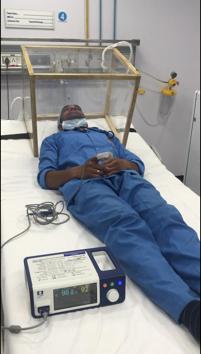
The aerosol containment box that can be manufactured out of readily available materials was jointly developed by Dr Ashish Sahani from IIT Ropar along with Dr Vivek Gupta and Dr GS Wander from DMCH.
According to Dr Sahni, coughing, sneezing or aerosol generating procedure in the Covid-19 patients leads to spread of heavy viral load among healthcare workers. Despite using Personal Protective Equipment (PPE) and taking appropriate precautions, the healthcare workers get infected with coronavirus, due to which a higher than normal infection rate has been noted among them, he added.
He said that containment box could be quickly made out of commonly available resources such as wood, thick poly-vinyl chloride (PVC) sheets, velcro and pasting and fixing materials. This box has a design that can allow it to be converted into a negative pressure chamber by connecting the vacuum from wall-gas supplies, which are readily available in most of the hospitals, said Dr Sahni, adding that aerosol particles are passed through a micron-level filter before being passed out to atmospheric air, which are standard fittings in majority hospitals.
He further said that the containment box has been tested at DMCH for its aerosol containment capability. “Patient comfort has been validated through volunteers lying with the box over their heads for more than one hour. They didn’t feel claustrophobic and their oxygen saturation levels remained normal throughout the test,” he added.
He also said that the advantage of the design was that it could be made and deployed easily by the hospitals themselves without depending on any external supply chains, many of which were broken due to lockdown in ever part the country.
Dr Sahani, Dr Gupta and Dr Wander hope that the design will be adopted by the hospitals in order to provide additional layer of protection to frontline healthcare workers fighting the Covid-19 pandemic. They are willing to offer help for quick adoption of this technology, they said.


