
 E-Paper



Uttarakhand: Chamoli police forms SIT to probe Badrinath QR code case
The Chamoli district police said they have started the investigation with scrutiny of agreement between the Badrinath-Kedarnath Temple Committee and Paytm

 Prefer HTon Google


The Chamoli district police in Uttarakhand has constituted a special investigation team (SIT) to investigate into the controversy surrounding the QR codes at the Badrinath shrine, a senior official said on Wednesday.
Chamoli superintendent of police (SP) Pramendra Dobhal said, “I have constituted an SIT to investigate the Badrinath QR code case. It is headed by CO (operations) Natasha Singh and includes Badrinath police station in-charge, SOG in-charge, investigating officer, and a few others.”
The Badrinath-Kedarnath Temple Committee (BKTC) had given a complaint in this regard at the Badrinath police station, alleging that QR codes were put up at the shrine without their requisite permission. Similar QR codes were also put at Kedarnath shrines.
On its complaint, a case was registered under section 420 (Cheating and dishonestly inducing delivery of property) of the Indian Penal Code at Badrinath police station.
However, the BKTC later issued a public statement that the QR codes at Badrinath shrines were installed by Paytm under an agreement signed between them in 2017.
BKTC chairman Ajendra Ajay had clarified, “The QR codes at Badrinath were installed by Paytm with the required permission of the designated officials of BKTC. Since the QR codes were put up at the shrine for the first time unlike Kedarnath, they had no information regarding who put up the QR codes at the shrine.
SIT in-charge Natasha Singh said, “We have started the investigation with scrutiny of agreement between BKTC and Paytm. She said they have also sought details from Paytm.
Singh said a senior sub-inspector (SSI) rank official was in Dehradun to question the Paytm officials.
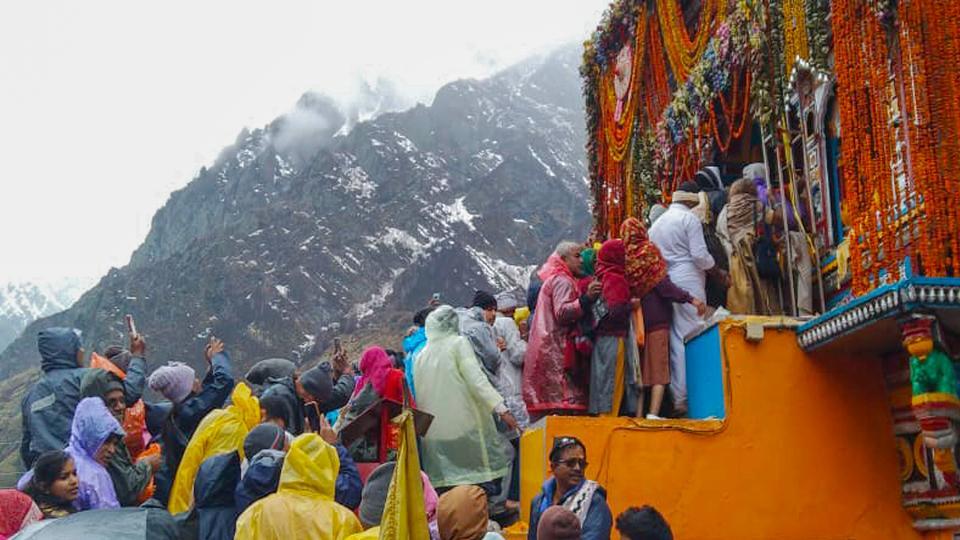
Badarinath, located in Chamoli district along the banks of the Alaknanda River at a height of 3,133 metres, is one of the holiest shrines for Hindus, especially Vaishnavites. It is also part of the Panch Badri temples, including Yog Dhyan Badri, Bhavishya Badri, Adi Badri and Vriddha Badri. The temple is around 50 feet tall with a small cupola on top, covered with a gold gilt roof. The temple complex has 15 idols, including the image of Lord Badarinath, sculpted in black stone.
According to local priests, Adiguru Shankaracharya discovered a black stone image of Lord Badarinarayan made of Saligram stone in the Alaknanda River. He originally enshrined it in a cave near the Tapt Kund hot springs. In the sixteenth century, the King of Garhwal moved the idol to the present location of the temple.


