E-Paper



Form committee of experts on land subsidence in Joshimath: HC tells state govt
The Uttarakhand high court has also directed the state government to ensure strict compliance of ban on constructions in and around Joshimath

 Prefer HTon Google


The Uttarakhand high court on Thursday directed the state government to constitute a committee of independent experts on land subsidence in Joshimath and submit the report in a sealed envelope to the court within two months.
The court has also directed the state government to ensure strict compliance of ban on constructions in and around Joshimath.
The division bench of chief justice Vipin Sanghi and justice Alok Verma gave these directions while hearing an interim relief application filed in an ongoing public interest litigation filed in the aftermath of February, 7, 2021 Chamoli tragedy which had claimed 204 lives.
PC Tewari, petitioner in the case is an Almora-based Chipko movement activist and president of Uttarakhand Parivartan Party.
Also Read: Supreme Court refuses to hold urgent hearing on Joshimath crisis
Snigdha Tiwari, counsel of the petitioner, said the PIL had sought formation of an independent committee to analyse the impact or hydel power projects in upper reaches of Himalayan valleys and a stay on construction of all under construction hydro power projects, till early warning systems are put in place.
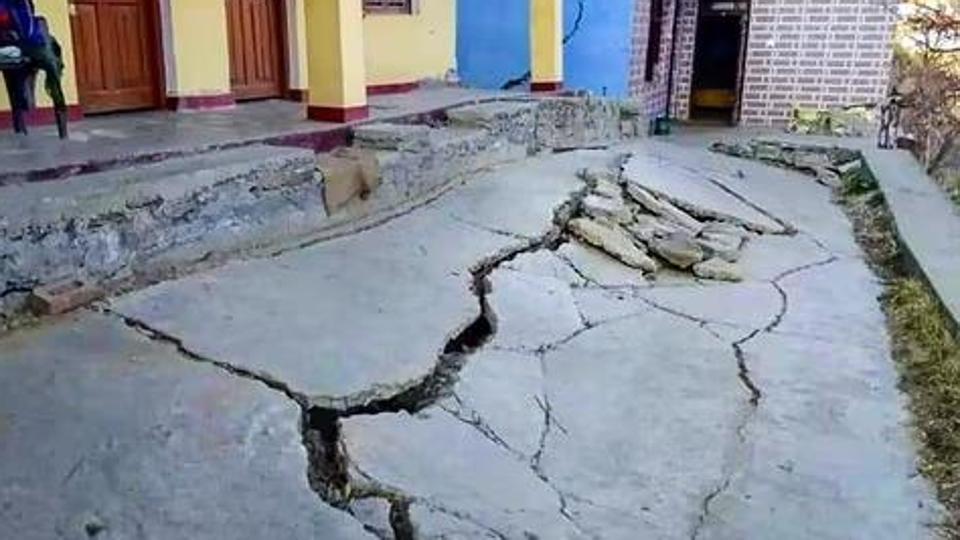
Tiwari said she informed the HC that over 700 houses have been affected due to land subsidence in Joshimath which has a population of about 23,000.
“I apprised the court that in 1976, Mishra Committee in its report had made it clear that Joshimath town is located on landslide material. And as such the town is ecological very fragile. Despite this, again in 2010, experts like Piyoosh Rautela and SPS Bisht had warned about Joshimath, but no one heeded to their warnings”, Tiwari said.
Tiwari said the court has also directed the state government that Piyoosh Rautela, who is at present executive director of Uttarakhand State Disaster Management Authority and MPS Bisht, who is currently director Uttarakhand Space Application Centre, be made members of the committee.
The interim relief application had sought formation of an independent committee of comprising of hydrologists, geologists, glaciologists, disaster management experts, social scientists, geomorphologists, ecologists, hydrogeologists, landslide expert who will submit the report assessing the current situation on ground in Joshimath, Reni village and Tapovan.
The application also sought directions to the committee to make recommendations relying on the scientific findings with respect of the viability of the hydel power project, disaster mitigation and management plans within a fixed time frame decided by the court.
The original PIL had sought installation of early warning system, escape routes, proper gears and training to the workers in all existent as well as under construction hydropower project sites across Uttarakhand, establishing flood warning systems across Uttarakhand as recommended by Ravi Chopra Committee Report, 2013, staying the operation in all under construction hydropower project sites across Uttarakhand till early warning system are established and formation of an expert committee to review impact of all the hydropower projects located on upper reaches of the rivers across Uttarakhand.
Around 760 houses have developed cracks in Joshimath, with 128 declared as unsafe.
So far, 165 affected families have been shifted to various relief camps in safer locations, including 27 families on Thursday.